Vendor Onboarding Process: Best Practices and Strategies to Get Approved Faster

Did you know that inefficient onboarding and vendor evaluation processes can delay deals by weeks or even months? When an organization starts onboarding vendors, it follows a structured process involving multiple teams, documents, and approvals. For you, this often means repeated requests, tight timelines, and the pressure to provide accurate information every time.
The challenge is simple. If your responses are slow or inconsistent, approvals get delayed. If your responses are structured and accurate, onboarding moves faster.
In this article, you will learn how vendor onboarding works, what organizations expect, and how you can respond more efficiently to get approved faster.
Key Takeaways
- Vendor onboarding involves multiple steps like data collection, compliance checks, and internal reviews, and your response quality directly impacts approval speed.
- Delays often happen due to incomplete, inconsistent, or outdated information, leading to repeated follow-ups and slower approvals.
- Preparing in advance with centralized content and standardized responses helps you respond faster and avoid rework.
- Organizations use automation to speed up onboarding, making accuracy and consistency in your responses even more important.
- Using tools like Inventive AI helps you generate accurate responses faster, reduce delays, and improve your chances of getting approved and winning deals.
What is Vendor Onboarding? All You Need to Know!
Vendor onboarding is the process organizations follow to evaluate, verify, and approve vendors before starting a business relationship. It is not a single step. It is a structured workflow where multiple teams review your company, your capabilities, and your compliance readiness.
Organizations use onboarding to answer a simple question: Can this vendor be trusted to deliver without risk?
To do this, they collect detailed information across different areas:
- Your company profile, financial stability, and certifications
- Your security practices and data protection measures
- Your legal and contractual terms
- Your ability to meet operational and service expectations
Each of these checks is handled by different teams, including procurement, legal, finance, and security. This is why onboarding often involves multiple rounds of questions, clarifications, and document submissions.
What does this mean for you as a vendor? You need to respond with accurate, consistent, and up-to-date information across all onboarding requests. Faster and structured responses help you move through approvals without delays.
Vendor onboarding sets the foundation for every new business relationship. While organizations control the process, your response quality and speed determine how smoothly you move through it.
The Complete Vendor Onboarding Process: A Step-by-Step Guide
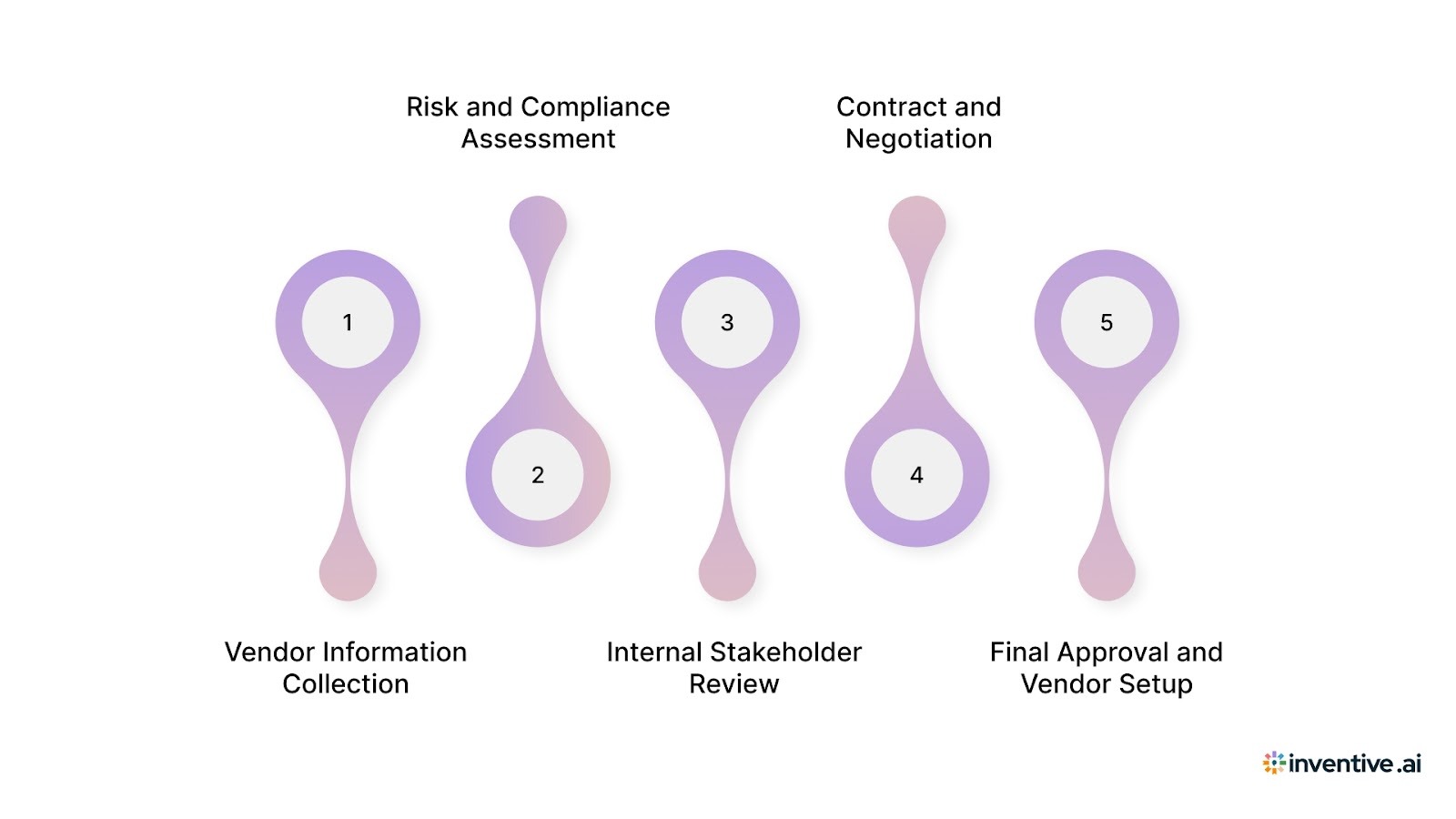
Organizations follow a structured onboarding workflow. Each step requires inputs from you, and delays often happen when responses are incomplete or inconsistent.
1. Vendor Information Collection
Organizations begin by collecting essential business details such as company registration, financial information, and certifications. This helps them understand your legitimacy, stability, and operational capabilities before moving forward.
2. Risk and Compliance Assessment
This stage focuses on evaluating your security practices and regulatory compliance. Organizations use security questionnaires and compliance checks to assess how well you meet their risk and data protection standards.
3. Internal Stakeholder Review
Your submitted information is reviewed by multiple teams, including procurement, legal, and finance. Each team validates different aspects such as pricing, contractual risks, and financial reliability.
4. Contract and Negotiation
Organizations finalize commercial and legal terms during this stage. This includes reviewing pricing, service-level agreements, and contract clauses before reaching a mutual agreement.
5. Final Approval and Vendor Setup
Once all checks are completed, organizations approve you as a vendor and set you up in their internal systems. This includes vendor registration, payment setup, and final documentation.
Each step depends on how quickly and accurately you respond. Most onboarding delays happen because of missing information or inconsistent answers.
5 Common Vendor Onboarding Challenges That Impact Approval Timelines
Organizations often deal with multiple challenges during vendor onboarding. These issues can slow down approvals and affect overall efficiency.
1. Operational Delays: Incomplete or inconsistent vendor information can slow down the onboarding process. This leads to repeated follow-ups and longer approval timelines.
2. Compliance Failures: Missing or incorrect compliance data can create risks during evaluation. Organizations may delay onboarding until all requirements are fully met.
3. Reputational Risks: Working with vendors who lack proper validation can impact business credibility. This makes organizations more cautious during onboarding.
4. Higher Costs: Manual processes and repeated reviews increase the time and effort required from internal teams. This leads to higher operational costs.
5. Limited Scalability: Without structured systems, onboarding becomes difficult to manage at scale. Handling multiple vendors at the same time can create bottlenecks.
Organizations aim to reduce these challenges through structured processes and better systems, making accurate and timely vendor responses critical.
Where Vendor Onboarding Actually Breaks Downs?
Vendor onboarding doesn’t usually fail because your product is weak or your team isn’t capable. It slows down because responding to onboarding requests becomes messy, repetitive, and hard to manage.
You’re expected to answer everything quickly and accurately. But in reality, most teams are piecing together answers from different places, under tight timelines, with multiple stakeholders involved.
Here’s where things start to fall apart:
1. Security Questionnaires That Go 200+ Questions Deep
These aren’t quick forms. They are long, detailed, and often repetitive. You end up answering similar questions multiple times, and small inconsistencies creep in when you’re rushing to complete them.
2. The Same Compliance Questions… Again and Again
Every new deal asks for similar compliance and security details. Without a reliable way to reuse answers, your team rewrites responses each time, and that’s where variations and errors start showing up.
3. Digging Through Old Files to Find Answers
You know the answer exists somewhere. But is it in a spreadsheet, an old RFP, or someone’s inbox? This constant searching wastes time and often leads to using outdated or incomplete responses just to move forward.
4. Different Teams, Different Answers
Sales, legal, security, and product teams all contribute to onboarding responses. Without alignment, you end up with answers that don’t match across sections, which raises red flags during review.
5. Outdated Answers That Slip Through
It’s easy to reuse an old response without checking if it’s still accurate. But buyers notice. Outdated certifications or product details can slow approvals and trigger follow-ups.
6. No Clear Way to Manage the Process
When there’s no structured workflow, responses come in from different places, at different times, in different formats. Bringing everything together becomes a task on its own, adding unnecessary delays.
These issues create extra back-and-forth, increase review time, and reduce your chances of getting approved quickly.
5 Ways To Speed Up the Vendor Onboarding Process With These Best Practices
By this stage, onboarding starts feeling repetitive and time-consuming. You’re answering similar questions, fixing inconsistencies, and chasing inputs across teams just to keep things moving.
This is where small gaps in how you prepare responses start causing delays. Here are a few practical ways to fix that and move through onboarding faster.
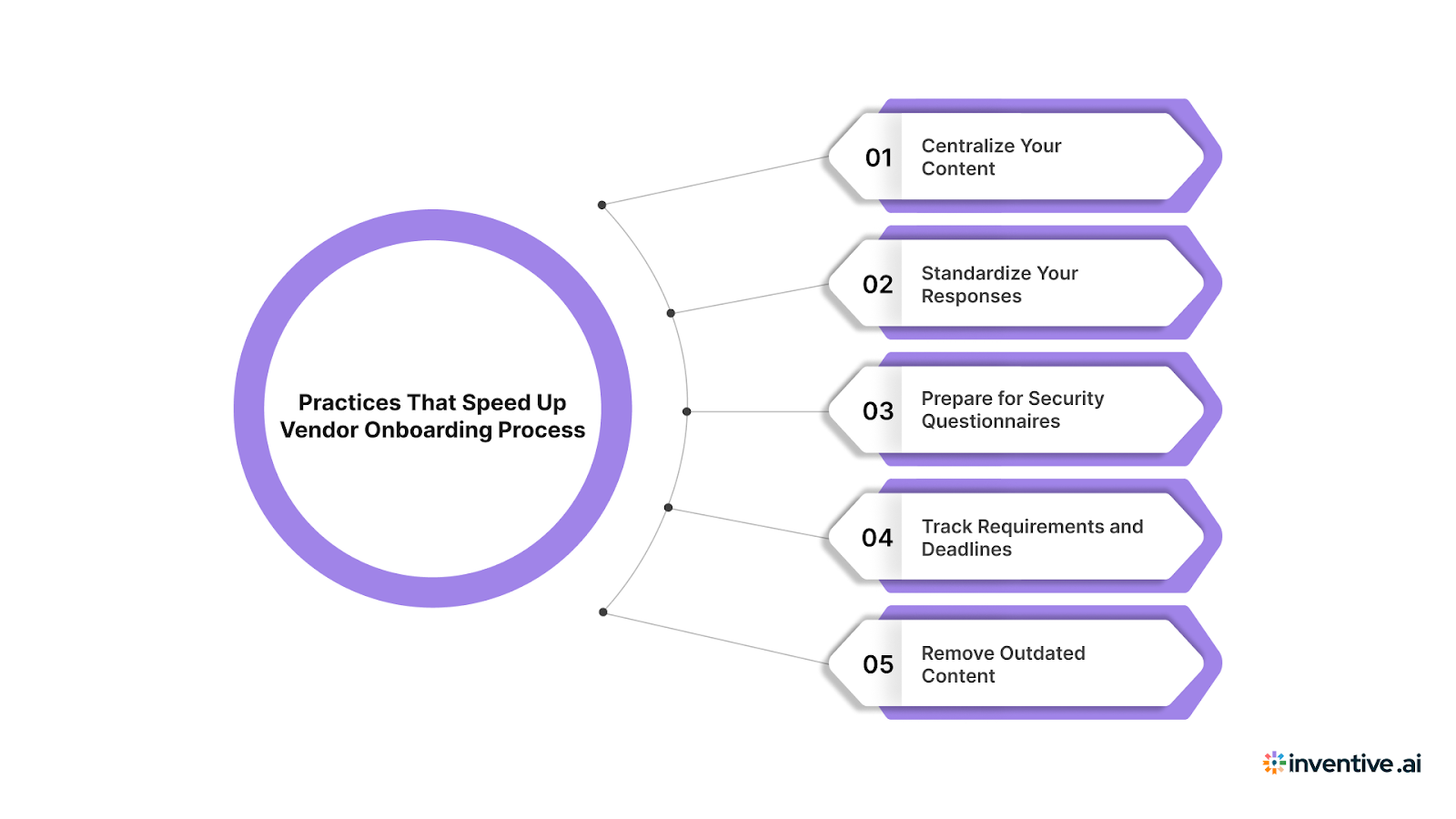
1. Centralize Your Content
Keep all onboarding documents, past responses, and supporting data in one place. This helps you quickly find the right information and reuse it across different onboarding requests without starting from scratch.
2. Standardize Your Responses
Use consistent and approved answers across all onboarding submissions. This ensures that different teams reviewing your responses see the same information, reducing confusion and avoiding rework.
3. Prepare for Security Questionnaires
Security questionnaires are detailed and often repeat similar questions. Preparing structured answers in advance allows you to respond faster and ensures consistency across different submissions.
4. Track Requirements and Deadlines
Onboarding involves multiple steps, documents, and stakeholders. Tracking requirements and timelines helps you stay organized, avoid missed submissions, and respond to requests without delays.
5. Remove Outdated Content
Outdated or conflicting information can lead to follow-ups and slow down approvals. Regularly updating your data ensures your responses remain accurate and aligned with current requirements.
Pro Tip: Create a reusable response library for common onboarding and security questions. This helps you respond faster and maintain consistency.
Preparation and consistency can reduce onboarding time. Structured and accurate responses help you move through approvals faster.
The Impact of Automation on Vendor Evaluation and Approval
Vendor onboarding is no longer just about submitting information. It’s about how quickly and accurately you can respond to detailed questionnaires, compliance checks, and repeated requests across deals.
Manual workflows slow you down. AI automation helps you structure responses, improve consistency, and move through approvals without unnecessary back-and-forth.
Here’s how it directly impacts your onboarding speed:
1. Faster Response Creation Across Questionnaires
AI helps you generate answers for long onboarding forms and security questionnaires in minutes. Instead of starting from scratch, you work with structured responses that are already aligned with the question.
2. Consistent Answers Across Multiple Requests
When the same compliance or security questions appear across deals, AI ensures your answers stay consistent. This reduces confusion during evaluation and avoids repeated clarification requests.
3. Centralized Knowledge for Quick Access
AI pulls information from your past responses, documents, and internal sources. You don’t have to search across files or tools to find the right answer every time.
4. Improved Response Quality and Accuracy
AI helps structure your answers clearly and ensures they match what buyers expect. This makes your responses easier to review and reduces the chances of rejection or follow-ups.
5. Faster Internal Alignment Across Teams
Instead of collecting inputs manually from different teams, AI helps standardize responses. This reduces conflicting answers and speeds up the final submission process.
6. Better Readability for Faster Approvals
Well-structured and clear responses make it easier for procurement, legal, and compliance teams to review your submission quickly, which directly impacts how fast you get approved.
When your responses are accurate, consistent, and easy to evaluate, onboarding moves faster. AI automation helps you remove delays at the response level and improves your chances of getting approved without repeated revisions.
Move Through Vendor Onboarding Faster with Inventive AI
Responding to onboarding requests often involves RFPs, RFIs, and security questionnaires. These require accurate, consistent, and well-structured answers across multiple documents. When handled manually, this process slows down approvals and increases the risk of errors.
Inventive AI’s AI RFP Agent is designed to simplify your RFP response process.
1. 2× Higher Quality Responses
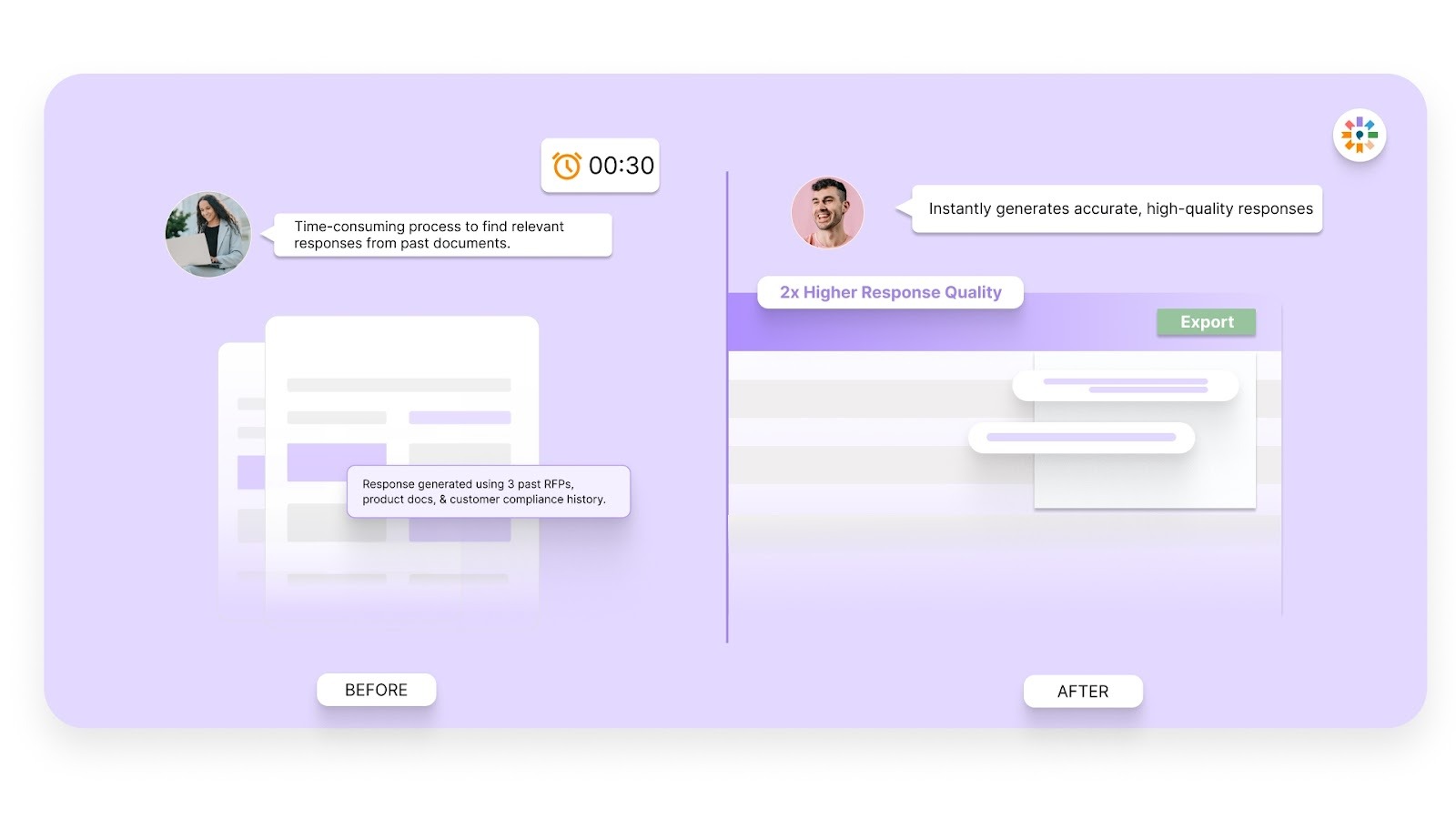
Generate responses that are complete, relevant, and aligned with the exact requirements of each onboarding request. This reduces back-and-forth with reviewers and helps you move through evaluation stages faster.
2. Context Engine
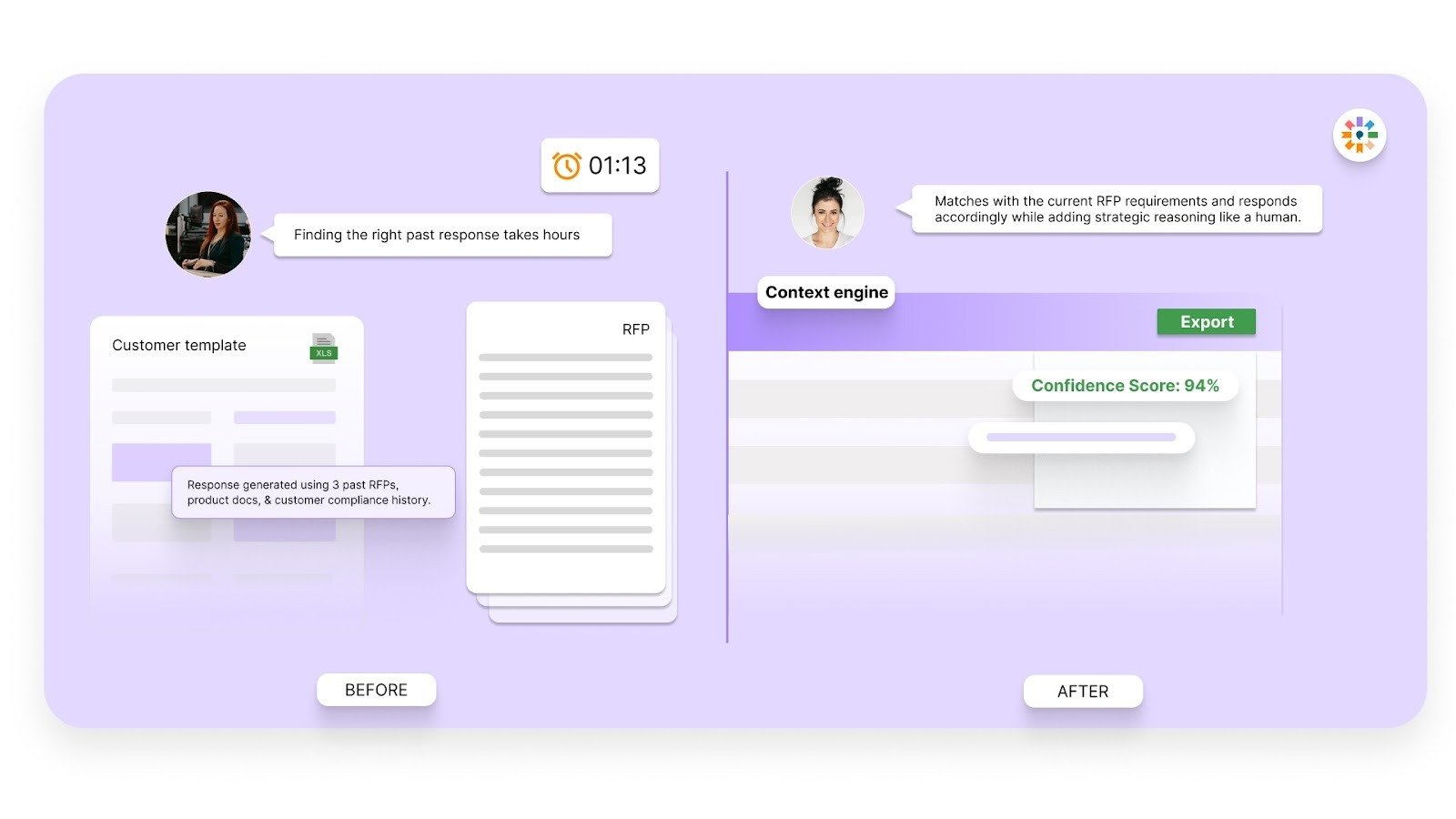
Pull accurate information from past responses, internal documents, and knowledge sources. This ensures every answer stays consistent across submissions and reduces the need to search for information manually.
3. Conflict Detection
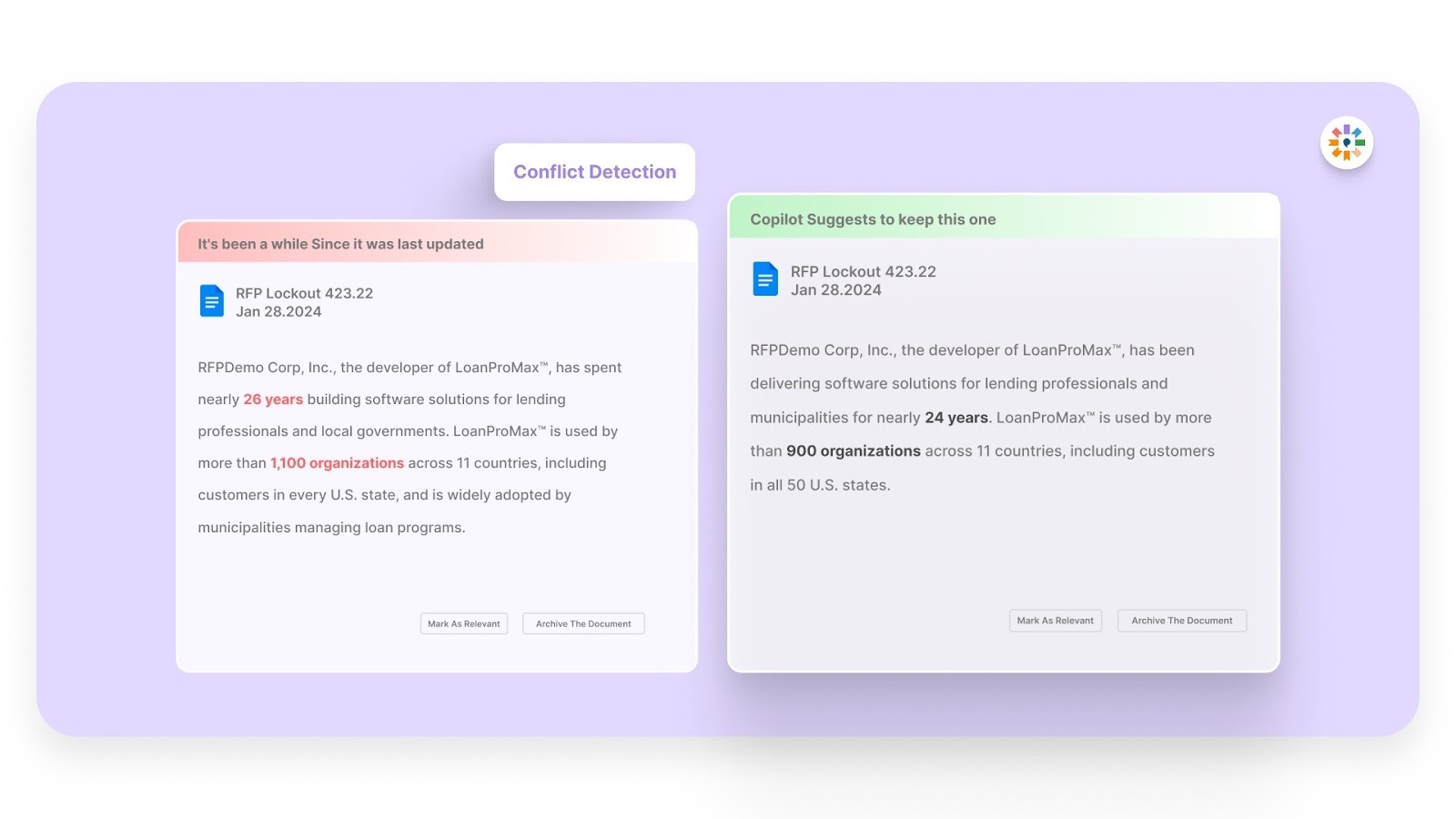
Identify conflicting or mismatched information across documents before submission. This helps you avoid delays caused by clarification requests and improves trust during internal reviews.
4. Outdated Content Detection
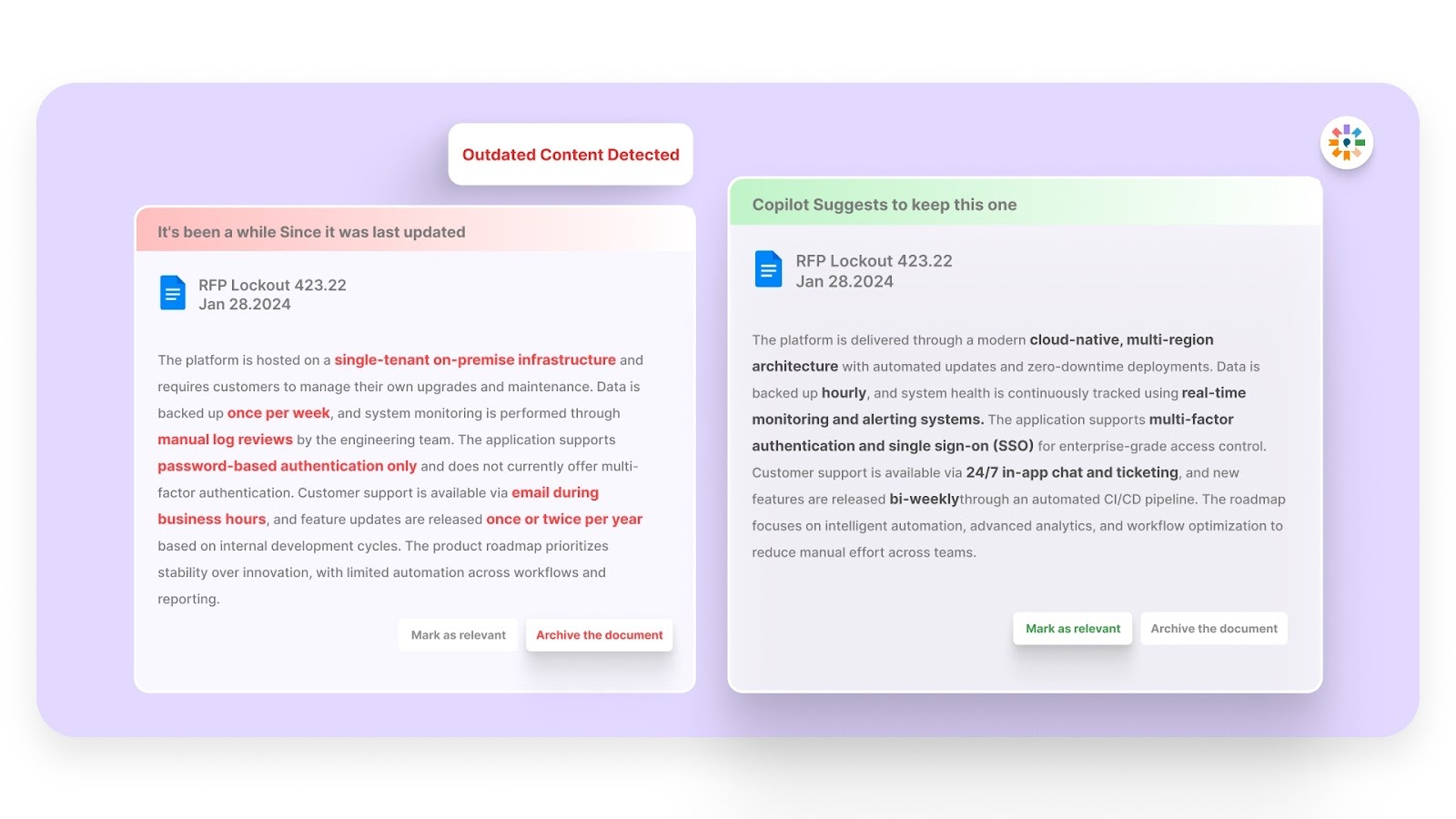
Automatically flag outdated or irrelevant content in your responses. This ensures that all submitted information reflects your latest capabilities, reducing the risk of rejections or follow-ups.
5. Narrative Style Proposals
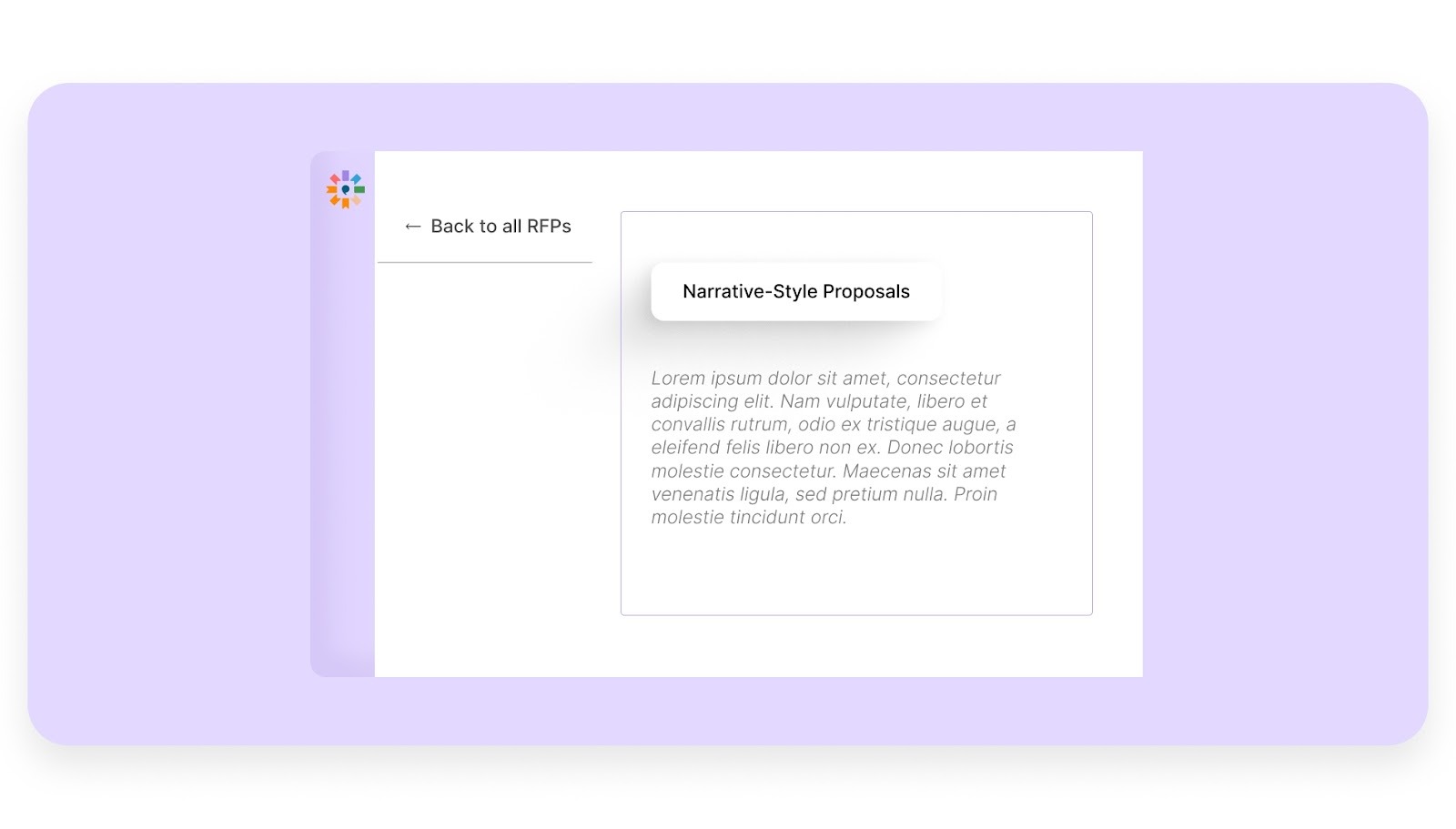
Create structured, easy-to-read responses that clearly communicate your capabilities. This makes it easier for procurement, legal, and finance teams to review and approve your submissions quickly.
6. Simple, Easy-to-Use Interface
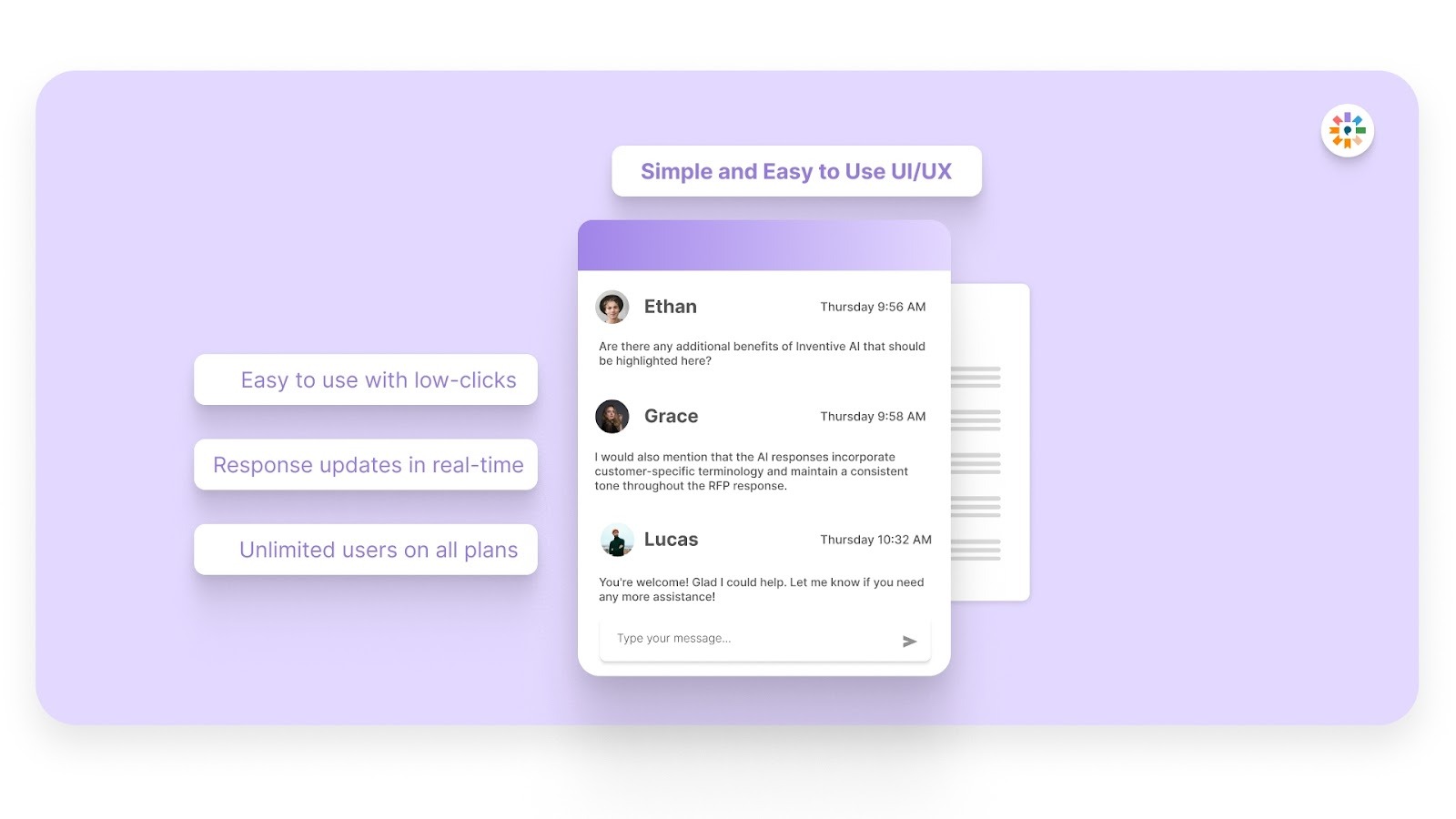
Work within a platform that is easy to adopt and requires minimal training. This allows your team to respond to onboarding requests faster without adding operational complexity.
When your responses are accurate, consistent, and easy to review, onboarding cycles become shorter. This helps you get approved faster and move forward with new business opportunities.
Frequently Asked Questions (FAQs)
1. How can you speed up vendor onboarding approvals?
You can speed up onboarding by preparing documents in advance, standardizing responses, and ensuring consistency across all submissions. Using structured systems also helps reduce manual effort.
2. What documents should you prepare for vendor onboarding?
You should prepare company profiles, compliance certifications, financial records, and security questionnaire responses. Keeping these updated helps avoid delays.
3. Why do vendor onboarding processes take time?
Onboarding involves multiple teams reviewing your responses. Delays usually happen when information is incomplete, inconsistent, or requires clarification.
4. How can you improve response accuracy during onboarding?
You can improve accuracy by centralizing your knowledge, using standardized answers, and ensuring outdated content is removed before submission.
.avif)