Inventive AI vs HeyIris: Which AI RFP Platform Is Better in 2026?
Compare Inventive AI and HeyIris across AI response quality, knowledge management, pricing, reviews, and more to choose the right RFP software.
The hardest part of responding to an RFP isn't generating a first draft. It's finding the right information, validating that it's still accurate, and getting the proposal ready to submit.
Inventive AI and HeyIris both use AI to accelerate RFP responses, but they automate different parts of that process. This guide compares where each platform performs best so you can choose the one that matches your team's workflow.
Key Takeaways
- Choose Inventive AI if you want an autonomous AI platform that automates more of the response process, including knowledge retrieval, content governance, competitive positioning, keeping humans in loop.
- Choose HeyIris if your priority is AI-assisted drafting, collaborative proposal creation, and a fast onboarding experience.
- Both platforms generate source-backed responses and support enterprise RFP workflows. The biggest difference is how much of the response process AI handles beyond drafting.
Inventive AI vs HeyIris: Key Differences at a Glance
| Criteria | Inventive AI | HeyIris |
|---|---|---|
| Best suited for | Enterprise and mid-market teams managing high volumes of RFPs, security questionnaires, and DDQs | Proposal teams focused on AI-assisted drafting and collaboration |
| AI approach | Autonomous AI platform with specialized AI agents across the response workflow, keeping humans in loop for approval. | AI-assisted proposal drafting and collaboration |
| Knowledge retrieval | Connects directly to SharePoint, Google Drive, Salesforce, Confluence, Notion, websites, and more | Centralized knowledge base with connected content sources |
| Content governance | AI Content Governance Agent detects outdated, duplicate, and conflicting content continuously | Conflict detection during drafting; ongoing knowledge maintenance remains team-managed |
| Competitive positioning | Competitive Intelligence Agent helps develop proposal differentiation and win themes | AI uses deal and prospect context to personalize responses |
| Pricing | Starting at $830 per month, billed annually; no per-seat cost. | Custom pricing (per seat, unlimited collaborators) |
| G2 Rating | 4.9/5 | 4.9/5 |
| Gartner Peer Insights | 5.0/5 | 4.9/5 |
Where Does Your Team Spend the Most Time?
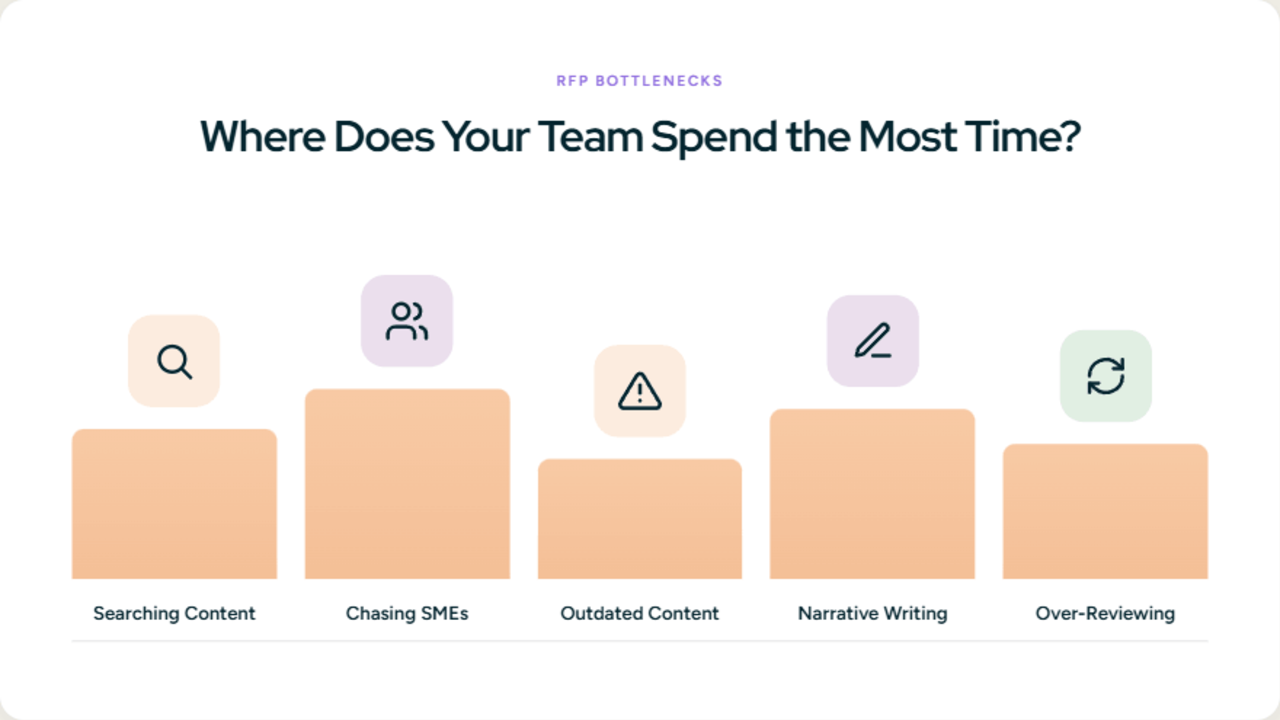
Choosing an AI RFP platform starts with understanding what's slowing your team down today.
The biggest bottlenecks usually look like this:
- Searching for the right answer. Approved content is scattered across SharePoint, Google Drive, Confluence, past RFPs, and SME inboxes, making it difficult to know which version is current.
- Chasing SMEs for validation. Security, legal, product, and engineering teams spend time reviewing answers they've already approved because no one is confident the existing response is still accurate.
- Managing outdated or conflicting content. The same question often has multiple answers across different proposals, creating extra review cycles before submission.
- Writing high-value narrative sections. Executive summaries, win themes, implementation plans, and technical approaches still require significant effort because they need to be tailored to each opportunity.
- Reviewing more than necessary. Teams often review every answer instead of focusing only on the responses that have changed or require expert judgment.
The right platform depends on which of these slows your team down the most. The sections below compare how Inventive AI and HeyIris handle each stage of the response workflow.
How Inventive AI and HeyIris Compare Across AI Capabilities
AI Response Generation
Inventive AI
- Generates responses from connected company knowledge instead of relying only on previously approved Q&A pairs.
- Uses a multi-step AI pipeline to verify context before generating an answer, reducing unsupported responses.
- Returns "Information Unavailable" when supporting information doesn't exist, rather than generating a confident but unverifiable response.
- Includes source citations and confidence scores, allowing reviewers to validate only lower-confidence answers.
HeyIris
- Generates first drafts from reusable proposal content and connected company documents.
- Supports both structured RFP questions and narrative proposal sections.
- Includes source citations and confidence scores so reviewers can prioritize lower-confidence answers.
- Keeps proposal teams in control of editing and approving responses before submission.
AI Content Governance
Inventive AI
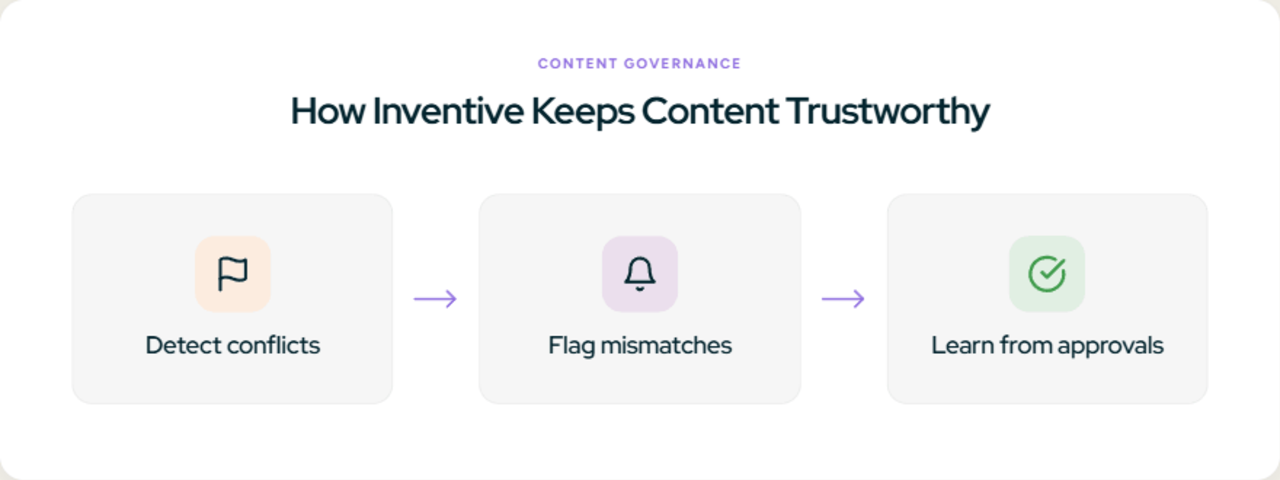
- Detects outdated, duplicate, and conflicting answers before they make it into a proposal.
- Flags when responses don't match the latest policies, certifications, or company documentation.
- Learns from approved updates, so future proposals use the latest validated responses.
- Reduces time spent checking whether an answer is still accurate.
HeyIris
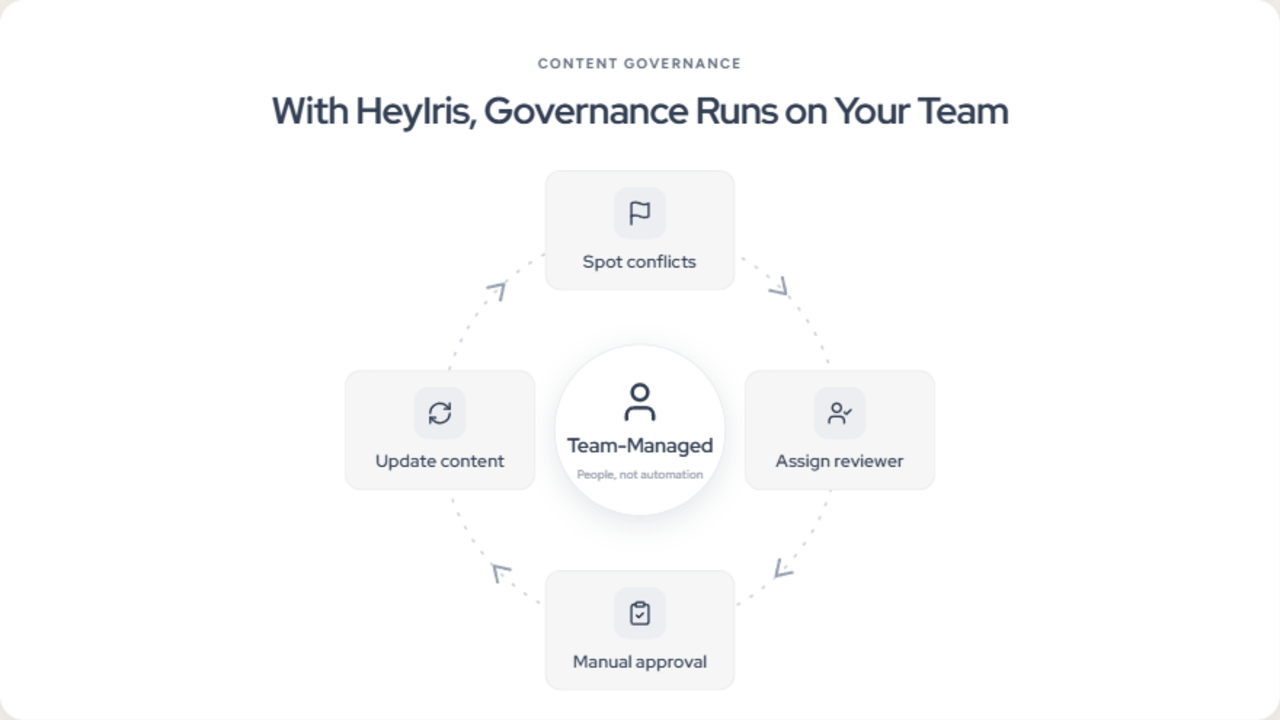
- Provides source references to help reviewers validate AI-generated responses.
- Uses approval workflows to review and publish reusable content.
- Requires teams to keep the knowledge base up to date as products, policies, and documents change.
- Makes it easier to organize approved proposal content in one place.
Multi-Format Support
Inventive AI
- Responds to Excel, Word, PDF, security questionnaires, DDQs, and browser-based procurement portals.
- Preserves the original questionnaire format, reducing manual copy-and-paste.
- Supports both structured questionnaires and narrative proposals in the same workspace.
- Well suited for teams managing a mix of RFPs, DDQs, and security questionnaires.
HeyIris
- Supports common RFP and proposal formats and responds to browser-based questionnaire portals via its Chrome extension.
- Helps teams draft responses for both questionnaires and narrative proposals.
- Enables collaborative editing before proposals are finalized.
- Best suited for proposal-centric workflows with structured review processes.
Integrations
Inventive AI
- Connects with SharePoint, Google Drive, Confluence, Notion, Salesforce, Slack, Microsoft Teams, and more.
- Retrieves information directly from connected systems instead of requiring teams to duplicate content.
- Automatically uses updated company information in future responses.
- Fits organizations that want AI to work with their existing knowledge ecosystem.
HeyIris
- Connects with Salesforce, HubSpot, SharePoint, Google Drive, Confluence, Notion, Slack, Microsoft Teams, Highspot, Seismic, and a Chrome extension (15+ native integrations).
- Brings existing proposal content into one searchable workspace.
- Lets teams continue using their existing proposal process alongside AI-assisted drafting.
Competitive Intelligence
Inventive AI
- Identifies likely competitors for an opportunity and highlights areas where your solution can stand out.
- Helps proposal teams develop stronger win themes and differentiators before writing the proposal.
- Uses competitive insights to strengthen executive summaries and narrative sections.
- Keeps positioning consistent across the proposal.
HeyIris
- Uses opportunity context to help tailor proposal messaging.
- Assists with drafting customer-specific responses based on proposal requirements.
- Relies on proposal teams to define positioning and competitive messaging.
Pricing
Inventive AI
- Uses volume-based pricing based on RFPs and security questionnaires handled, with unlimited users and no per-seat fees.
- Starts at $830/month, billed annually.
- Well suited for teams with multiple contributors, SMEs, and reviewers.
HeyIris
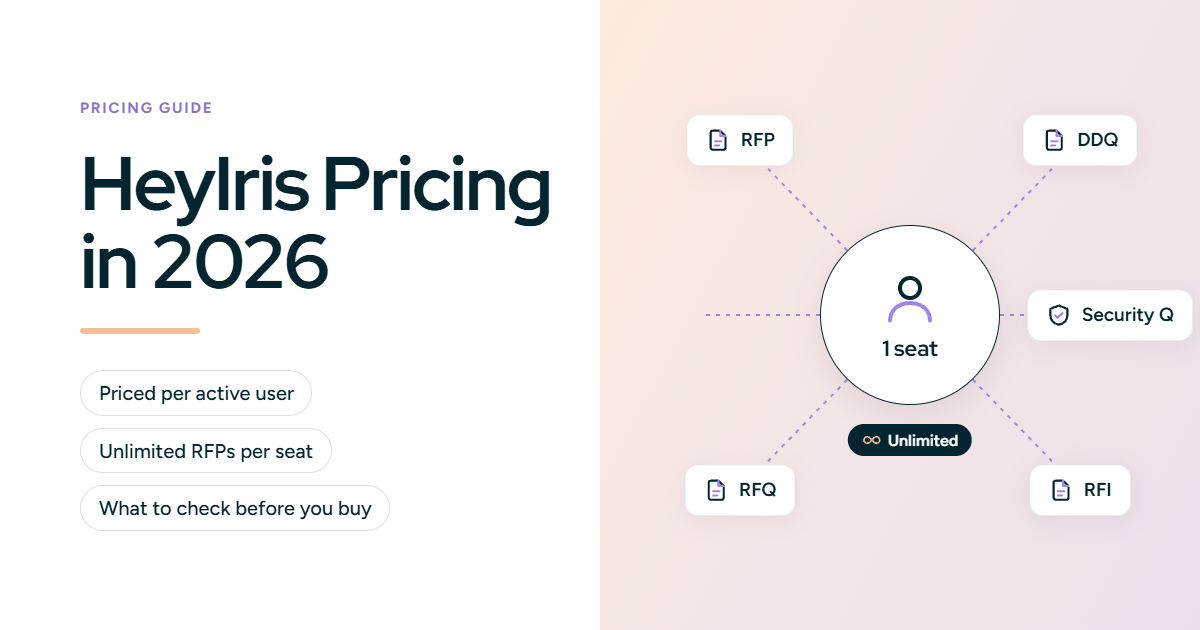
- Uses per-seat pricing with unlimited collaborators and custom enterprise plans.
- Additional paid seats are needed only for core users; collaborators and SMEs can participate without extra seat costs.
- Pricing is available through a custom quote.
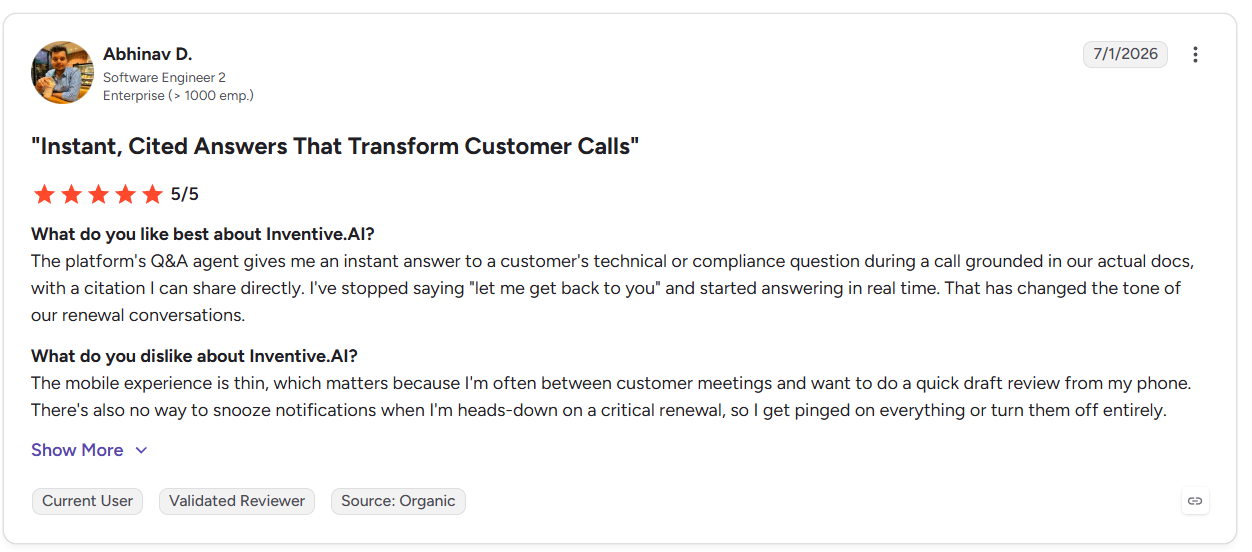
Customer Reviews
Inventive AI
- Rated 4.9/5 on G2, with reviewers frequently highlighting AI response quality, ease of use, and responsive customer support.
- Ranked #1 for Ease of Use among RFP software on G2.
- Customers report significant reductions in proposal effort and faster response times after implementation.
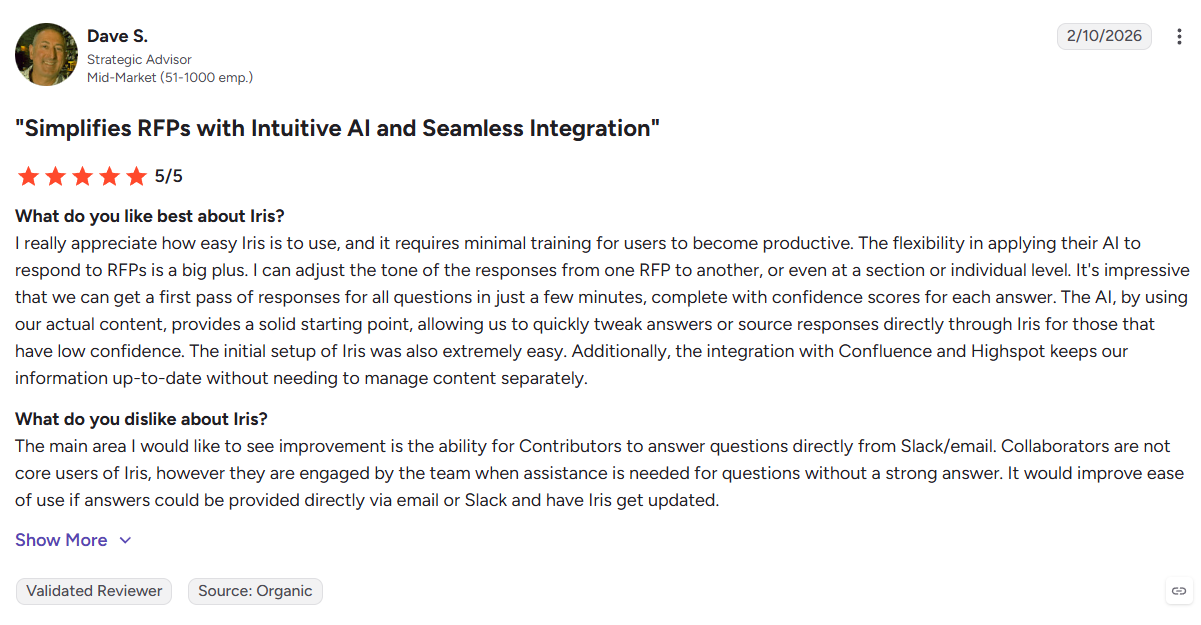
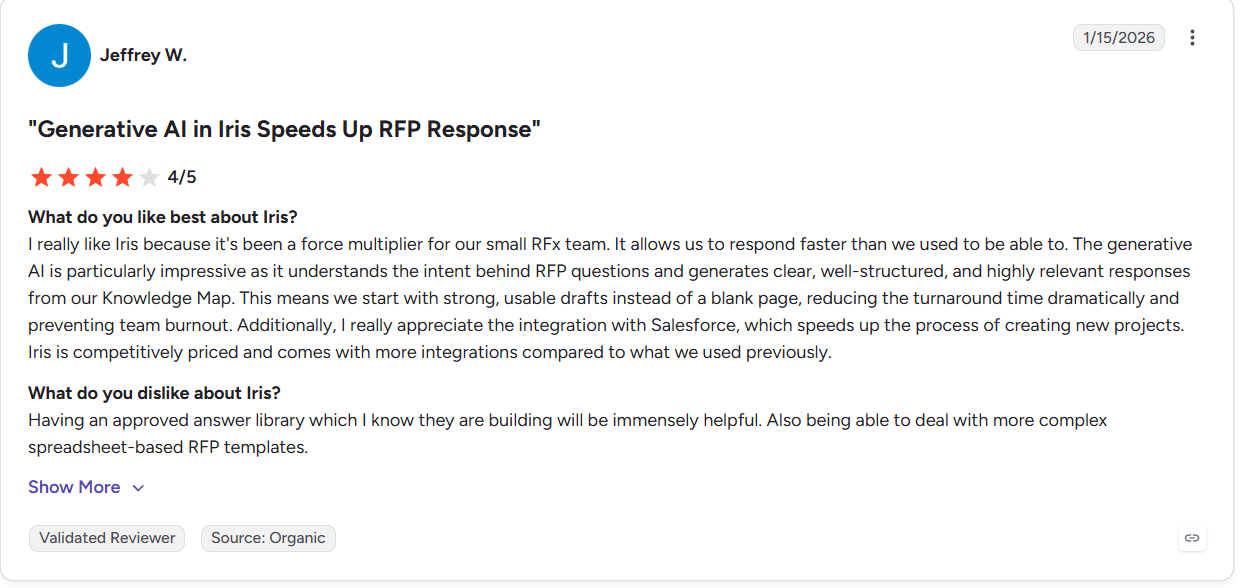
HeyIris
- Rated highly on G2 for its modern interface, proposal collaboration, and AI-assisted drafting.
- Reviewers appreciate the intuitive user experience and responsive support.
- Organizations highlight faster proposal creation while maintaining human oversight during reviews.
See How Much Manual Work You Can Eliminate
Bring one of your active RFPs and see how much reviewing, editing, and SME follow-up Inventive AI removes.
Book a DemoStrengths and Limitations of Inventive AI and HeyIris
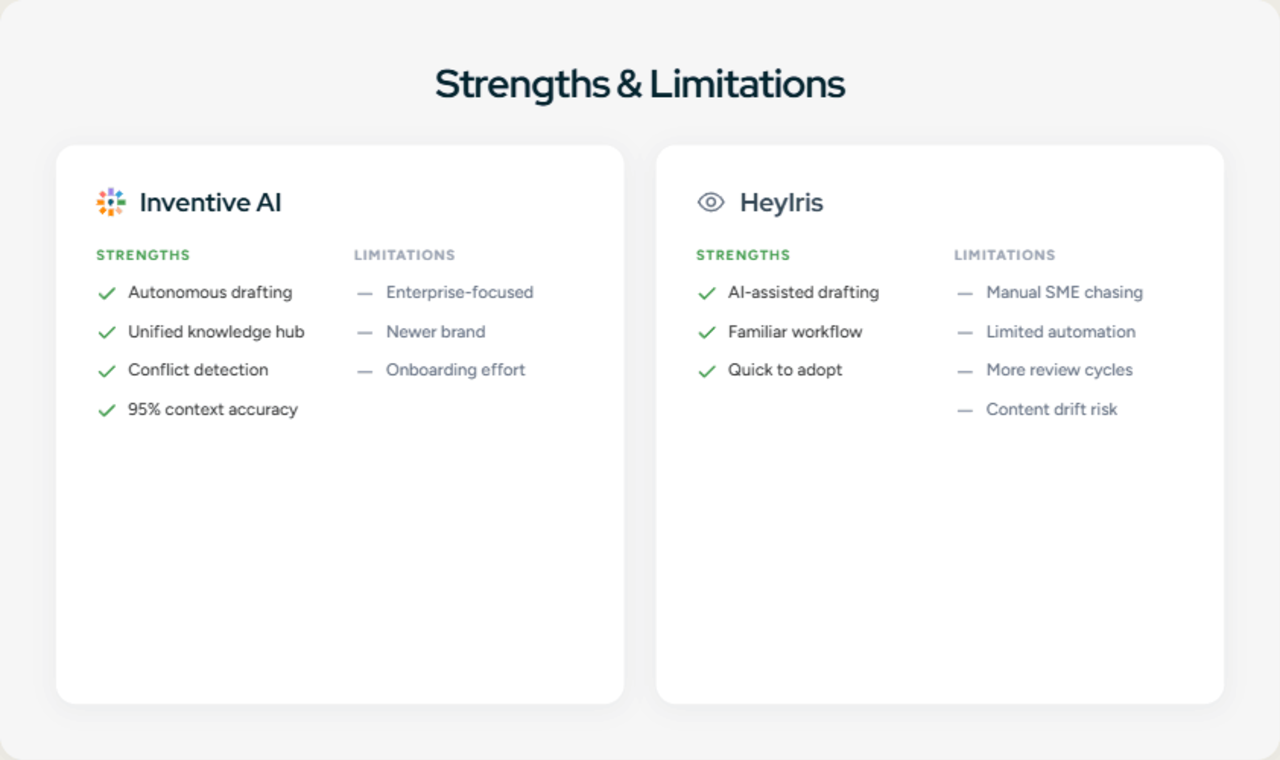
Every platform has trade-offs. Here's an honest view based on product capabilities and customer feedback.
Inventive AI
Strengths
- Autonomous AI platform purpose-built for RFPs, DDQs, and security questionnaires, keeping human in loop for approval.
- AI Content Governance Agent detects outdated, duplicate, and conflicting responses before submission.
- Competitive Intelligence Agent helps teams develop stronger win themes and proposal positioning.
- Generates responses from connected company knowledge, reducing reliance on a separate answer library.
- Usage-based pricing with unlimited users, making it easier to involve SMEs without additional seat costs.
Limitations
- Analytics and reporting capabilities may not meet every organization's needs.
- No native Jira integration at the time of writing.
- Mobile experience is limited, according to some G2 reviewers.

HeyIris
Strengths
- Modern, intuitive interface that's easy for proposal teams to adopt.
- Strong collaboration features, including comments, assignments, and approval workflows.
- Chrome extension and portal support simplify responding to web-based questionnaires.
- Flexible knowledge base for organizing reusable proposal content.
- Responsive customer support and onboarding, according to G2 reviewers.
Limitations
- Mobile experience is limited, according to some G2 reviewers.
- AI-generated responses occasionally require additional manual validation.
- Some reviewers would like broader third-party integrations and workflow automation.
Also Read: Top HeyIris Alternatives and Competitors in 2026
Which Platform Is the Better Fit for Your Team?
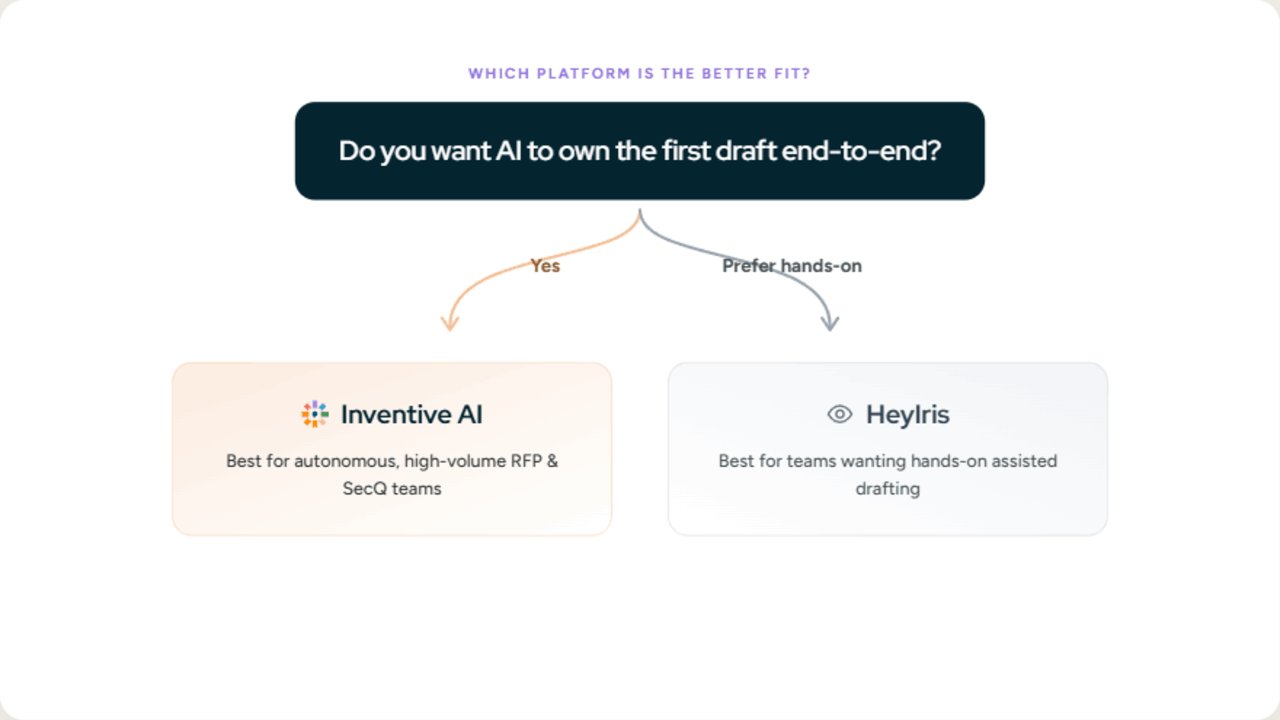
The right choice depends on how your team manages proposals today and where you want AI to have the biggest impact.
| If your team prioritizes... | Better fit |
|---|---|
| Faster first drafts with better quality responses | Inventive AI |
| Collaborative proposal writing with multiple contributors | HeyIris |
| Generating responses from connected company knowledge | Inventive AI |
| Organizing and managing a centralized proposal knowledge base | Both |
| Source citations for AI-generated responses | Both |
| Detecting outdated, duplicate, and conflicting responses automatically | Inventive AI |
| AI-assisted drafting with human review throughout the process | HeyIris |
| Developing stronger win themes and competitive positioning | Inventive AI |
| Fast onboarding and an intuitive user experience | Both |
| Responding to RFPs, DDQs, and security questionnaires from one platform | Inventive AI |
| Unlimited users with usage-based pricing | Inventive AI |
Before You Decide, See the Results
Read how Insider achieved 50%+ higher win rates and 90% faster RFP responses after replacing manual proposal workflows with Inventive AI.
Download the Case StudyRead more: 15 Best RFP Software in 2026: Compared for Features, Prices and Review
Frequently Asked Questions
Is Inventive AI or HeyIris better for enterprise proposal teams?
Both platforms support enterprise proposal workflows, but they're designed differently. Inventive AI is a better fit for organizations that want to automate more of the response process, including knowledge retrieval, AI content governance, and competitive positioning. HeyIris is better suited for teams that prioritize collaborative proposal writing and structured review workflows.
Which platform is better for security questionnaires and DDQs?
Inventive AI supports RFPs, security questionnaires, DDQs, and browser-based questionnaire portals from the same platform. If your team regularly responds to vendor security assessments alongside RFPs, it's generally the more comprehensive option.
Do both platforms provide source citations for AI-generated responses?
Yes. Both Inventive AI and HeyIris provide source references to help reviewers verify AI-generated responses before submission. The difference lies in how each platform retrieves and governs the underlying content.
Which platform requires less ongoing content maintenance?
Inventive AI retrieves responses from connected company knowledge and includes AI content governance to identify outdated or conflicting information. HeyIris combines connected sources with a centralized knowledge base, so teams typically spend more time maintaining reusable proposal content.
Which platform is easier for occasional contributors and SMEs?
Both platforms are designed to involve subject matter experts, but they take different approaches. HeyIris emphasizes collaborative editing and approvals, while Inventive AI uses confidence scores, source citations, and AI-driven prioritization to reduce the number of responses SMEs need to review.
Can I evaluate both platforms using my own RFP?
Yes, and you should. Rather than relying on sample demos, ask each vendor to run one of your actual RFPs, DDQs, or security questionnaires. Compare response quality, editing effort, source traceability, and how much manual review is still required before the proposal is ready to submit.