MSSP RFP Template: Win More Managed Security Services Contracts

Winning Managed Security Services Provider (MSSP) contracts starts with a clear, well-structured RFP response. Organized submissions allow vendors to showcase security capabilities, compliance posture, and scalability, making it easier for buyers to evaluate and compare solutions.
Responding can be challenging when buyers expect detailed evidence of threat monitoring, incident response, and integration with existing IT systems. Providing concise, accurate, and measurable information ensures your proposal communicates operational maturity and security expertise.
In this blog, you’ll learn how buyers use MSSP RFP templates to evaluate vendors and how you can use structured response templates to submit organized, evidence-based proposals.
MSSP RFP Template: How Buyers Evaluate Vendor Security Capabilities
Buyers use this template to assess vendors across threat detection, response readiness, and compliance. Structured evaluation helps procurement teams compare vendors, manage risk, and select the MSSP that aligns with organizational security objectives.
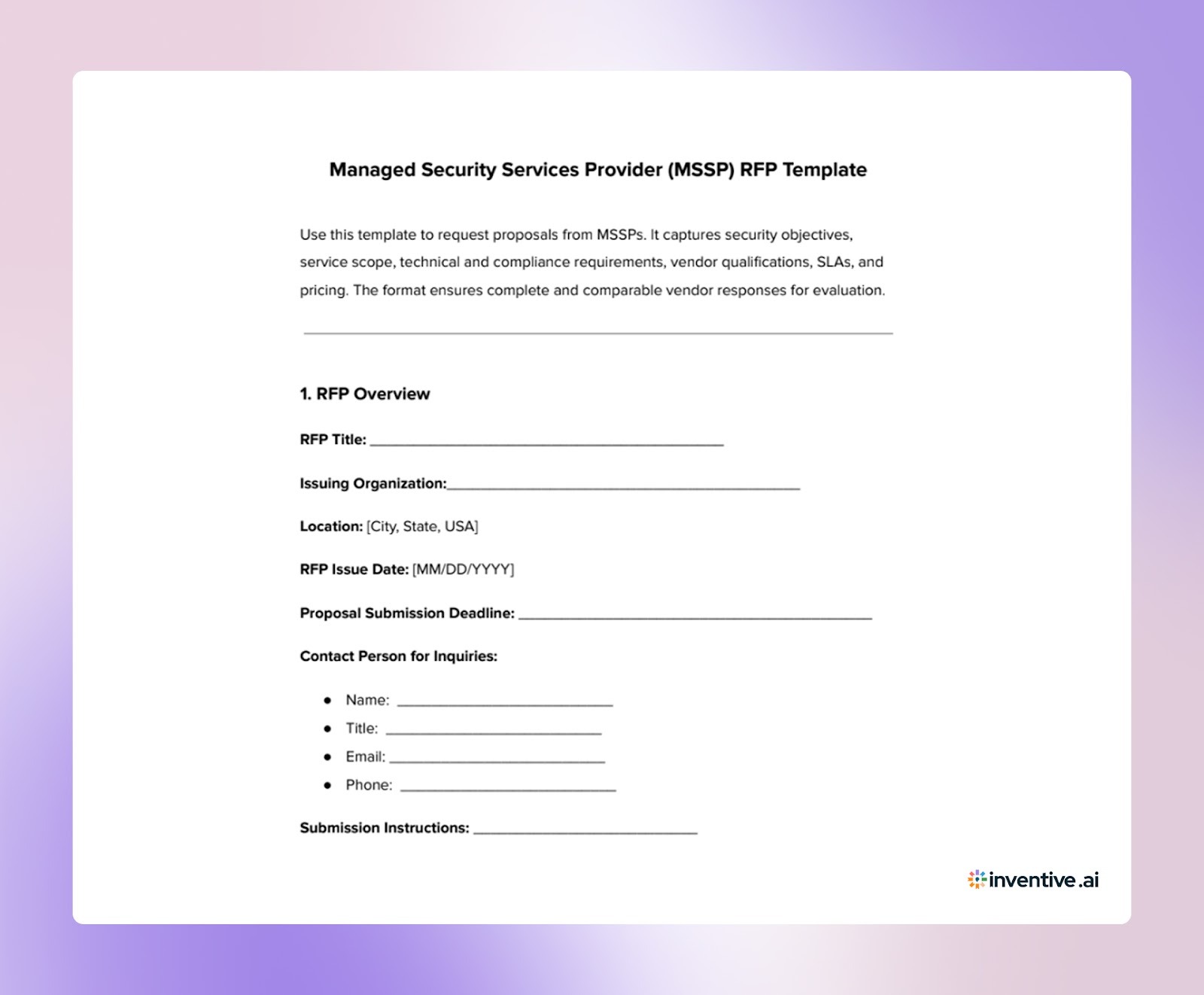
- RFP Overview: Defines the basic procurement details, including title, issuing organization, location, dates, and contact information. Ensures vendors know how and when to submit proposals.
- Organizational Background: Provides context about your company, industry, size, regulatory environment, and current security posture. Helps vendors tailor proposals to your environment and compliance requirements.
- Project Objectives: Outlines expected outcomes of the MSSP engagement, including improved threat detection, faster response, and support for regulatory compliance. Guides vendors on what success looks like.
- Scope of Services: Details the services you require, including 24/7 monitoring, incident response, integrations with SIEM/EDR/cloud tools, vulnerability management, and reporting. Defines the operational expectations for vendors.
- Technical, Operational & Compliance Requirements: Specifies the technical environment, integration needs, encryption and access controls, and required certifications (SOC 2, ISO 27001, or regulatory compliance). Ensures vendor solutions align with your security standards.
- Vendor Qualifications & Experience: Collects information on vendor background, security analyst capacity, service delivery locations, and relevant past engagements. Allows buyers to evaluate credibility and industry experience.
- Statement of Work (SOW): Defines deliverables, project milestones, and roles/responsibilities for both buyer and vendor. Provides clarity on scope execution and accountability.
- Service Level Agreements (SLAs): They specify expected performance metrics, such as incident detection, resolution times, reporting frequency, and uptime guarantees. Enables objective evaluation of vendor capabilities.
- Pricing & Cost Proposal: Requests a detailed cost breakdown, including onboarding, licensing, per-incident fees, optional services, and multi-year TCO. Ensures proposals can be compared on total cost and value.
- Evaluation Criteria: Lists how vendor responses will be scored across technical fit, SLAs, pricing, references, and compliance. Guides vendors on priorities and helps buyers score consistently.
- RFP Timeline: Specifies key dates for issuance, questions, responses, evaluations, and contract award. Ensures vendors understand deadlines and submission schedule.
- Terms, Conditions & Proposal Format: Covers confidentiality, IP rights, termination, and dispute resolution while guiding vendors on proposal structure, required documents, and authorized signatures. Ensures submissions are compliant and standardized.
Also Read: Best 8 Enterprise RFP Software in 2026 & How to Choose the Best
With the buyer’s requirements clearly defined, your goal is to make your proposal stand out. Let’s explore a response template that helps you showcase your strengths and clearly align your MSSP services with the buyer’s objectives.
MSSP RFP Response Template: Structure Your Winning Proposal (for Vendors)
The MSSP RFP Response template organizes proposals according to buyer evaluation criteria. It structures technical capabilities, service details, and pricing so evaluators can quickly see how your MSSP solution meets requirements.
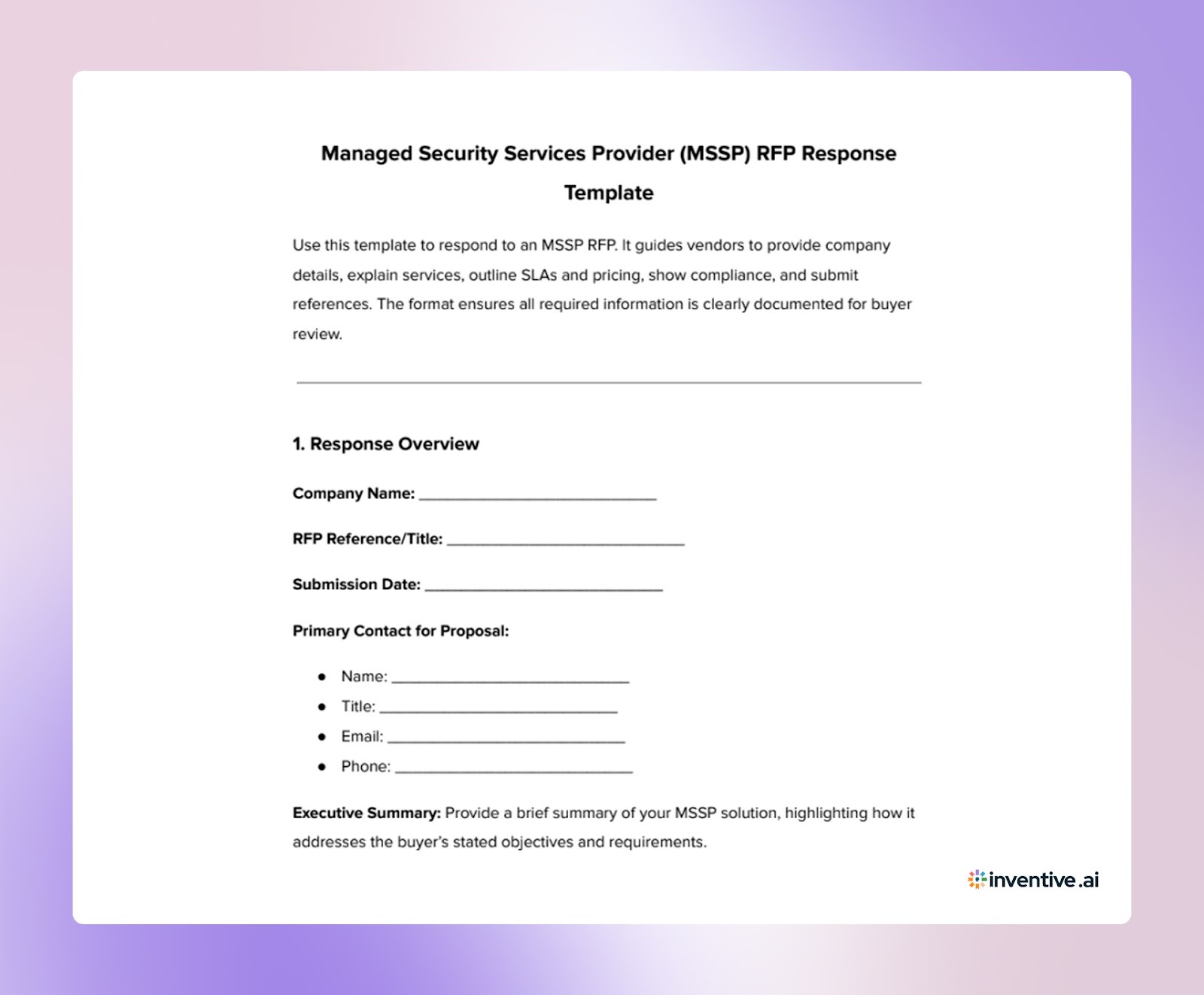
- Response Overview: Provide your company and contact details along with a concise executive summary. Highlight upfront how your MSSP solution addresses the buyer’s specific objectives.
- Company Profile & Vendor Qualifications: Share your organizational details, security analyst capacity, locations, and core offerings. Include past MSSP projects and certifications to demonstrate credibility and experience.
- Understanding of Buyer Requirements: Summarize your interpretation of the buyer’s needs and expected outcomes. Show how your services align with their defined objectives and KPIs.
- MSSP Solution Overview: Present your solution name, version, deployment model, and key capabilities. Explain how each capability addresses the buyer’s security and operational requirements.
- Technical Architecture & Integration: Describe your infrastructure, redundancy, and scalability. Detailed integration with existing security tools, APIs, connectors, and adherence to security controls.
- Statement of Work (SOW) & Deliverables: Define project deliverables, milestones, and responsibilities for both vendor and buyer. Provide clear timelines to illustrate how you will meet their expectations.
- Service Level Agreements (SLAs): Specify measurable performance metrics, including detection, response, and reporting times, as well as uptime guarantees. Include escalation paths and monitoring practices to assure reliability.
- Pricing Proposal: Provide a detailed cost breakdown that includes setup, licensing, per-incident fees, and optional services. Show multi-year TCO for transparent financial evaluation.
- References: List previous clients and MSSP projects with scope, contact information, and measurable outcomes. This validates your track record and industry experience.
- Supporting Documentation: Attach diagrams, compliance certificates, workflow examples, and case studies. These strengthen your submission and provide tangible evidence of capability.
- Assumptions & Clarifications: Document any assumptions, dependencies, or conditions affecting service delivery. Clarify scope and limitations to set accurate expectations.
- Signature: Provide the name, title, date, and signature of an authorized representative. Confirms accountability and official approval of your submission.
A structured proposal sets you up for success, but even strong submissions can falter. Let's explore the top errors vendors should watch for.
5 Common Pitfalls to Avoid When Responding to MSSP RFPs
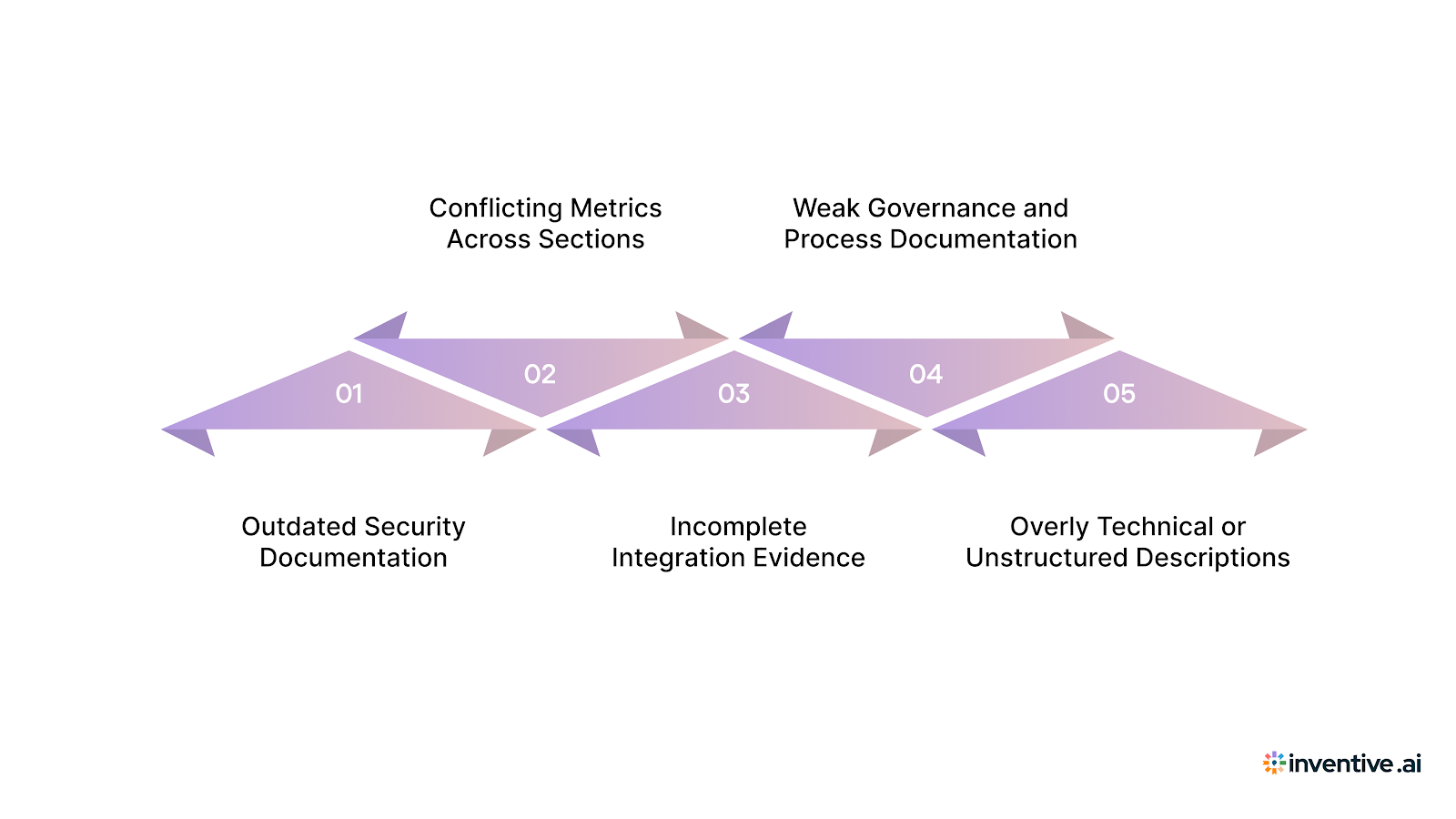
Responding to MSSP RFPs requires precise documentation of security services, integration, and operational metrics. Vendors who overlook common issues risk lowering their evaluation scores, even if their platform is strong.
Here are the most frequent mistakes vendors make and how to fix them:
1. Outdated Security Documentation
Including old monitoring workflows, obsolete incident response SOPs, or expired compliance certificates can make buyers doubt your operational readiness.
Fix: Update all threat-monitoring processes, incident-handling logs, and compliance evidence to reflect your current MSSP operations.
2. Conflicting Metrics Across Sections
Reporting different incident response times or SLA adherence in separate sections signals poor data accuracy and reduces trust.
Fix: Use a single source of operational metrics and ensure that all KPIs, SLAs, and monitoring data are consistent throughout your RFP response.
3. Incomplete Integration Evidence
Claiming your solution integrates with SIEMs or enterprise apps without diagrams or examples leaves evaluators skeptical.
Fix: Include architecture diagrams, API integration examples, and workflow orchestration evidence demonstrating how your MSSP services integrate seamlessly.
4. Weak Governance and Process Documentation
Omitting structured change control, approval workflows, or incident escalation procedures makes your operational maturity unclear.
Fix: Provide detailed governance frameworks, version control practices, and escalation workflows to demonstrate disciplined security operations.
5. Overly Technical or Unstructured Descriptions
Long, overly technical descriptions can obscure how your MSSP services achieve measurable outcomes, frustrating evaluators.
Fix: Use clear, structured language with concrete metrics, such as average incident resolution time, coverage percentage, and SLA compliance rates.
Also Read: 8 Best RFP Software for Small Teams in 2026
With rising MSSP RFP volumes, manually managing documentation, metrics, and integrations is challenging, highlighting the need for intelligent automation. Let’s see how Inventive AI helps vendors streamline responses and submit RFPs faster.
How Inventive AI Simplifies MSSP RFP Responses?
Manual responses to MSSP RFPs can be slow and error-prone, especially when security metrics and documentation are distributed across teams. Inventive AI centralizes this knowledge, uses AI drafting to generate structured responses, and flags outdated or conflicting content.
Key Capabilities of Inventive AI:
2x Higher Response Quality
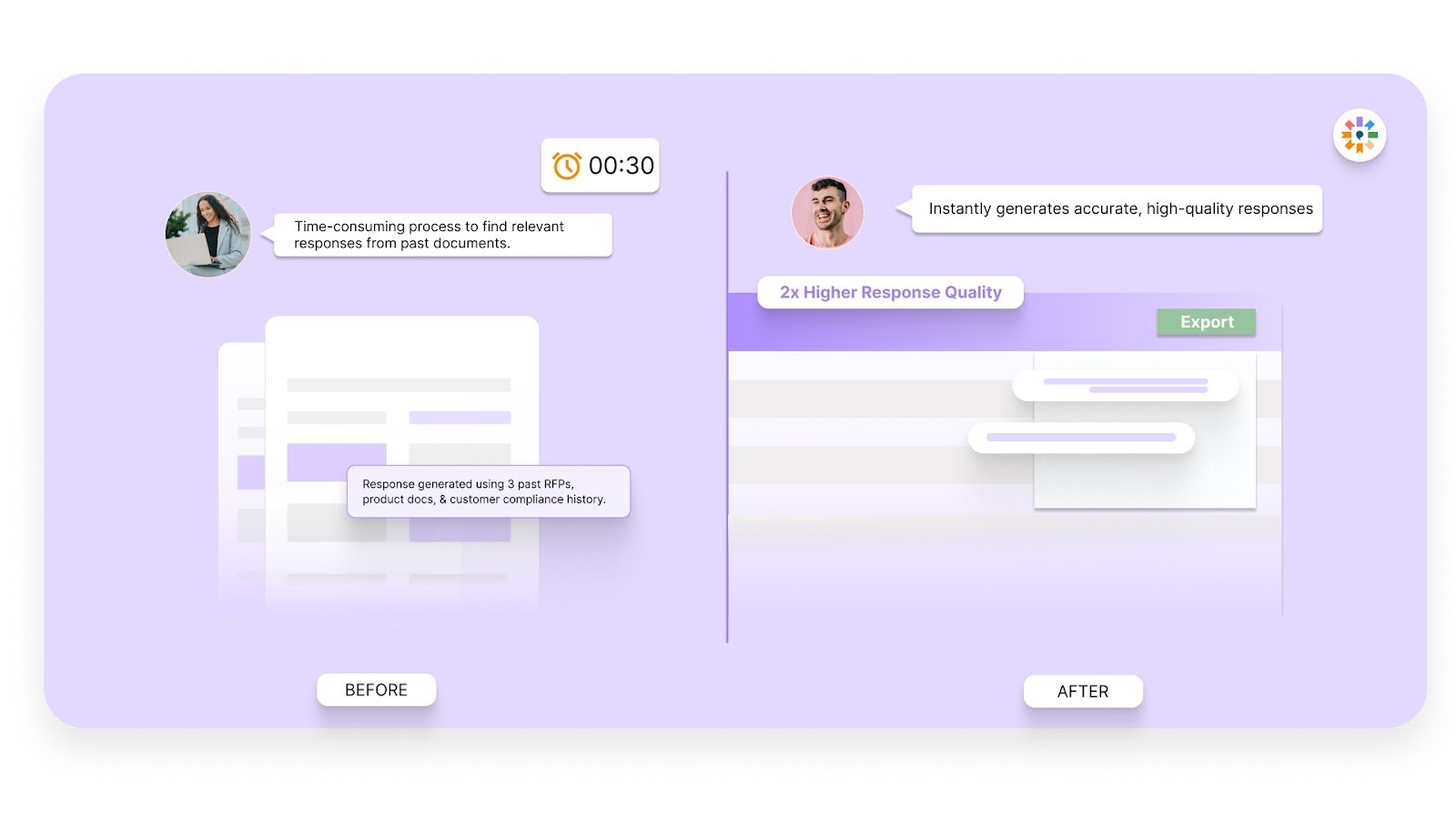
Inventive's multi-agent AI generates complete, structured responses that require minimal revision, ensuring consistency across security documentation and RFP sections. Vendors can finalize submissions up to 90% faster.
Context-Awareness
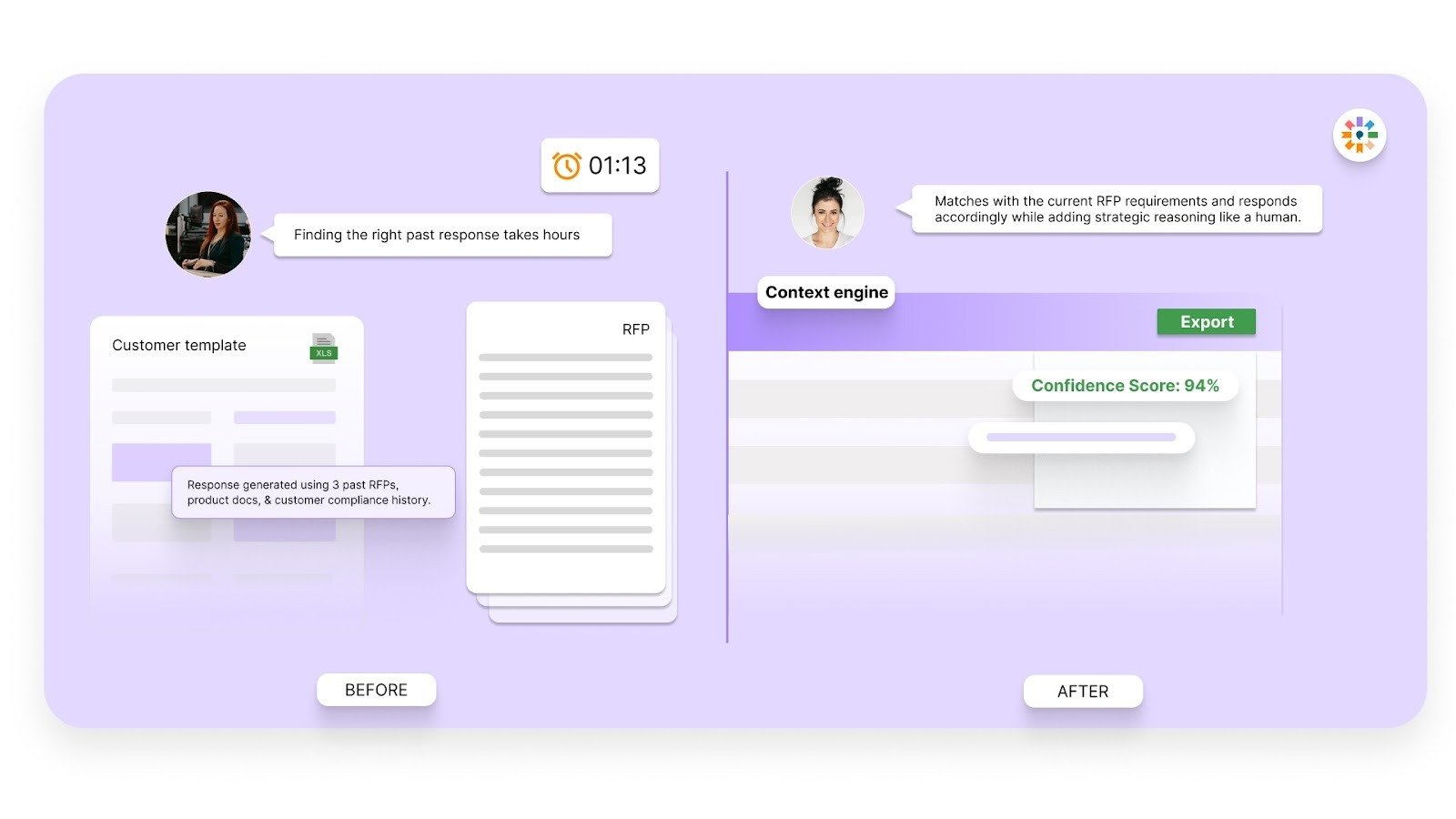
Inventive AI analyzes the full MSSP RFP, including scope, compliance requirements, and evaluation criteria. Responses align with project-specific security needs rather than static boilerplate, helping vendors achieve up to 50% higher win rates.
Instant Conflict Detection Before Submission
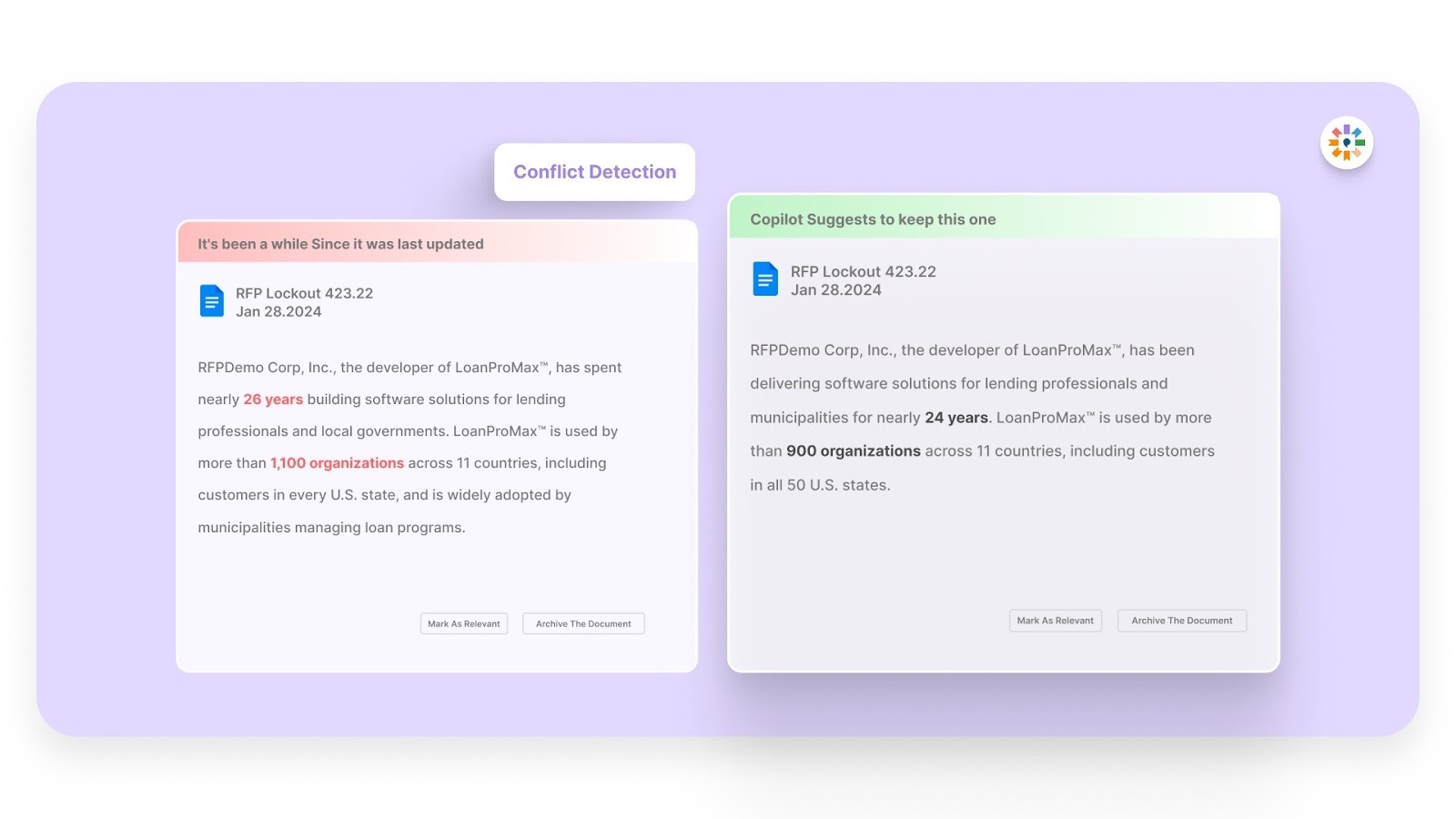
Identify and resolve inconsistencies in SLAs, incident response metrics, or integration details before submission to reduce errors and improve credibility with buyers.
Outdated Content Detection
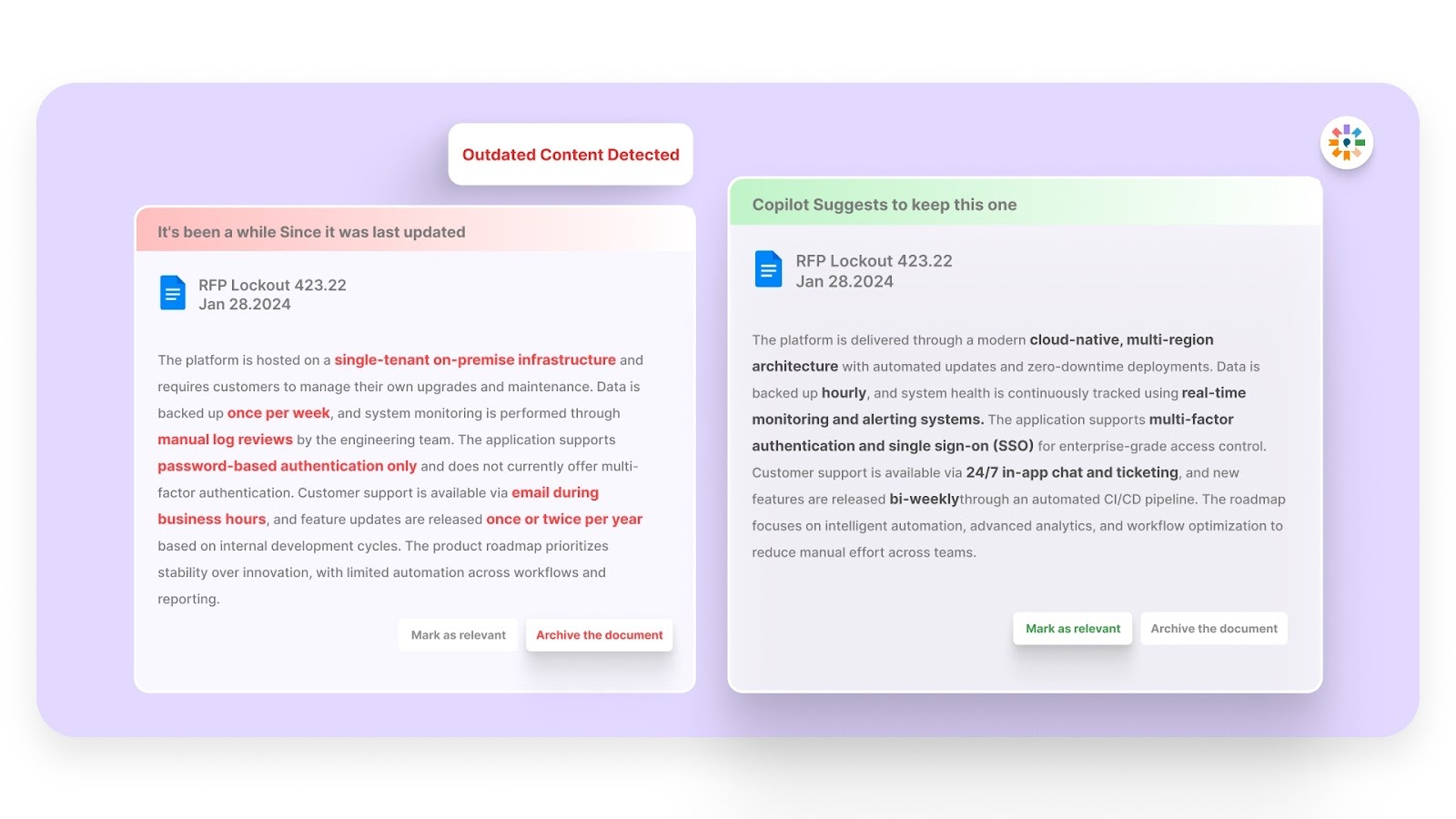
Automatically flags and updates obsolete threat reports, SOPs, and compliance documentation, ensuring all MSSP RFP responses are current and accurate.
Narrative-Style Proposals
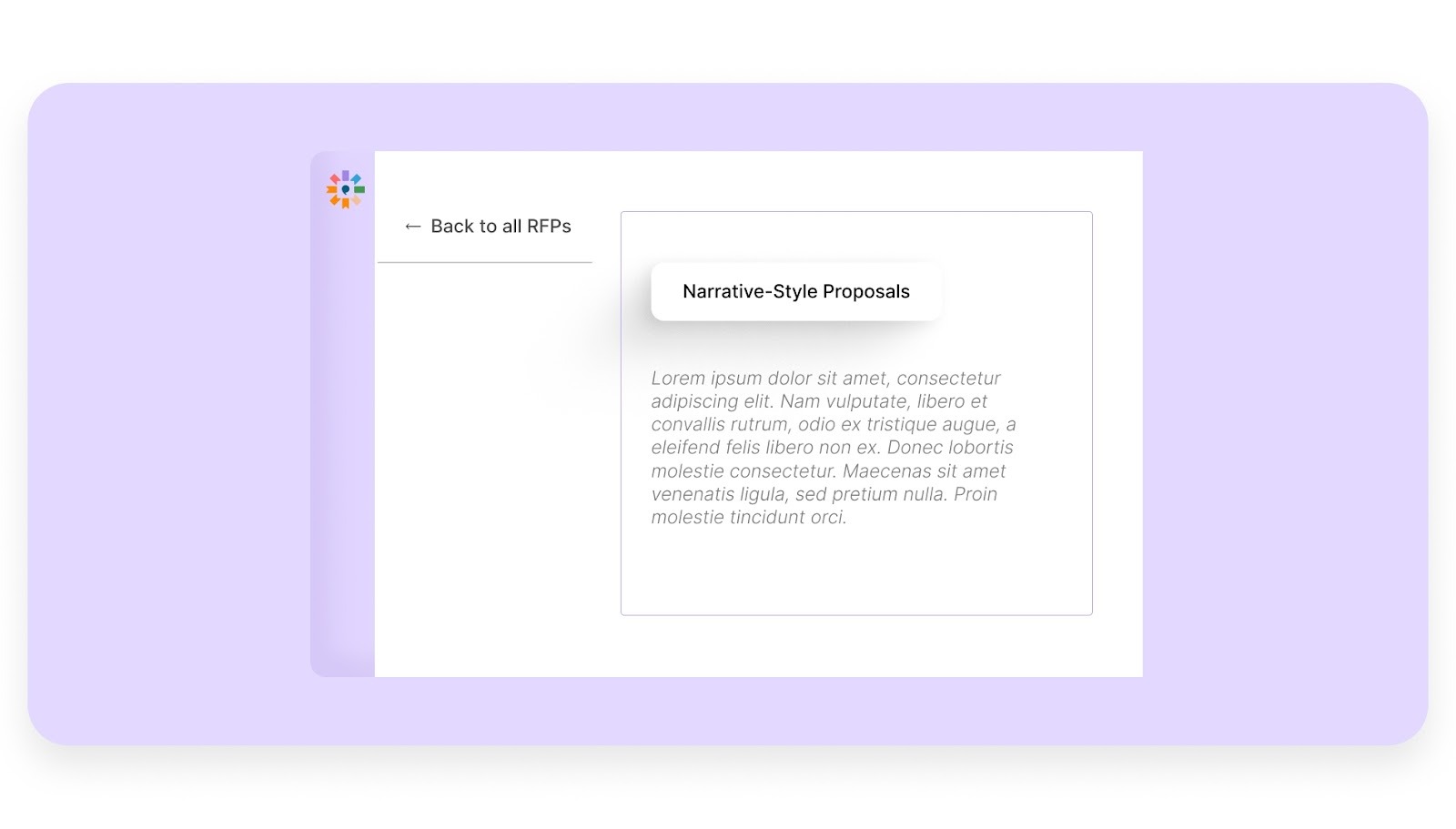
Transform fragmented answers into cohesive, professional proposals that clearly convey operational maturity, security coverage, and incident handling capabilities.
Simple, Easy-to-Use Interface
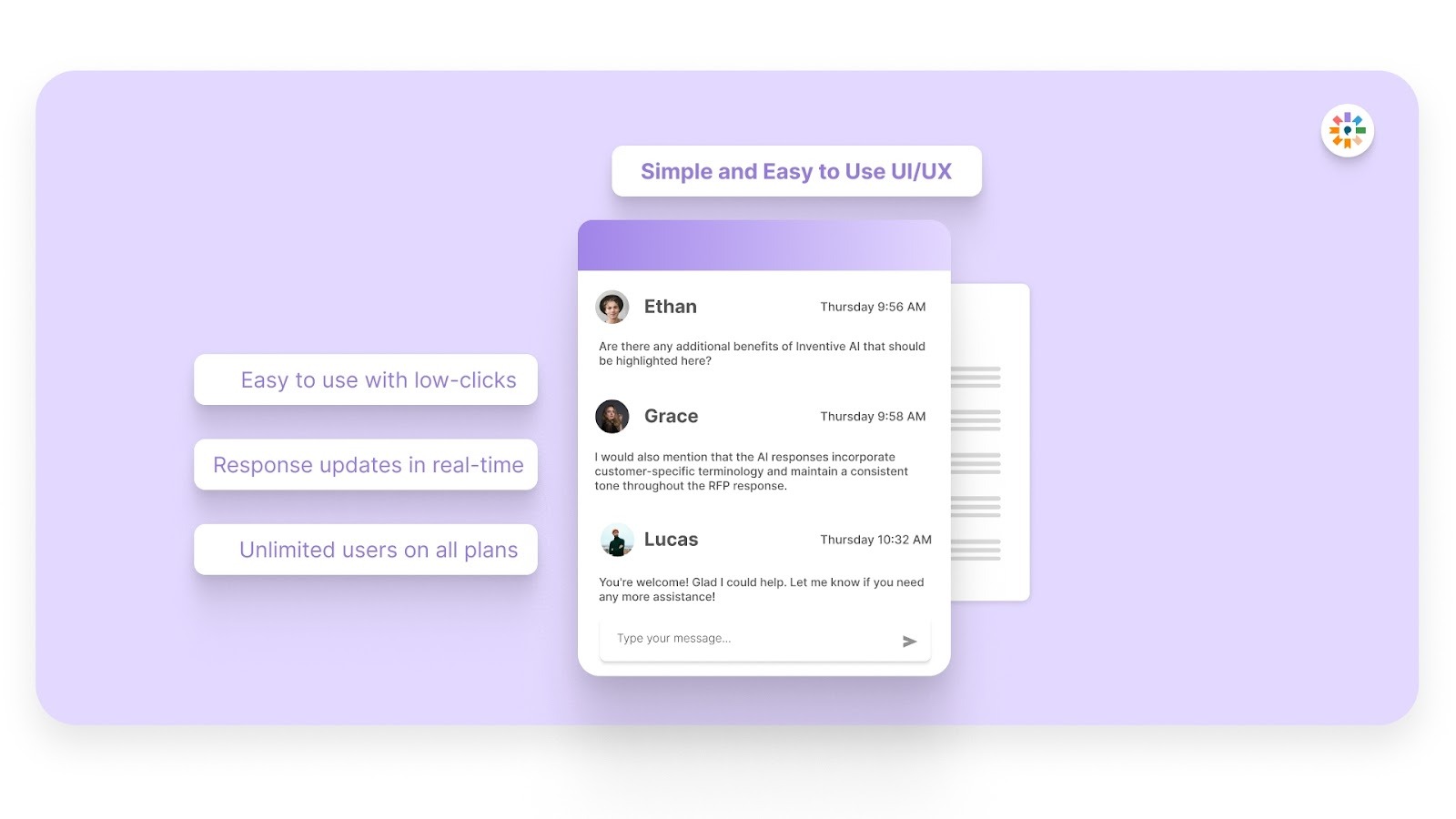
Inventive AI is designed for real proposal teams, not just technical users. Stakeholders across HR, sales, legal, and compliance can contribute without training overhead, reducing coordination friction and keeping responses moving forward.
FAQs
1. How can I highlight MSSP differentiators in my RFP response?
Emphasize measurable security outcomes, unique threat detection methods, proprietary automation tools, and compliance expertise. Include real metrics, case studies, and integration success stories to clearly distinguish your MSSP services from competitors.
2. Should I include optional MSSP services in the response?
Yes. Clearly separate optional services, such as advanced threat hunting, 24/7 SOC support, or AI-driven analytics. This helps buyers understand added value while keeping core requirements distinct, enhancing your proposal’s strategic positioning.
3. How detailed should the integration evidence be in the response?
Include diagrams, API workflows, and examples of successful SIEM, EDR, and cloud integration. Show how your services connect with existing infrastructure and streamline alerting, incident handling, and reporting to prove operational compatibility.
4. How do I demonstrate governance and operational maturity effectively?
Provide structured process frameworks, escalation paths, version control policies, and SLA adherence examples. Illustrate real-world application through past deployments to show disciplined security operations and low-risk service delivery.
5. What metrics impress buyers the most in MSSP RFPs?
Highlight measurable outcomes like average incident detection time, resolution speed, SLA compliance, coverage percentage, false positive reduction, and uptime guarantees. Use tables or charts to make these metrics immediately visible and verifiable.
.avif)



%2010%20Free%20Response%20Templates%20By%20Industry%20%26%20Service.jpg)