Conveyor vs SiftHub: Which RFP Tool Actually Delivers Better Results in 2026?
Choosing between Conveyor, SiftHub, and Inventive AI comes down to more than response speed. All three tools help teams move away from manual RFP work, but they take different approaches to draft quality, content management, and consistency. Understanding where they differ makes it easier to pick the right fit for your team.
This guide covers how each tool performs across the areas that matter most to proposal teams: response quality, consistency, content management, and time to adoption. The RFP automation AI market reached $1.48 billion in 2024 and is growing at a 22.1% CAGR, reflecting how widely teams are investing in proposal automation. Whether you're comparing AI-powered RFP response software options for the first time or ready to switch, the breakdown below covers what actually separates these tools.
What to Look for Beyond Speed in an RFP Tool
Most RFP tools lead with speed benchmarks. But draft velocity is just one part of the picture. Here are four capability areas worth comparing across Conveyor, SiftHub, and Inventive AI.
How Each Tool Understands RFP Context
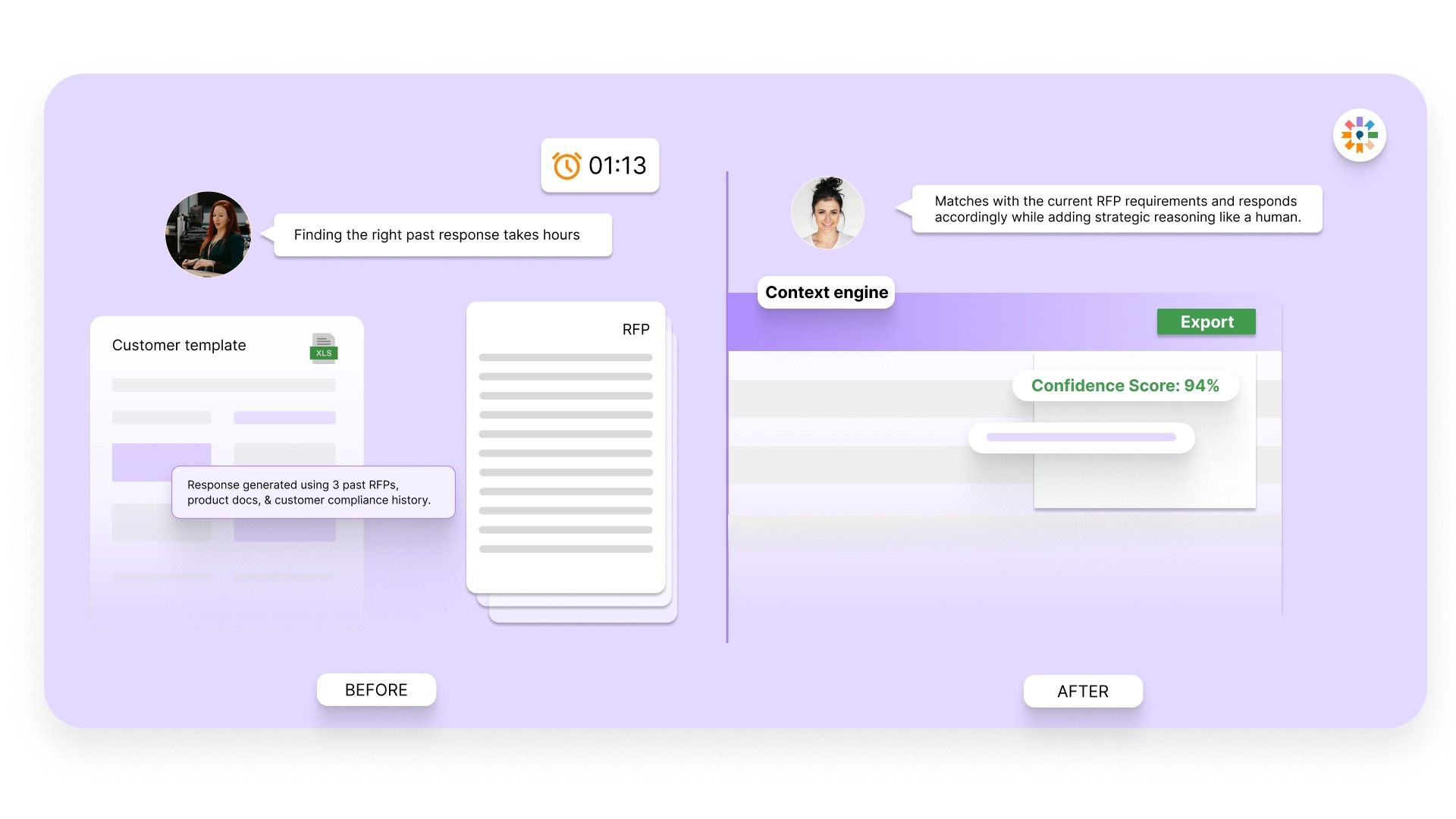
Conveyor generates responses by matching questions against its connected content library. This works well for teams with well-organized repositories and standard question types. SiftHub takes a similar approach, with added workflow tooling for structured questionnaires. It performs best when the content library is consistently maintained. Inventive AI uses multi-agent reasoning to interpret the intent behind each question rather than just matching keywords — a shift that V7Labs on AI RFP automation moving from keyword retrieval to semantic understanding. This produces deal-specific responses tailored to each opportunity, which can reduce editing time on complex or narrative-style RFPs.
Built-In Conflict Detection
Conveyor includes conflict detection to flag inconsistencies across a response before submission, helping teams catch issues in timelines, pricing, and product claims. SiftHub does not currently offer automated conflict detection. Teams typically rely on manual review to validate consistency across sections. Inventive AI also includes conflict detection, scanning responses for mismatches and flagging them before submission.
Content Freshness and Stale Content Management
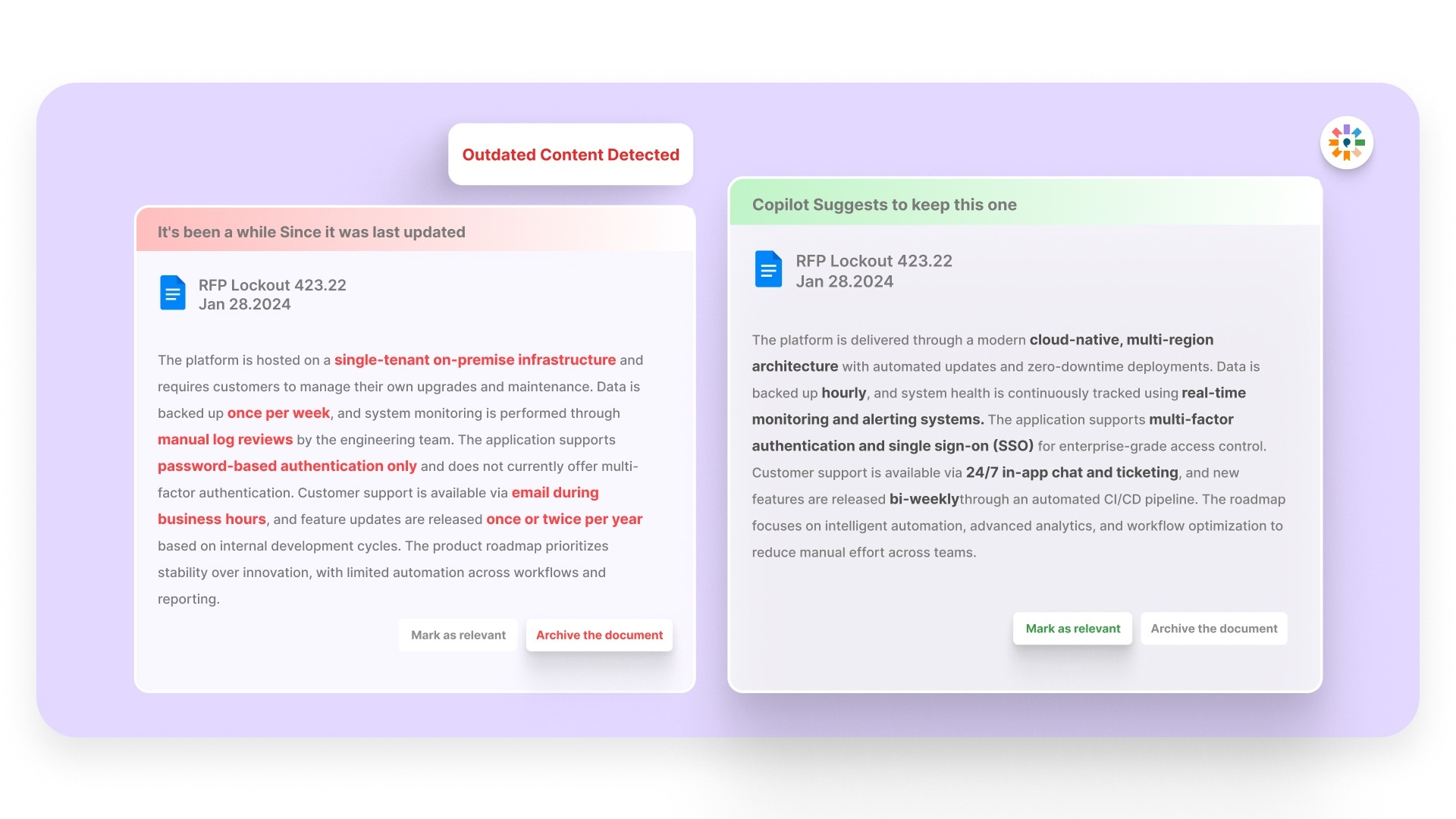
Conveyor offers advanced stale content management, making it easier to identify and refresh outdated responses in its library. SiftHub does not include automated content freshness detection. Keeping the content library current relies on regular manual reviews. Inventive AI proactively flags outdated or low-confidence content within responses, pointing your team to areas that may need updating before submission.
Ease of Use and Onboarding Time
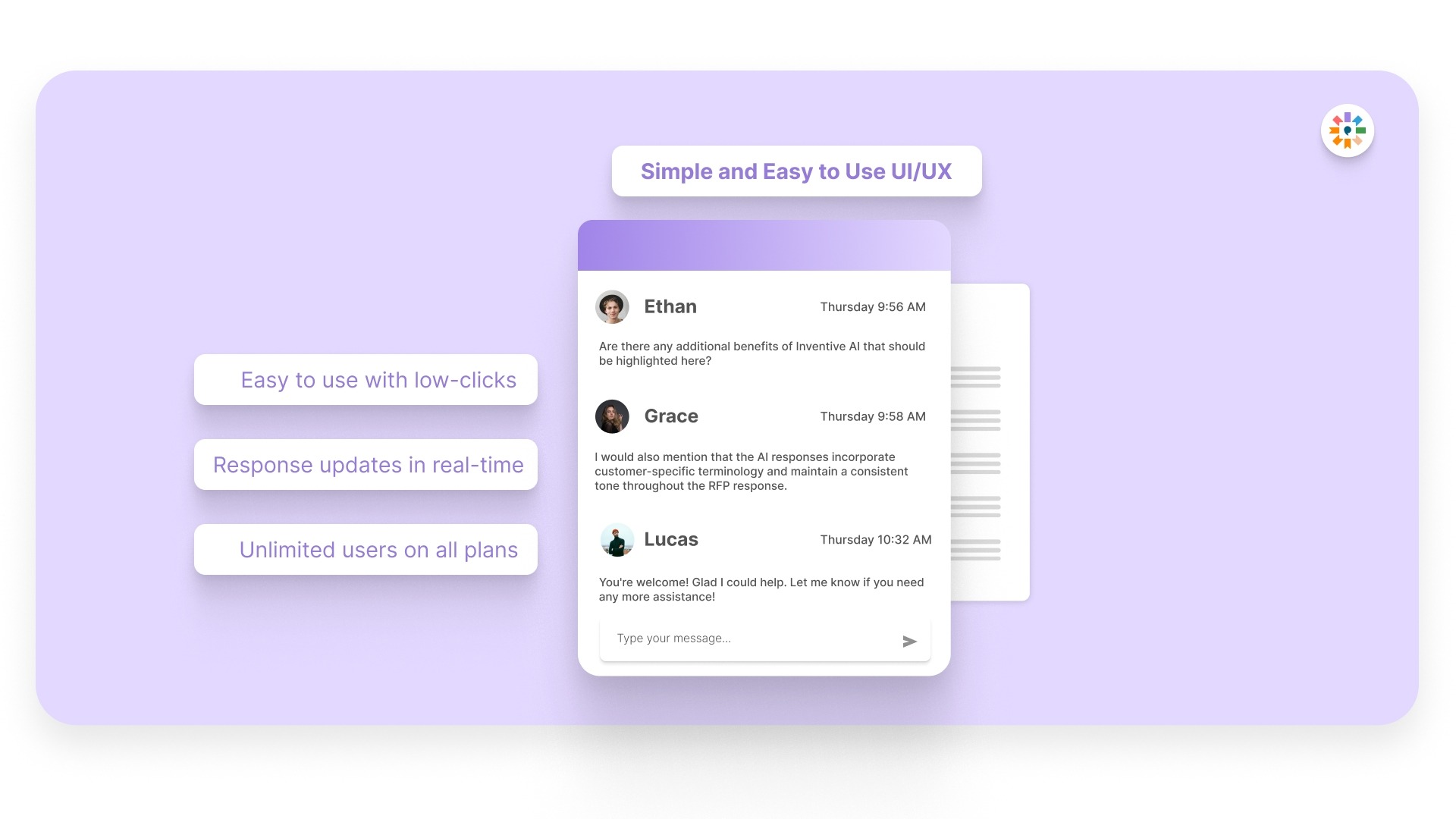
All three tools are designed to be approachable for proposal, sales, and solutions teams. Where they differ is initial setup time. Conveyor typically requires a few days to configure fully. SiftHub onboarding usually takes less than a week. Inventive AI is designed for a faster start, often within hours. Your team's existing content organization and tech stack will affect how quickly any of these tools delivers value.
Each of these capability areas affects how much time your team spends after the first draft — and how confident you feel at submission.
Conveyor vs SiftHub Feature Comparison: Where Inventive AI Leads Across Critical RFP Capabilities
| Feature | Conveyor | SiftHub | Inventive AI |
|---|---|---|---|
| Multi-Agent Reasoning (Deep Context) | ❌ | ❌ | ✅ |
| Collaboration Support | ✅ | ✅ | ✅ |
| AI-assisted Content Manager | ✅ | ✅ | ✅ |
| Strategic AI Agents | ✅ | ❌ | ✅ |
| Narrative Style RFP & Excel Questionnaire | ❌ | ✅ | ✅ |
| Advanced Stale Content Management | ✅ | ❌ | ✅ |
| Built-in Conflict Detection | ✅ | ❌ | ✅ |
| CRM Integration | ✅ | ✅ | ✅ |
| Centralized Knowledge Hub | ✅ | ✅ | ✅ |
| Easy to Use | ✅ | ✅ | ✅ |
Most tools support drafting. Inventive AI supports complete, submission-ready responses.
Want to see the difference firsthand? Book a demo with Inventive AI and run a real RFP from your pipeline.
Conveyor vs SiftHub vs Inventive AI: Which Tool Actually Improves Efficiency and Results
| Metric | Conveyor | SiftHub | Inventive AI |
|---|---|---|---|
| Setup & Time to Value | Days | Less than a week | Hours |
| Learning Curve | Steep | Moderate | Easy |
| Average RFP Speed Improvement | 90% faster responses | Up to 10x faster responses | 90% faster drafts |
| Automation Features | AI Drafting | Workflow automation + drafting | Full AI automation with strategic agents |
Here is what Inventive AI users report about their experience. For Conveyor and SiftHub reviews, G2 and Capterra both carry current user feedback for all three tools.

Not sure which tool fits your team? The sections below break down how Conveyor, SiftHub, and Inventive AI compare on what matters most: setup time, response quality, content management, and integrations.
Conveyor vs SiftHub: The Real Test of an RFP Tool Starts After the First Draft
When you look beyond drafting, the real differences between Conveyor, SiftHub, and Inventive AI become clear.
AI Response Quality
Conveyor
It generates responses by pulling from connected content libraries, which helps your team move quickly during the initial drafting stage. This works well for standard questions and repeat use cases. However, the responses are largely dependent on the structure and quality of the stored content.
SiftHub
It performs effectively when your content library is well-structured and consistently maintained. But the output quality still depends on how well the underlying content is organized. Teams typically review and adjust responses to ensure consistency in tone, accuracy, and alignment across sections.
Inventive AI

Inventive AI focuses on improving the quality of the first draft itself. Instead of relying only on stored answers, it uses multi-agent reasoning to understand the full RFP context and the intent behind each question. This results in responses that are more precise, relevant, and aligned with buyer expectations from the start. With 95% accuracy and significantly fewer edits required, your team spends less time fixing drafts and more time moving proposals forward.
Consistent Responses Without Manual Cross-Checking
Conveyor
It supports response generation and includes automation across workflows. However, maintaining consistency across sections still requires careful review. Teams often cross-check key details such as timelines, pricing, and product claims to ensure alignment throughout the proposal.
SiftHub
It helps organize responses efficiently, particularly in structured workflows where multiple contributors are involved. While this improves coordination, consistency across sections still depends on internal review processes. Teams typically validate responses manually to ensure there are no mismatches or conflicting information.
Inventive AI
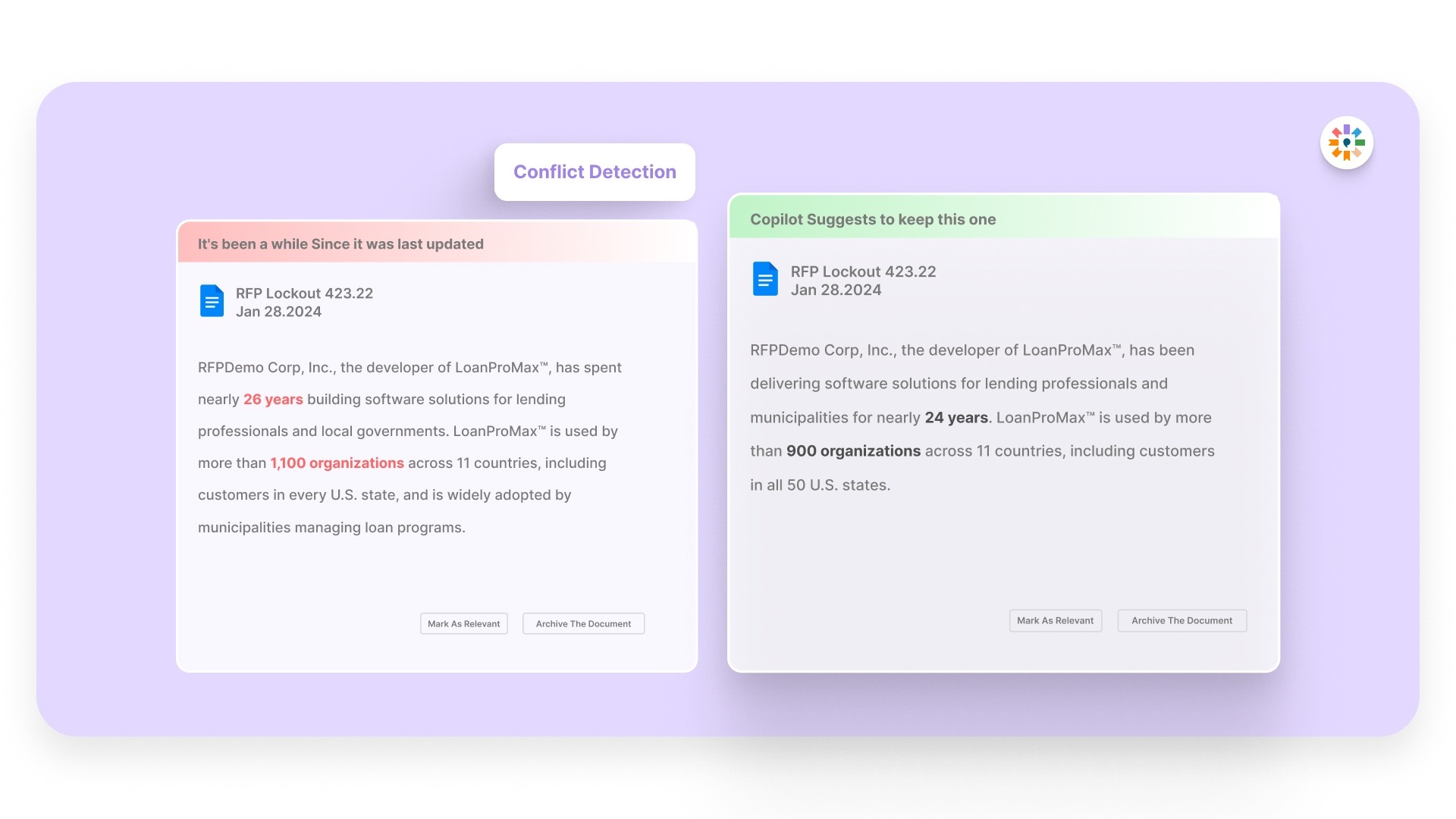
Inventive AI introduces an automated layer of quality control by detecting inconsistencies across the entire response before submission. It flags conflicts early, allowing your team to resolve them quickly without relying heavily on manual checks. This improves consistency and reduces the time spent on final-stage reviews.
Keeping Content Current Without Manual Effort
Conveyor
It enables efficient content reuse through its centralized repository. As your content library grows, keeping it updated becomes an ongoing responsibility. Teams need to regularly review and refresh stored responses to ensure they reflect the latest product information and messaging.
SiftHub
It also provides centralized content management, making it easier to access and reuse responses. Maintaining content quality, however, depends on how consistently the library is reviewed and updated. Many teams rely on structured internal processes to identify and replace outdated content.
Inventive AI
Inventive AI reduces this effort by automatically identifying outdated or low-confidence content within responses. It highlights areas that may require updates, helping your team maintain accuracy without constant manual audits. This ensures that proposals consistently reflect current information while saving time on content maintenance.
Structured Responses vs Cohesive Proposals
Conveyor
It is effective for template-driven responses and structured workflows. It helps teams generate answers quickly, especially in standardized formats. For longer proposals, however, teams may need to spend additional time improving transitions and ensuring the document flows consistently from one section to another.
SiftHub
It performs well in structured environments such as questionnaires and spreadsheets. It simplifies response creation for repeat formats. For narrative-style proposals, teams may still need to refine tone and structure to create a cohesive and polished final document.
Inventive AI
Inventive AI supports both structured responses and narrative-style proposals. It maintains consistency in tone, flow, and logic across sections, helping your proposals read as a unified document. This reduces the need for post-editing and improves how your response is perceived by the buyer.
Managing Content as Your Library Grows
Conveyor
It offers a centralized content repository that supports reuse across proposals. As the library expands, managing relevance and accuracy becomes more important. Teams often spend time searching, validating, and updating content to confirm the right responses are being used.
SiftHub
It provides a centralized knowledge base that improves accessibility and speeds up retrieval. However, maintaining consistency and accuracy across a growing content library still depends on regular updates and internal governance processes.
Inventive AI

Inventive AI combines centralized storage with context-aware retrieval and built-in quality checks. It automatically surfaces the most relevant and up-to-date content, reducing the need for manual validation. This makes the knowledge hub more reliable as it scales, helping your team work more efficiently.
Integrations That Improve More Than Visibility
Conveyor
It integrates with key tools to support collaboration and data access across teams. These integrations help simplify workflows and improve coordination during the response process. However, the impact is largely access-focused, concentrating on data availability instead of enhancing response quality directly.
SiftHub
It integrates with CRM systems and other tools to provide visibility into deal context. This helps teams stay aligned and improves coordination, mostly in simple response workflows. The integration primarily supports organization and access to information.
Inventive AI

Inventive AI goes a step further by actively using integrated data to improve responses. Its AI agents use CRM and system data to refine and personalize answers, so proposals stay aligned with the specific deal context and buyer requirements. This makes integrations a core part of the response workflow; they directly improve the quality of your submissions.
Conveyor and SiftHub help teams move away from manual RFP work. Inventive AI takes it further by improving response quality, building consistency, and helping you submit proposals that are ready to win.
Conveyor vs SiftHub vs Inventive AI: Pros and Cons
Conveyor
Pros:
- Strong fit for security questionnaire and DDQ workflows
- Built-in conflict detection catches inconsistencies before submission
- Advanced stale content management keeps the library accurate
- CRM integration supports deal visibility across teams
Cons:
- Setup typically takes a few days with a steeper learning curve
- Responses depend heavily on the quality of stored content
- Less effective for narrative-style or complex RFPs
SiftHub
Pros:
- Handles both structured questionnaires and Excel-based formats well
- Designed for full deal cycle workflows, going beyond security questionnaires
- Moderate learning curve makes adoption manageable for most teams
- CRM integration supports team alignment across contributors
Cons:
- No built-in conflict detection
- No automated stale content management
- Content quality depends on consistent manual upkeep
Inventive AI
Pros:
- Multi-agent reasoning produces deal-specific, context-aware responses
- Fastest time to value, often within hours
- Built-in conflict detection and automated content freshness flagging
- Supports both structured questionnaires and narrative-style RFPs
- Strategic agents for competitive intelligence and go/no-go decisions
Cons:
- Newer tool with a shorter track record than longer-tenured options
- Best results require connecting existing knowledge sources upfront
- May be more capability than smaller teams with simple, repeat-format RFPs need
Ready to move past manual RFP work? See how Inventive AI works — connect your knowledge sources and get your first draft in hours.
Decision Guide: Which Tool Fits Your Team?
| Your Situation | Best Fit |
|---|---|
| Primary workload is security questionnaires and DDQs | Conveyor |
| Need structured workflow tooling across a full deal cycle | SiftHub |
| Respond to complex, narrative-style RFPs with high stakes | Inventive AI |
| Content library is well-organized and rarely changes | Conveyor or SiftHub |
| Want the fastest setup with minimal configuration | Inventive AI |
| Sales Engineer handling technical security questionnaires | Conveyor |
| Proposal Manager coordinating multiple contributors on structured formats | SiftHub |
| VP of Sales focused on win rate and response quality on complex deals | Inventive AI |
| Need competitive intelligence baked into the response workflow | Inventive AI |
Not sure if Inventive AI is the right fit for your team? Schedule a quick demo — bring a real RFP and see how it handles your use case.
FAQ
Conveyor vs SiftHub vs Inventive AI: which tool is best for complex, narrative-style RFPs?
Inventive AI is the strongest fit for narrative-style RFPs because its multi-agent reasoning interprets the intent behind each question, producing deal-specific responses instead of recycled library answers. Conveyor and SiftHub both perform well in structured, template-driven formats, but neither offers the same depth of context-aware drafting for long-form proposals. If your team handles high-stakes RFPs where tone, flow, and buyer alignment matter, Inventive AI reduces post-draft editing the most.
Should I pick Conveyor or SiftHub if my primary workload is security questionnaires and DDQs?
Conveyor is the better pick for security questionnaire and DDQ-heavy workflows, given its built-in conflict detection and advanced stale content management, two features SiftHub lacks entirely. SiftHub works better when you're coordinating multiple contributors across a full deal cycle with structured questionnaire formats. If automated content governance matters to your team, Conveyor has the edge over SiftHub in that specific use case.
How does Inventive AI handle stale content compared to Conveyor and SiftHub?
Inventive AI automatically flags outdated or low-confidence content within responses so your team knows what needs updating before submission, without running manual audits. Conveyor offers advanced stale content management through its library, but teams still own the refresh process. SiftHub has no automated stale content detection, so keeping its library current depends entirely on regular manual reviews from your team.
What is multi-agent reasoning in RFP tools, and why does it matter for proposal quality?
Multi-agent reasoning means the AI uses several specialized agents working together to understand the full context of an RFP, instead of simply matching keywords to stored answers. In practice, this produces responses that align with the buyer's specific priorities and deal context from the first draft, which cuts the editing cycle for Proposal Managers and Sales Engineers. Conveyor and SiftHub use content library retrieval, so draft quality is tied directly to how well that library is organized and maintained.
How long does it take to get started with Inventive AI compared to Conveyor and SiftHub?
Inventive AI is designed to deliver value within hours of setup, while Conveyor typically takes a few days and SiftHub usually under a week. The speed difference comes from Inventive AI connecting to knowledge sources your team already uses (SharePoint, Google Drive, Salesforce, Confluence) without requiring you to build and populate a new content repository from scratch. Your existing content organization still affects how quickly any of these tools performs well, but Inventive AI's setup barrier is the lowest of the three.
The Final Verdict: Which Tool Is Right for Your Team?
All three tools move teams away from manual RFP work. The right choice depends on your workflow, the types of RFPs you handle, and how much post-draft editing your team can absorb.
Choose Conveyor if your primary workload is security questionnaires and DDQs, your content library is well-organized and consistently maintained, and you need built-in conflict detection and stale content governance.
Choose SiftHub if you manage a broad deal cycle with structured questionnaire formats, value workflow collaboration across multiple contributors, and need a tool your team can adopt without a steep learning curve.
Choose Inventive AI if you handle complex, narrative-style RFPs where response quality and consistency are the deciding factor, you want the fastest setup, or your team needs strategic agents for competitive analysis and go/no-go decisions baked into the response workflow.
Speed matters. So does what happens after the first draft. Test how each tool handles a real RFP from your pipeline before committing.
Ready to see how Inventive AI handles your next RFP? Request a Demo
Not ready for a call yet? Visit Inventive AI and see how proposal teams are cutting RFP turnaround time, improving win rates, and spending less time fixing drafts.

.avif)