Trust Center vs. Security Questionnaire: Which Is More Efficient
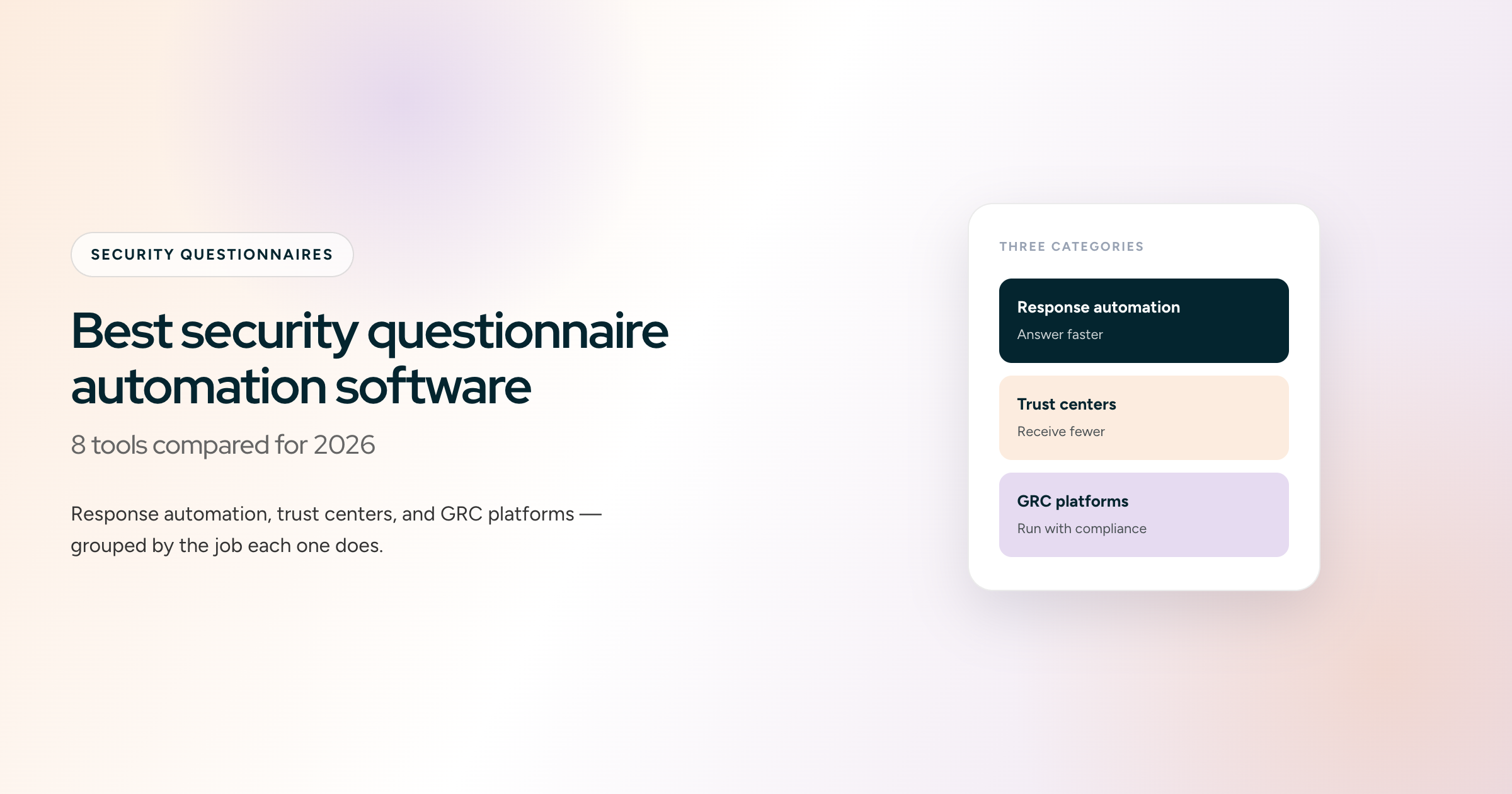
A trust center and security questionnaire response solve security reviews differently. Here's which is more efficient, where each wins, and why the best process uses both.
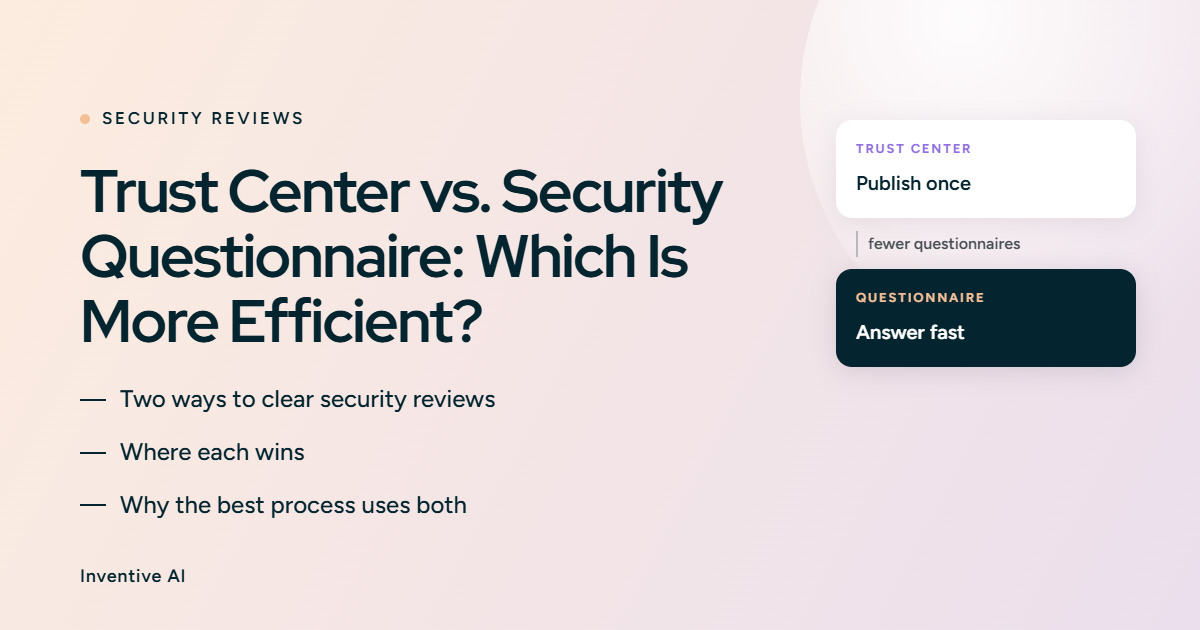
Before an enterprise buyer signs, their security team reviews how you handle data, and that review now shapes the deal. Gartner projects that by 2025, 60% of organizations will use cybersecurity risk as a primary factor in choosing who they buy from. How fast you clear security reviews affects how fast you close.
You can handle these reviews two ways. A trust center publishes your security information once, so buyers read it themselves. A security questionnaire response answers the questions each buyer sends. Teams treat this as either/or.
In reality, they are not either/or. Each is efficient at a different part of the review, and the best process uses both. This guide covers what each does well, the risk of running them out of sync, and how to make security reviews move faster without adding headcount.
TL;DR
- A trust center is proactive. You publish certifications, policies, and controls once, and buyers review them before sending a questionnaire. It is most efficient at the repetitive, standard questions every buyer asks.
- Security questionnaire response is reactive. You answer the questions a buyer sends. It is most efficient for the deal-specific questions a trust center can't pre-answer.
- A trust center and questionnaire response do different jobs, so you need both. A trust center deflects the repeatable majority of questions; questionnaire response handles the custom remainder that still comes through.
- The main risk of using both is conflicting answers. When your trust center and your questionnaire answers disagree, the review slows while someone works out which is right. One source of truth prevents it.
- The efficient setup runs both from the same facts: a trust center for standard evidence, and fast, cited questionnaire responses for everything deal-specific.
What is a trust center?
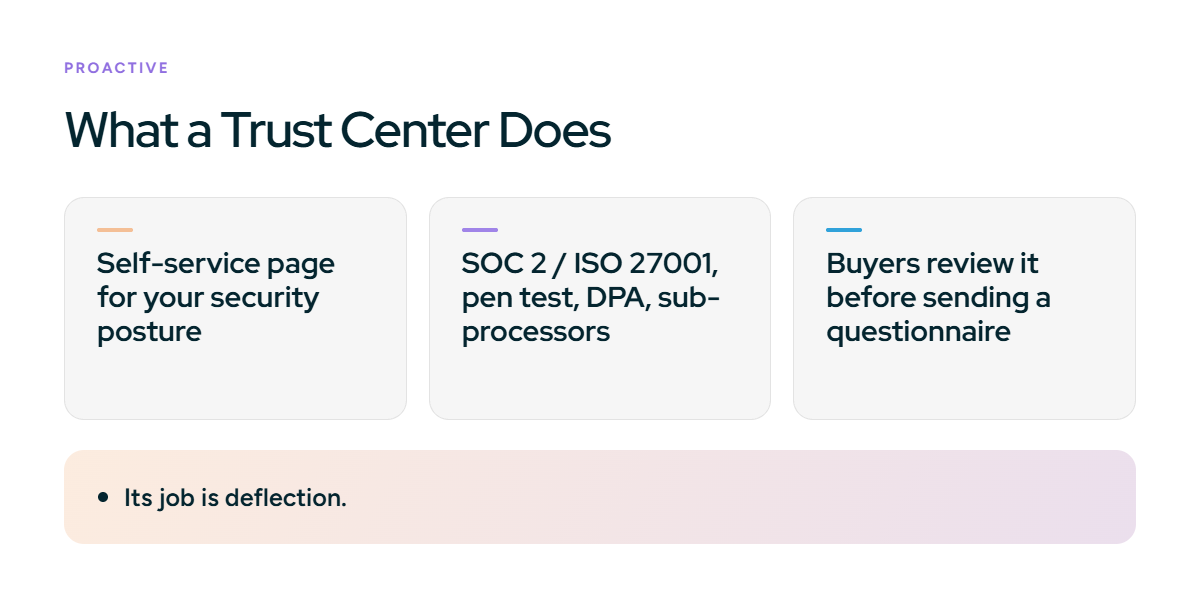
A trust center is a self-service page where you publish your security posture: your SOC 2 or ISO 27001 status, penetration test summary, data processing agreement, sub-processor list, and answers to the security questions buyers ask most. Buyers review it before, or instead of, sending a full questionnaire.
Its job is to answer repeat questions once. Most buyer questionnaires, from SIG Lite to CAIQ to a bank's own template, overlap heavily on the same core topics: certifications, encryption, access control, data residency, sub-processors, and incident response. A trust center answers those once, so a buyer can clear the standard part of their review without your team touching it.
What is a security questionnaire?

A security questionnaire is a set of questions a buyer sends to assess your security before they buy. It arrives as a spreadsheet, a document, or a form inside the buyer's portal, and your security or GRC team answers it per deal.
Its strength is handling buyer-specific questions. A questionnaire captures what a buyer needs for their exact risk profile: a right-to-audit clause, their sector's compliance framework, or a data-flow requirement unique to their deployment. That is the part of a review a standing page cannot pre-answer, because it is different for every buyer.
Trust center vs. security questionnaire: the core difference
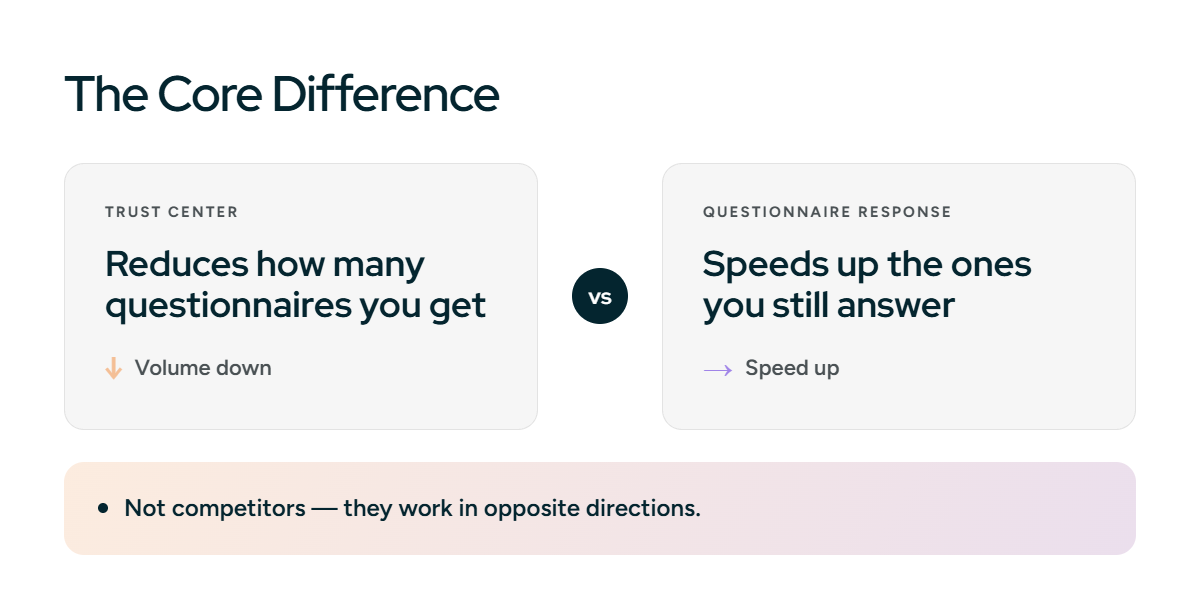
The two work in opposite directions. A trust center reduces how many questionnaires you get. Questionnaire response speeds up the ones you still have to answer.
They solve different problems, not the same one. A trust center means fewer questions reach your team. Questionnaire response means the questions that do reach you get answered faster.
Which is more efficient?
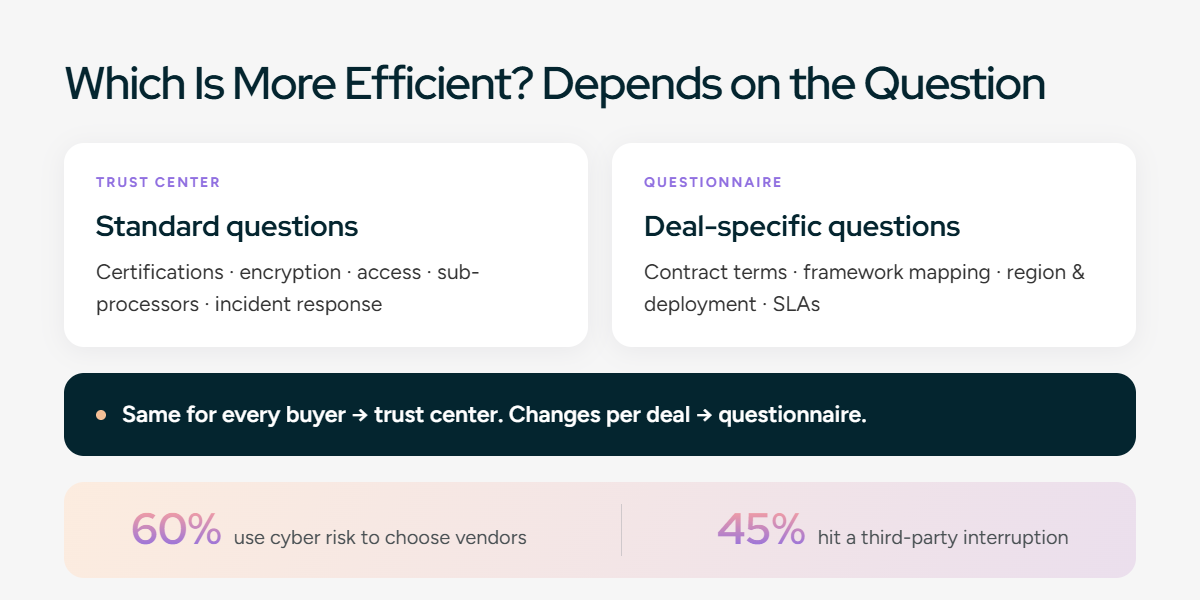
Efficiency depends on the question type, so the honest answer is that each approach wins on a different set of questions. Sorting your questions into standard and deal-specific helps you choose the right tool for each.
A trust center is more efficient for standard questions.
As third-party risk grows, buyers assess more vendors and assess them more deeply. Gartner found that 45% of organizations experienced a third-party-related business interruption over two years, which is why security reviews keep getting longer and more frequent. The questions driving that volume are mostly standard, and they rarely change between buyers:
- Which certifications you hold (SOC 2 Type II, ISO 27001) and when they were last renewed
- How you encrypt data at rest and in transit
- Your access control and authentication model
- Your sub-processors and where data is hosted
- Your incident response and breach notification process
- Your standard data retention and deletion policy
Answering those once and publishing them beats answering them fifty times. This is where a trust center saves the most time: it removes repeat work before it reaches your team, and lets buyers start their review the moment they're interested.
Questionnaire responses are more efficient for deal-specific questions.
These change with every buyer, so a public page can't pre-answer them:
- Custom contractual terms, such as liability caps, indemnification, or a right-to-audit clause
- Mapping your controls to the buyer's framework, such as HIPAA, FedRAMP, or DORA
- Data-handling requirements tied to the buyer's deployment or region
- Their own SLA and uptime commitments written into the contract
Expanding a trust center to cover these does not help, because each applies to one buyer. The efficient move is to answer them quickly and accurately when they arrive, not to keep growing a page toward questions no one else will ask.
The decision rule is simple: if the answer is the same for every buyer, it belongs in the trust center; if it changes per deal, it belongs in your questionnaire response workflow. Optimize only one side and the other becomes the bottleneck. A polished trust center still leaves your team hand-answering custom questions; fast questionnaire response alone still means fielding standard questions you could have deflected.
Why you need both a trust center and security questionnaires
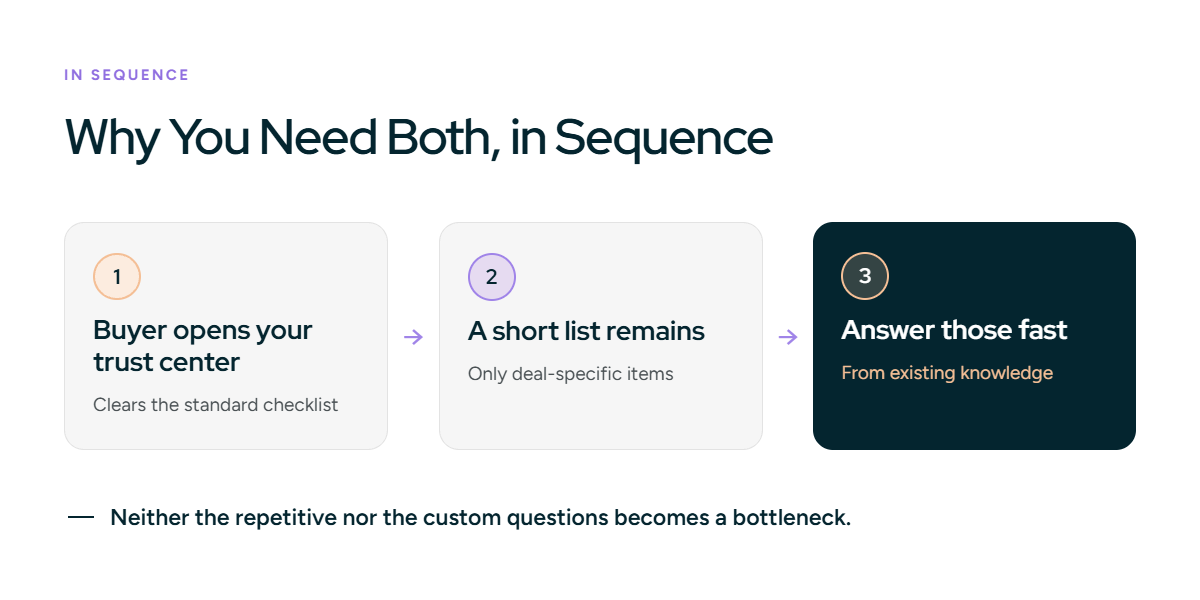
The most efficient security review process is not a trust center or questionnaire response. It is both, in sequence.
Picture a mid-market SaaS deal. The buyer's security team opens your trust center, downloads your SOC 2 report and pen test summary, and confirms your encryption and sub-processor details. That clears most of their standard checklist without a single email to you. What is left is a short list of deal-specific items: their DPA redlines, a FedRAMP control mapping, and one question about data residency in their region. Those come to your team as a questionnaire, and you answer them from your existing knowledge in hours, not days.
Run this way, each approach covers the other's weakness. The trust center keeps volume down; response automation keeps the remaining turnaround short. The deal clears faster because neither the repetitive nor the custom questions became a bottleneck.
Also Read: Best AI Agent for Security Questionnaires
What happens when your trust center and questionnaire answers don't match

Running both creates one risk you don't have with either alone: your two sources can say different things.
Here is how it happens. Your trust center says your data is stored in the US. A questionnaire you answered last quarter says US and EU. The buyer's reviewer sees both, can't tell which is current, and emails your team to ask. The review you wanted to speed up now stalls while you check your own records.
These gaps are easy to create:
- Marketing updates the trust center page without security signing off.
- You renew your SOC 2 report, but the old detail still sits in your saved questionnaire answers.
- You add a new sub-processor and update the trust center, but not the questionnaire library.
Each mismatch is small on its own. Together, they cost you something that matters in a security review: a reviewer trusts a vendor whose answers agree, and doubts one whose answers don't.
How to build the most efficient security review process
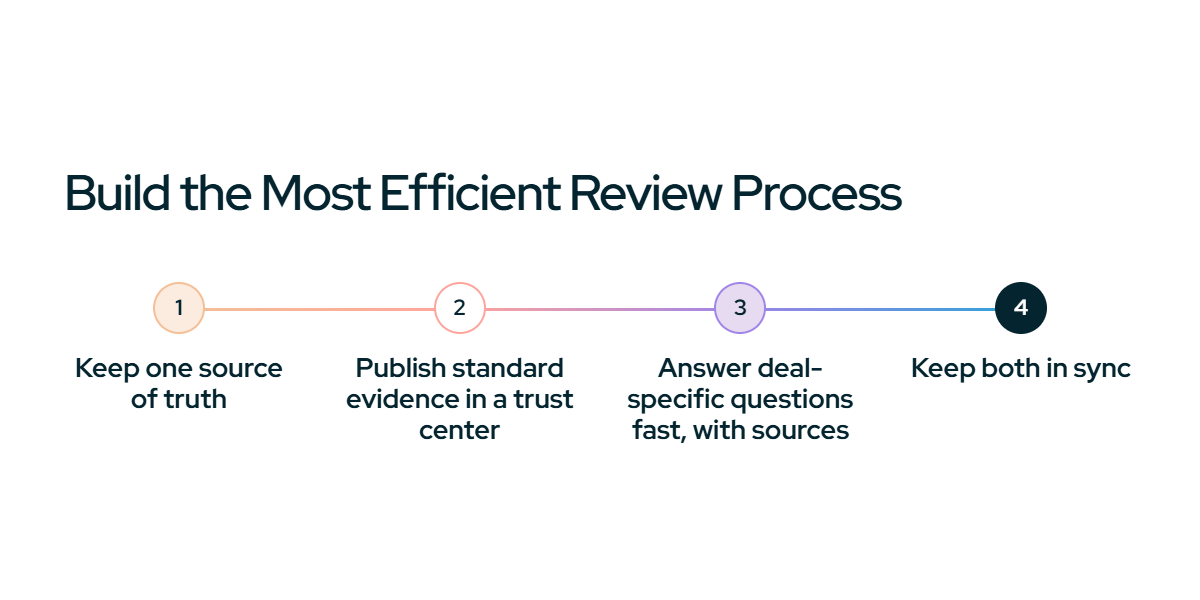
You can put this together in four steps.
- Keep one source of truth. Maintain your controls, policies, and evidence in one governed place. Everything buyer-facing derives from it, so an update propagates instead of creating a conflict.
- Publish the standard evidence in a trust center. Put your certifications, policies, sub-processors, and the questions every buyer asks where buyers can self-serve. This deflects the repetitive majority.
- Answer the deal-specific questions fast, with sources. For what a trust center can't pre-answer, draft from your existing knowledge and attach a citation to each answer, pointing to the policy or report it came from, so a reviewer can trust it without a follow-up.
- Keep both in sync. When a control or report changes, update the source once and regenerate the trust center and any reused answers from it. This is what prevents drift.
Answer deal-specific security questions faster with Inventive AI
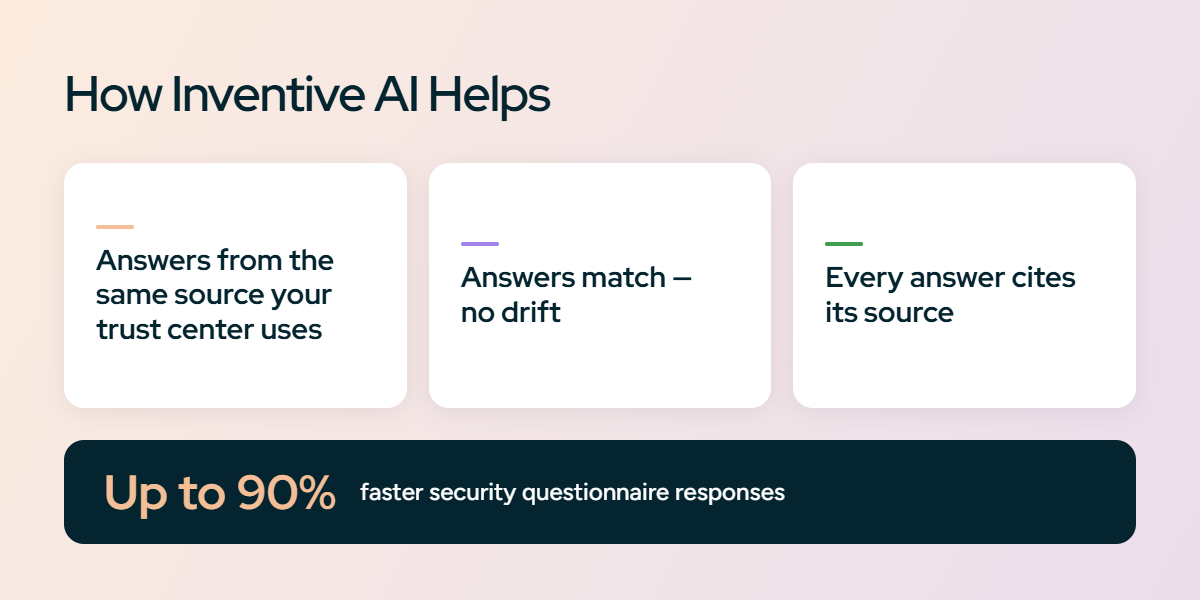
A trust center handles your standard questions. The deal-specific ones still land on your security team, and those are the ones that slow a review down. That is the part Inventive AI does.
Inventive AI answers security questionnaires by pulling from the source where your security information already lives, the same source your trust center should use. Because both draw from one place, the answers match, so you avoid the mismatch problem from the last section. Every answer comes with the source it's based on, so a reviewer can check it and move on instead of coming back with follow-ups.
The result: your trust center clears the repeat questions, and Inventive AI clears the custom ones fast, from a single source of truth. Customers report security questionnaire responses up to 90% faster.