Best Security Questionnaire Automation Software in 2026: 8 Tools Compared
Compare the 8 best security questionnaire automation software tools in 2026 by features, pros and cons, G2 rating, and pricing.
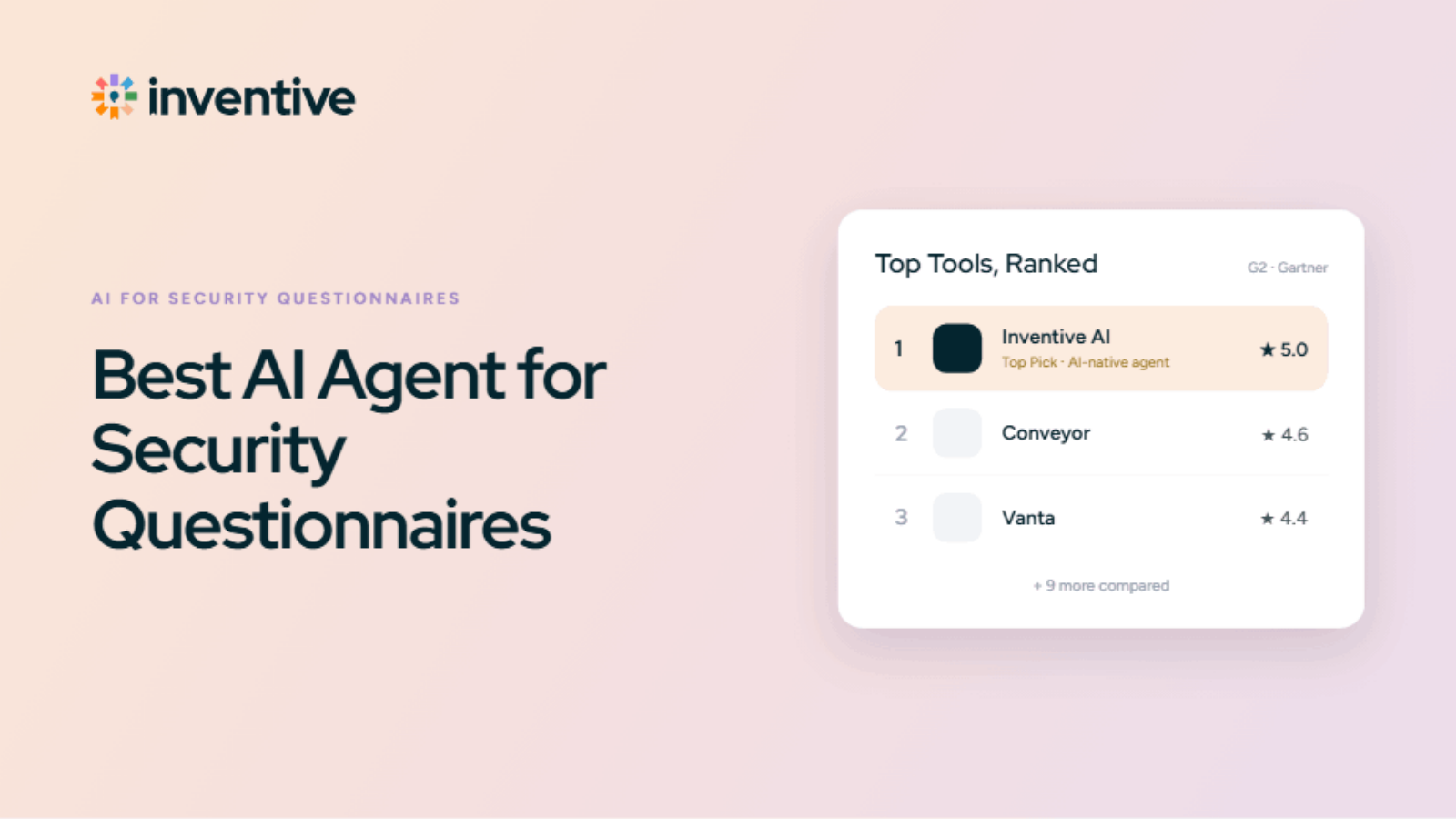
The best security questionnaire automation software in 2026 is Inventive AI for teams answering a steady volume of questionnaires alongside RFPs, Conveyor for security-only teams that need portal submission, and Vanta or Drata for teams that want questionnaires handled inside an existing compliance program.
Every tool here promises faster answers. What separates them is where those answers come from. Some draft from a content library your team builds and maintains; others retrieve from the systems you already use and attach a citation a reviewer can check. That single difference decides how much ongoing work the tool creates and how much you can trust what it sends to a buyer.
Below: eight tools grouped by category, with pricing, G2 ratings and the limitations reviewers actually report.
TL;DR
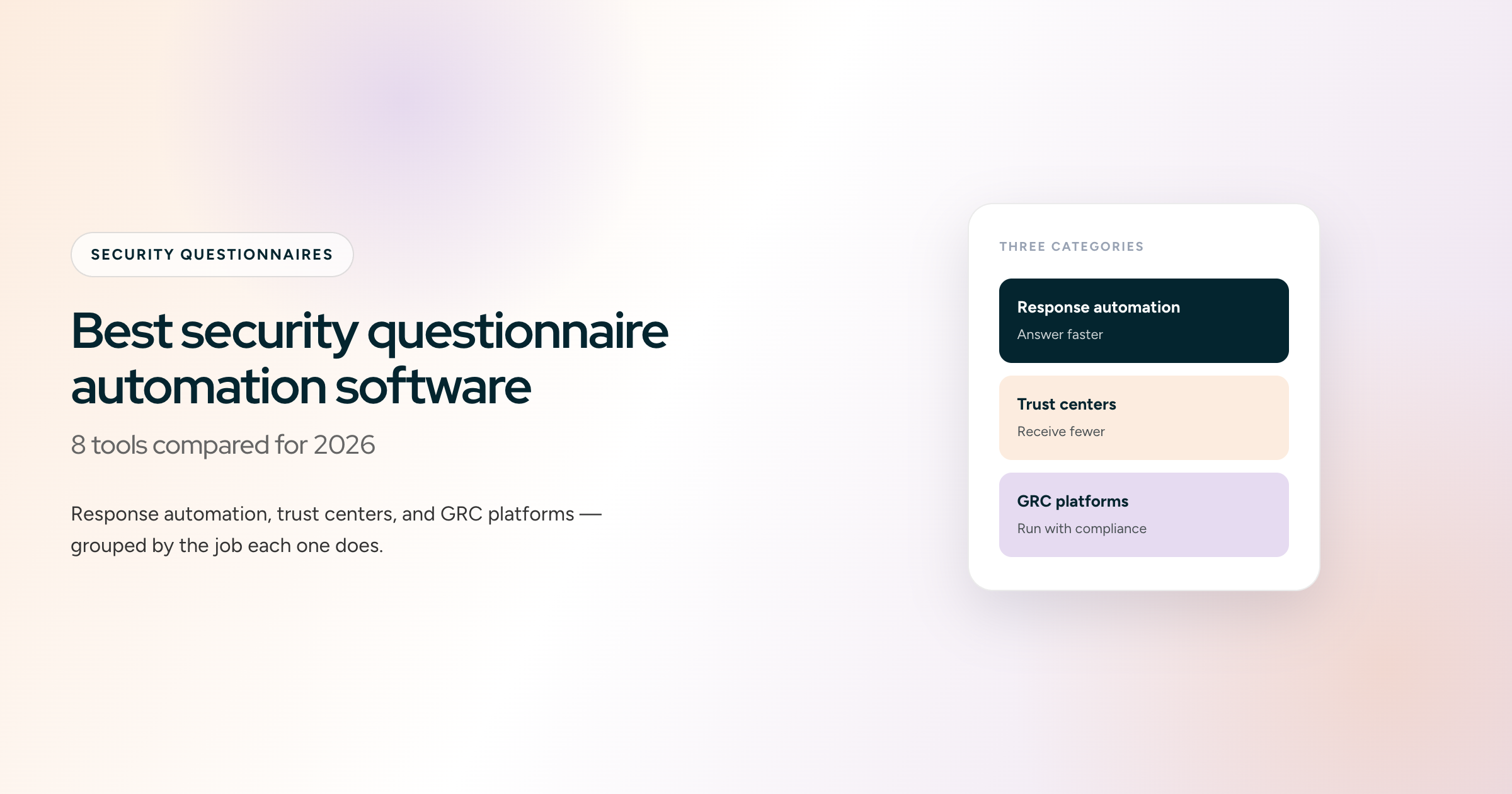
- Security questionnaire software falls into three types: response automation (answer faster), trust centers (receive fewer), and GRC platforms (run questionnaires with compliance). Start from the job you need done.
- Response automation: Inventive AI, Responsive, Loopio, Conveyor. Trust centers: SafeBase, Whistic. GRC: Vanta, Drata.
- Within a category, two things decide it: where answers come from (a library you maintain vs. retrieval from systems you already use), and whether each answer carries a citation and confidence score a reviewer can check.
- Before you buy: test each tool on a real questionnaire of your own, confirm format and portal coverage, and check the vendor's own SOC 2.
How we compared the security questionnaire tools
We compared all eight tools using a consistent set of criteria and public evidence. We used G2 ratings and reviews to assess customer sentiment and recurring strengths and limitations, Gartner Peer Insights and analyst coverage to understand category positioning and enterprise adoption, official product and pricing pages to verify features, integrations, framework support, and pricing, and Reddit and other practitioner communities to see how these tools perform in day-to-day security and proposal workflows.
Three categories of security questionnaire software
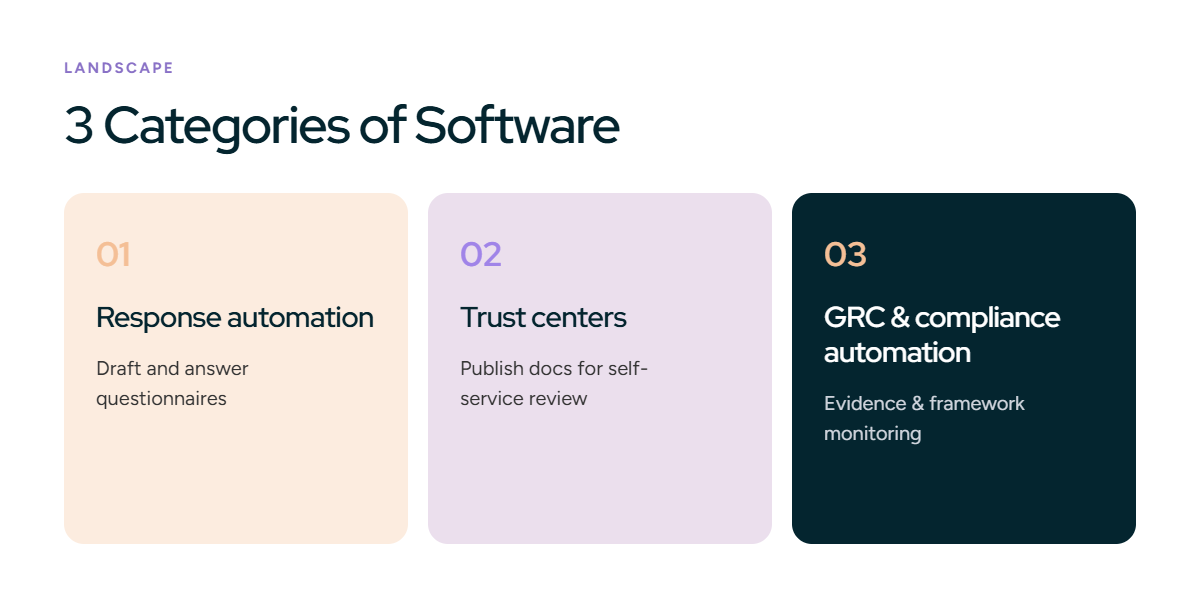
Security questionnaire tools fall into three categories. Response automation platforms draft answers so you reply faster. Trust centers publish your posture so buyers self-serve and send fewer questionnaires. GRC platforms run questionnaire response alongside your SOC 2 or ISO 27001 program. The eight tools below are grouped accordingly.
What to evaluate in security questionnaire software
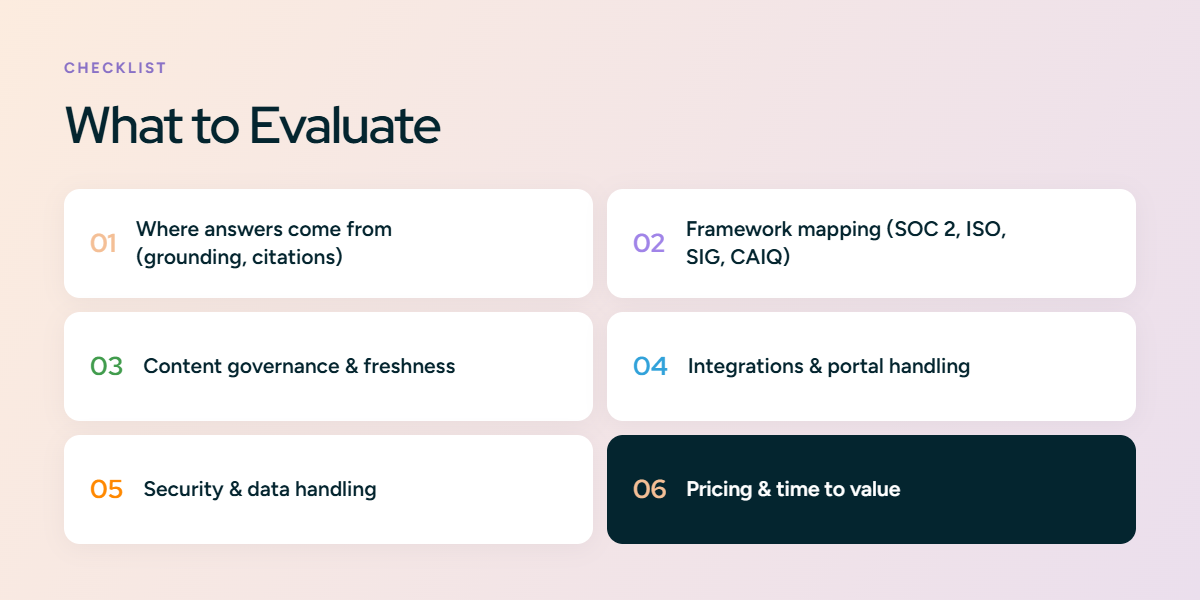
- Answer sourcing. Does each answer come with a citation and a confidence score a reviewer can check?
- Knowledge source. Does it draft from a library you maintain, or retrieve from systems you already use, like SharePoint, Google Drive, and past questionnaires?
- Format coverage. Does it handle Excel, Word, PDF, and frameworks like SIG and CAIQ, plus custom formats?
- Portal support. Can it answer inside a buyer's portal without copy-paste?
- Content governance. Does it flag outdated, duplicate, or conflicting answers before you submit?
- Review workflow. Can you assign sections, route only unsupported answers to experts, and track approvals?
- Framework mapping. Does it align answers to SOC 2, ISO 27001, and GDPR?
- The vendor's own security. Is the tool SOC 2 Type II compliant, and is your data kept out of public model training?
Best security questionnaire automation software in 2026
The tools below are reviewed and grouped by category. G2 ratings are current as of October 2026 and link to each product's review page. Pricing is quote-based unless a public figure is noted from the vendor's pricing page.
Best security questionnaire response automation platforms
Inventive AI

Inventive AI is an AI-native platform for teams that answer security questionnaires, RFPs, RFIs and DDQs from connected knowledge, with humans approving the output. It retrieves answers from your existing systems rather than a library you maintain, and it treats its own security posture as a first-class product surface because its users are security teams.
Best features
- Cited, scored answers: every draft carries a source citation and confidence score, and unsupported questions are flagged instead of guessed.
- Content governance: detects outdated or conflicting answers before submission.
- Full response analyzer: scans the whole questionnaire for gaps before you send it.
- Connected knowledge: syncs with your existing documentation through the Knowledge Hub, so there is no library to build or maintain.
- One platform for response types: covers security questionnaires, RFPs, RFIs and DDQs in one workspace.
- Portal answering: answers inside a buyer's portal without copy-paste.
- Enterprise-grade security posture: SOC 2 Type II audited against all five trust principles by an independent firm, multi-tier architecture with isolated production and staging VPCs, redundant systems across availability zones, and SOC 1, SOC 2, ISO 27001 and PCI Level 1 compliant cloud hosting, with regular penetration tests and vulnerability scans.
- Strict data isolation and privacy: logical tenant isolation by design, AES-256 encryption at rest and TLS 1.2 in transit, and customer data that never trains generalized models, with custom zero data retention agreements in place with OpenAI and Anthropic.
- Access and identity controls: SAML single sign-on with Google, Microsoft, Okta and other major IdPs, enforced 2FA for staff, and role-based access for admins and general users.
Cons
- Reviewers want deeper analytics, such as win-rate trends and time-to-respond dashboards.
- Some integrations and exports are still missing, including certain CRM connectors and PowerPoint export.
Inventive pricing
- Volume-based, tied to the RFPs, RFQs and security questionnaires your team handles, with unlimited users and no per-seat fees.
- Plans start at $830 per month billed annually. The ROI calculator helps estimate cost against your volume.
Inventive ratings and reviews
- G2: 4.9/5
What are real users saying about Inventive?
A G2 review says:
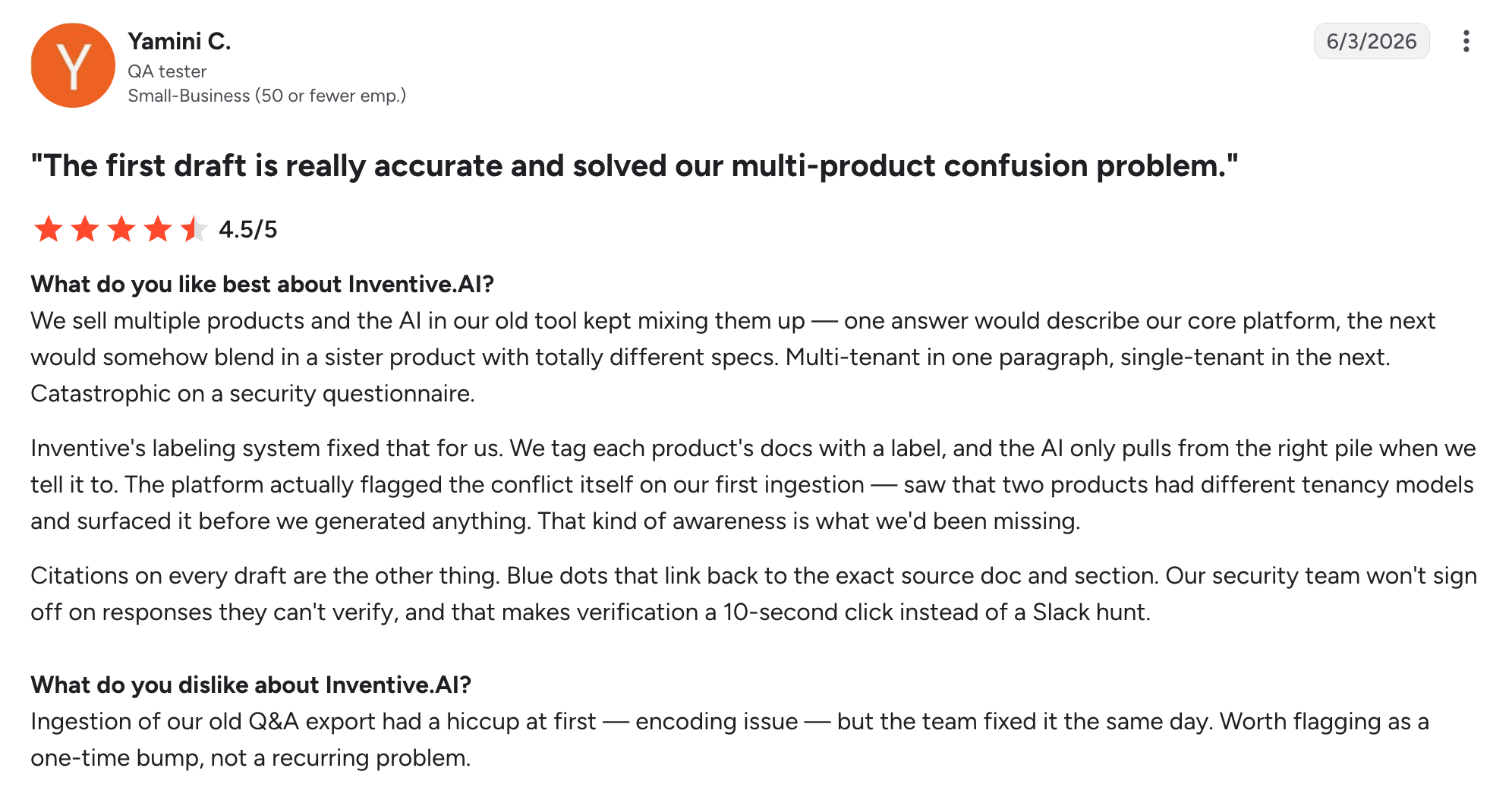
Responsive (formerly RFPIO)
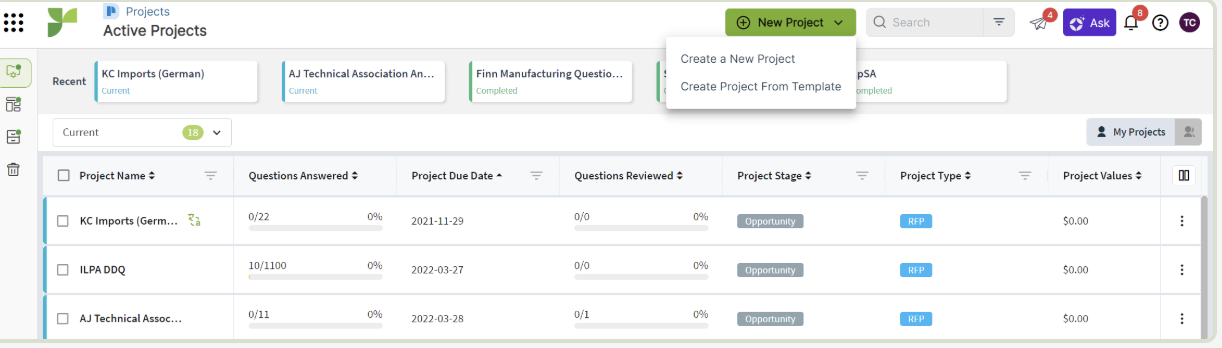
Responsive is an enterprise response management platform for RFPs, RFIs, and security questionnaires. It centers on a large managed content library, AI drafting, and broad workflow features. It suits organizations that want one platform across every response type.
Responsive Pros
- It cuts response time and lets teams handle far more RFPs and questionnaires than before.
- A centralized, searchable content library keeps answers consistent across proposals.
- Task assignment, progress tracking, and Slack and Salesforce integrations reduce email back-and-forth.
- AI drafting speeds up first drafts once the content library is well maintained.
Responsive Cons
- The interface has a steep learning curve and can feel complex for occasional users.
- Keeping the library current takes ongoing effort, and duplicates build up as it grows.
- AI answer quality drops when the underlying library is poorly organized.
- Expect content migration, library structuring, and admin ownership before the AI drafting is reliable.
Responsive Pricing
The Emerging edition starts at $10,000/year
What customers say about Responsive?
Customers rate it 4.5 out of 5 on G2 and praise reuse and collaboration, while naming library upkeep as the main ongoing effort.
For a feature-level breakdown, see how Responsive compares with Inventive AI.
Loopio
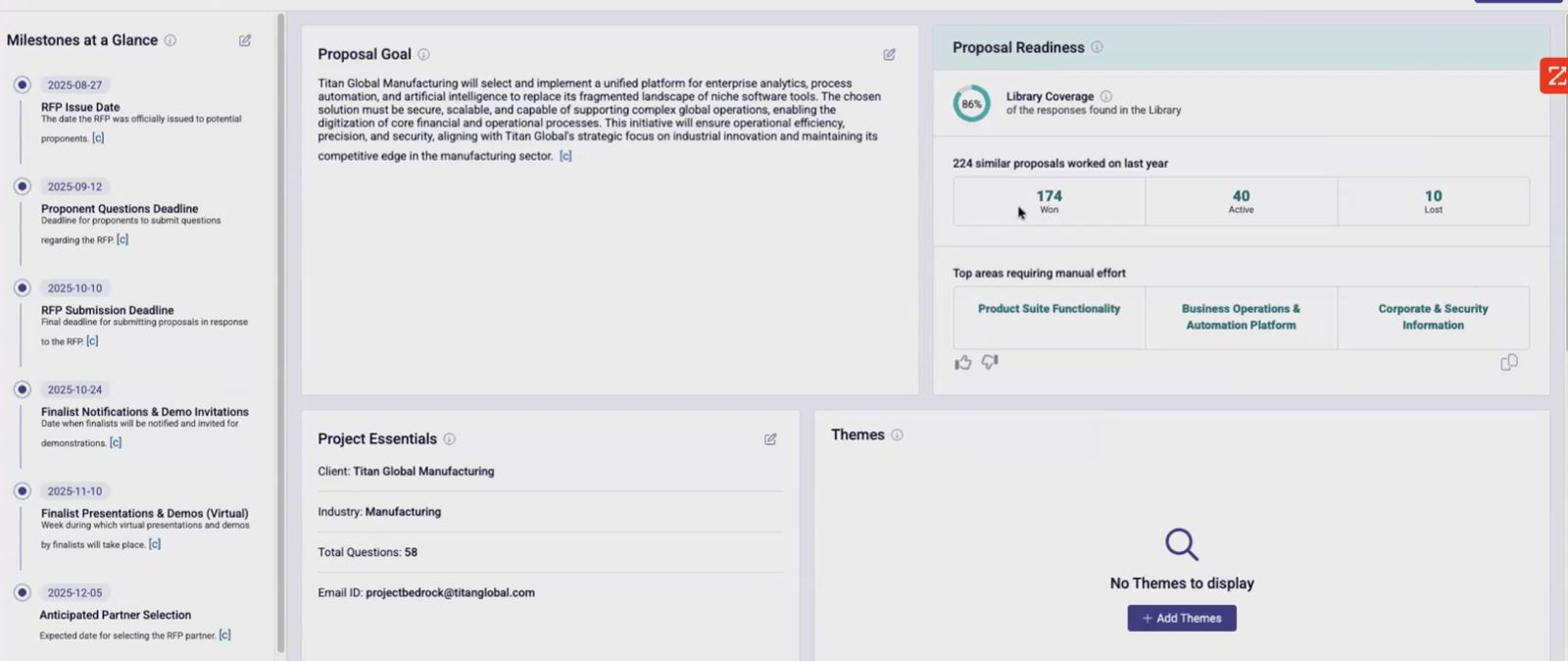
Loopio is a response management tool that organizes approved answers in a shared content library the team maintains over time. It supports RFPs and security questionnaires with review workflows, collaboration, and reporting.
Loopio Pros
- The interface is intuitive and easy to navigate for everyday response work.
- Collaboration features let teams assign, track, and review without long email chains.
- Reusing approved library answers noticeably cuts response time.
Loopio Cons
- Outdated and duplicate answers accumulate in the library over time, and cleanup stays manual as it grows.
- Formatting can be lost on import and export, needing manual cleanup on complex files.
Loopio Pricing
Custom. Loopio prices by quote based on team size and modules.
What customers say about Loopio?
Customers rate it 4.6 out of 5 on G2. Reviewers point to the centralized library and SME collaboration as what keeps large responses on track, with duplicate and outdated content accumulating over time as the recurring complaint.
Also Read: Loopio vs Inventive AI
Conveyor
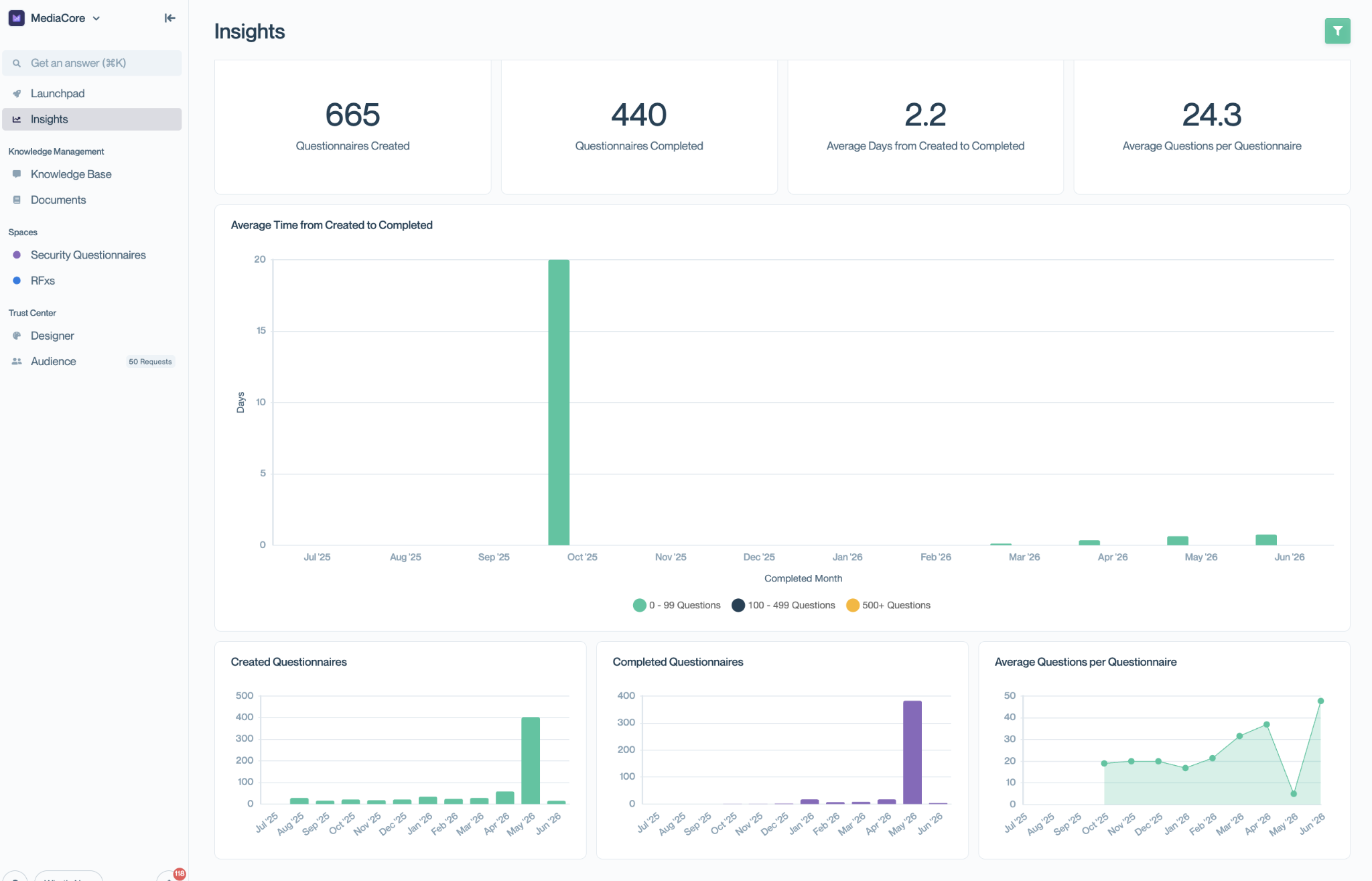
Conveyor combines AI security questionnaire automation with a trust center and portal submission. It focuses on the security review workflow rather than general RFPs, and covers the full cycle from a trust center to answering inside a buyer's portal.
Conveyor Pros
- The platform is intuitive and simplifies document and questionnaire management.
- Its AI reads and maps questions automatically, which cuts manual setup.
- It automates security questionnaires and speeds up work teams used to do by hand.
Conveyor Cons
- Some users find the trust center features incomplete and miss bulk download options.
- Branding, layout, and analytics customization is limited.
- Navigation in certain portals can be unclear.
Conveyor Pricing
Custom pricing
What customers say about Conveyor?
Customers rate it 4.6 out of 5 on G2 and cite strong time savings, with trust center customization the main gap.
Also Read: Conveyor vs Inventive AI
Best trust center software for security questionnaires
SafeBase (by Drata)

SafeBase, acquired by Drata in 2025, is a self-service trust center. You publish security documentation so buyers review it directly, which reduces how many questionnaires reach your team. It is a proactive tool rather than a way to answer questionnaires faster.
SafeBase Pros
- The trust center is intuitive and efficient for sharing security documentation.
- The support team is responsive and communicative.
- It integrates smoothly with other tools and automates repetitive security sharing.
SafeBaseCons
- Customization is limited, so tailoring the portal to specific needs is hard.
- Larger enterprises miss multi-organization support for subsidiaries.
- A few features feel non-intuitive to navigate.
SafeBase Pricing
Free tier available; paid plans custom. Now sold as part of Drata.
Whistic
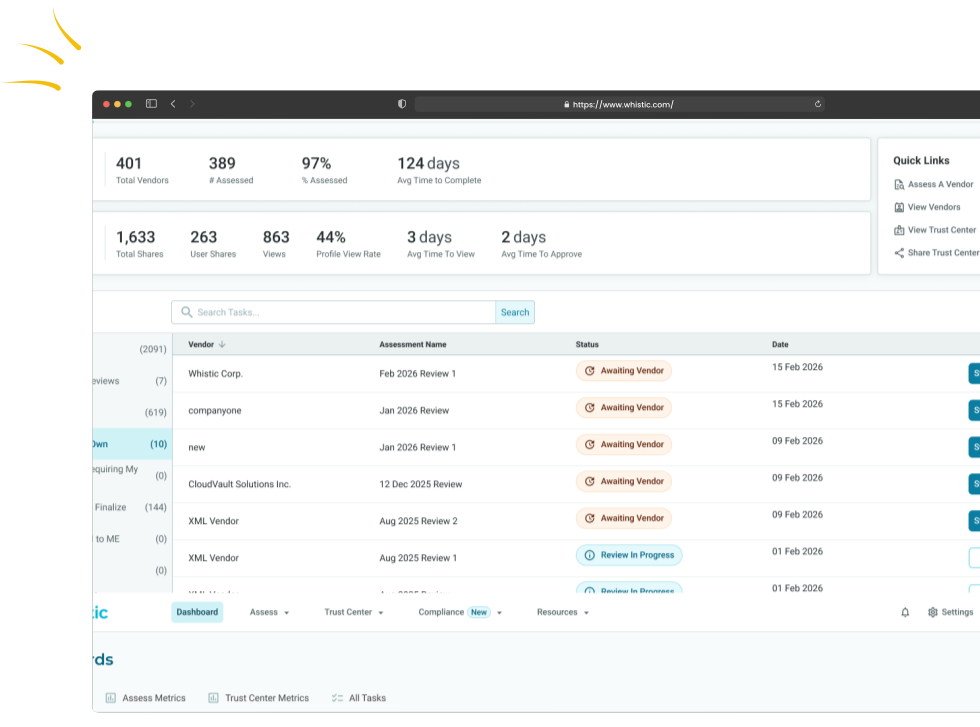
Whistic pairs a trust center with vendor assessment, so you can share your profile and assess third parties from one platform. It fits teams that sit on both sides of the security review.
Whistic Pros
- It is easy to use from both the responder and the vendor-assessment sides.
- Vendor management is strong, with custom questionnaires, follow-ups, and automation.
- Customer support is personable and responsive.
Whistic Cons
- Parts of the interface feel unintuitive, with a learning curve for new users.
- Evidence gathering can be manual and prone to error.
- The knowledge base needs better organization, such as folders.
Whistic Pricing
Custom. Whistic prices by quote.
What customers say about Whistic?
Customers rate it 4.6 out of 5 on G2 and value the support and dual-sided use, with the interface the main critique.
Best GRC and compliance questionnaire automation
Vanta
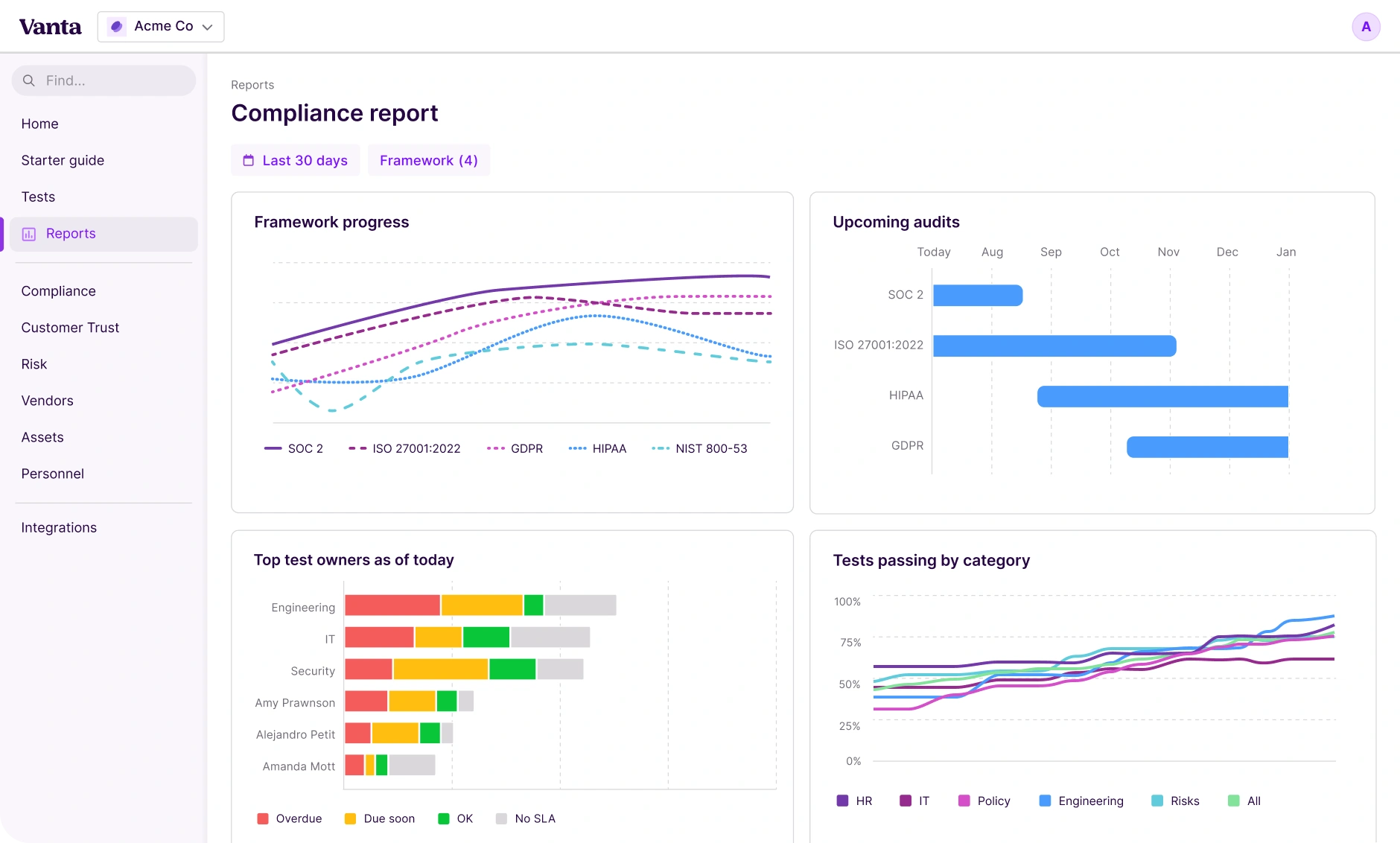
Vanta is a compliance automation platform for frameworks like SOC 2 and ISO 27001, with questionnaire automation and a trust center added on top. It suits teams that want questionnaire response inside a broader compliance program rather than as a standalone tool.
Vanta Pros
- Automated evidence collection removes manual screenshotting for audits.
- The interface is clean and onboarding is straightforward.
- Broad integrations across AWS, Slack, GitHub, and Google Workspace start collecting evidence automatically.
- Continuous monitoring frees teams from repetitive compliance checks.
Vanta Cons
- Cost is the most common complaint, and base plans are expensive for smaller teams.
- Reporting and dashboard customization is limited, and some integrations need manual work.
- A few reviewers report a difficult implementation and weak post-sale support.
Vanta Pricing
Custom. Vanta prices by quote and does not publish standard pricing.
What customers say about Vanta?
Customers rate it 4.6 out of 5 on G2 and praise the evidence automation, with price the most common concern.
Drata
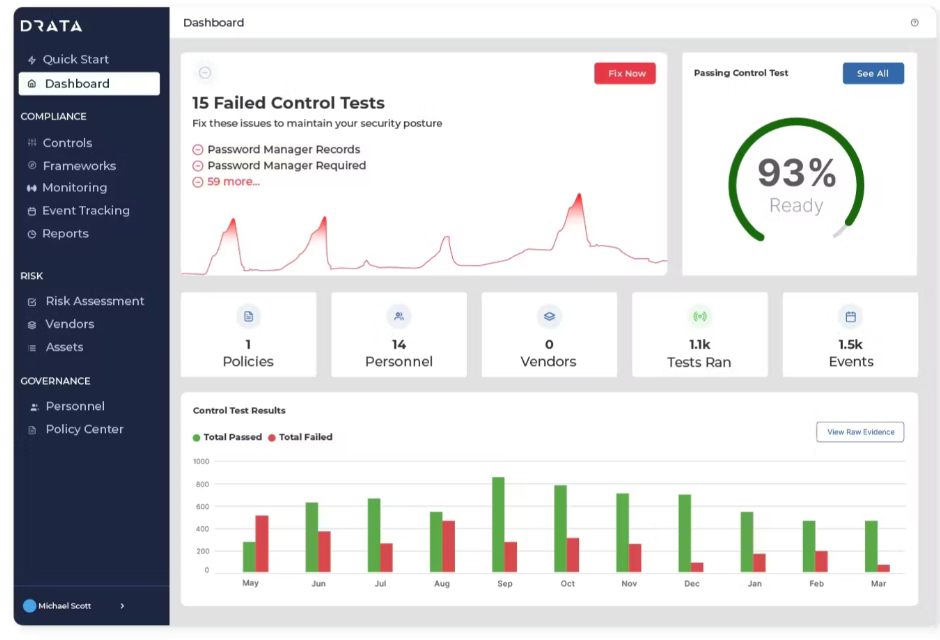
Drata is a compliance automation platform that now includes SafeBase for trust management. It fits compliance-led teams that want evidence collection, continuous monitoring, and trust sharing in one system.
Drata Pros
- Automated evidence collection and continuous monitoring reduce manual compliance work.
- The interface is generally intuitive, making compliance tracking and audit preparation easier.
- Integrations connect security and business tools to automate evidence collection.
- Centralized dashboards help teams track controls, identify gaps, and maintain audit readiness.
Drata Cons
- Some integrations lack flexibility or require manual troubleshooting and follow-up.
- Navigation and workflow continuity can be confusing when switching between auditor requests, controls, and evidence.
- Customizing tests and handling exceptions can be difficult for certain environments.
- Some reviewers report inconsistent test results and limited visibility into why controls fail.
Drata Pricing
Custom. Drata does not publish standard pricing on the G2 page provided. Contact its sales team for a quote.
What customers say about Drata?
Customers rate Drata 4.7 out of 5 on G2, based on 1,397 reviews. They praise its compliance automation, ease of use, and time-saving evidence collection, while integration limitations and occasional UX issues remain common concerns.
How to choose the right security questionnaire response tool for your team
Start with the job you need the tool to do most often, then compare how each platform handles sourcing, traceability, formats, and review.
Start with your primary job
- You answer a lot of questionnaires and RFPs. If your security or proposal team spends hours re-answering the same questions for every deal, a response automation platform can draft repeat answers and reduce manual work.
- You want fewer questionnaires to begin with. A trust center is a better fit when buyers repeatedly request the same evidence, such as SOC 2 reports and security policies. Publish it once and let buyers self-serve.
- You need compliance evidence and questionnaires together. A GRC platform makes sense when you already manage programs such as SOC 2 or ISO 27001 and want evidence collection and questionnaire response in one system.
Many teams use two tools together, most commonly a trust center plus a response automation platform: the trust center reduces incoming volume, while the response tool handles the questionnaires that still require a detailed response.
Compare how the response process works
Once you know which category you need, focus on these factors:
- Where answers come from: Does the tool rely on a library your team has to maintain, or can it retrieve information from existing sources such as SharePoint, Google Drive, Confluence, and past questionnaires? A library gives you tighter control but requires ongoing upkeep; connected-source retrieval can reduce that maintenance.
- Whether answers are traceable: Look for citations, confidence scores, and flags for unsupported answers. Security claims need to be verifiable because an incorrect answer about encryption, data handling, or compliance can create more than a sales risk.
- Format and portal coverage: Confirm support for the formats your buyers actually use, including Excel, Word, PDF, SIG, CAIQ, custom questionnaires, and buyer portals.
- Governance and review: Check whether the tool flags outdated, duplicate, or conflicting answers and lets you assign sections, route uncertain responses to SMEs, and track approvals.
- Framework support: If relevant to your workflow, verify coverage for frameworks and standards such as SOC 2, ISO 27001, and GDPR.
- Vendor security: The platform itself should meet your security requirements. Check for SOC 2 Type II and confirm how customer data is handled and whether it is used to train external or public models.
Three checks before you commit
- Test it on your own questionnaire. Ask the vendor to run a real SIG, CAIQ, or customer questionnaire rather than a polished demo file. Accuracy on your content is what matters.
- Test your actual formats and portals. Make sure it can handle the Excel, Word, and portal workflows your buyers use.
- Review the vendor's security terms. Confirm the platform meets your security requirements and understand its data retention and model-training policies.
Which security questionnaire tool fits your team?
- Startups and small teams with no dedicated security hire: Conveyor’s free plan and SafeBase’s free tier let you publish evidence and deflect inbound questionnaires before paying for anything. Move to a response platform once you clear roughly five questionnaires a month.
- Mid-market SaaS with sales blocked on security review: A response automation platform is the unblock. Inventive AI drafts from connected sources, so you are not staffing a library owner alongside the tool.
- Infosec teams handling 30 or more questionnaires a month: You need governance, not just drafting. Prioritize conflict detection, confidence scoring, and SME routing so volume does not become a review bottleneck.
- Enterprise compliance teams running multiple frameworks: Look for control mapping across SOC 2, ISO 27001, GDPR and ISO 42001 so one answer serves several frameworks.
- Teams already running Vanta or Drata: You have compliance evidence but probably still a questionnaire bottleneck. A trust center cuts volume, a response platform handles what still comes through.
Format and framework coverage
Confirm coverage before you buy, because format gaps create the manual work the tool was meant to remove.
- Standard questionnaires: SIG, SIG Lite, CAIQ, HECVAT, VSAQ. Most platforms handle SIG and CAIQ; HECVAT support is thinner and matters if you sell into education.
- File formats: Excel with multiple tabs, Word, PDF forms, and custom spreadsheets buyers build themselves.
- Buyer portals: The portals your largest accounts use. Portal answering without copy-paste is the single biggest time difference between platforms.
- Frameworks: SOC 2, ISO 27001, ISO 42001, GDPR, HIPAA, PCI DSS, NIST 800-53. Ask whether one answer maps across frameworks or whether you maintain parallel sets.
Others to consider
SecurityPal pairs AI with 24/7 human analysts to complete questionnaires for enterprise teams, which fits organizations that want a managed-service layer.
Skypher focuses on native portal automation for security questionnaires. Both are sales-led with custom pricing and have limited public G2 review volume, so request a reference and a live demo before shortlisting.
Sprinto is a compliance automation platform with questionnaire response and a trust center, positioned at fast-growing SaaS teams. Reviewers flag its self-service workflow as thin on long or heavily customized questionnaires, so test it on your hardest one before committing.
If your shortlist is leaning toward agentic tooling specifically, the best AI agent for security questionnaires covers that thoroughly.
How much does security questionnaire automation cost?
Pricing models differ more than the headline numbers. Response platforms price by volume or seat, trust centers by tier, GRC platforms by company size and framework count.
Volume-based pricing suits teams adding reviewers and SMEs, since headcount does not raise the bill. Per-seat pricing suits a small fixed response team.
How Inventive AI approaches security questionnaires
The right tool depends on the job: response automation to answer faster, a trust center to receive fewer, or a GRC platform to run questionnaires and compliance together. Within any category, two things decide it: where answers come from, and whether a reviewer can trust each one.
That is what Inventive AI’s security questionnaire software is built around. It reads the questionnaire, retrieves each answer from your connected systems, and drafts it with a citation and a confidence score. Content Governance flags conflicts before you submit, and anything it cannot support goes to an expert instead of a guess.
Customers report responses up to 90% faster, and RAD-AI found answers about 2x more accurate than other AI tools. Insider raised its win rate from 30% to 50% after switching.