AutoRFP vs Loopio vs Responsive (2026): Should You Switch to AI-Native?
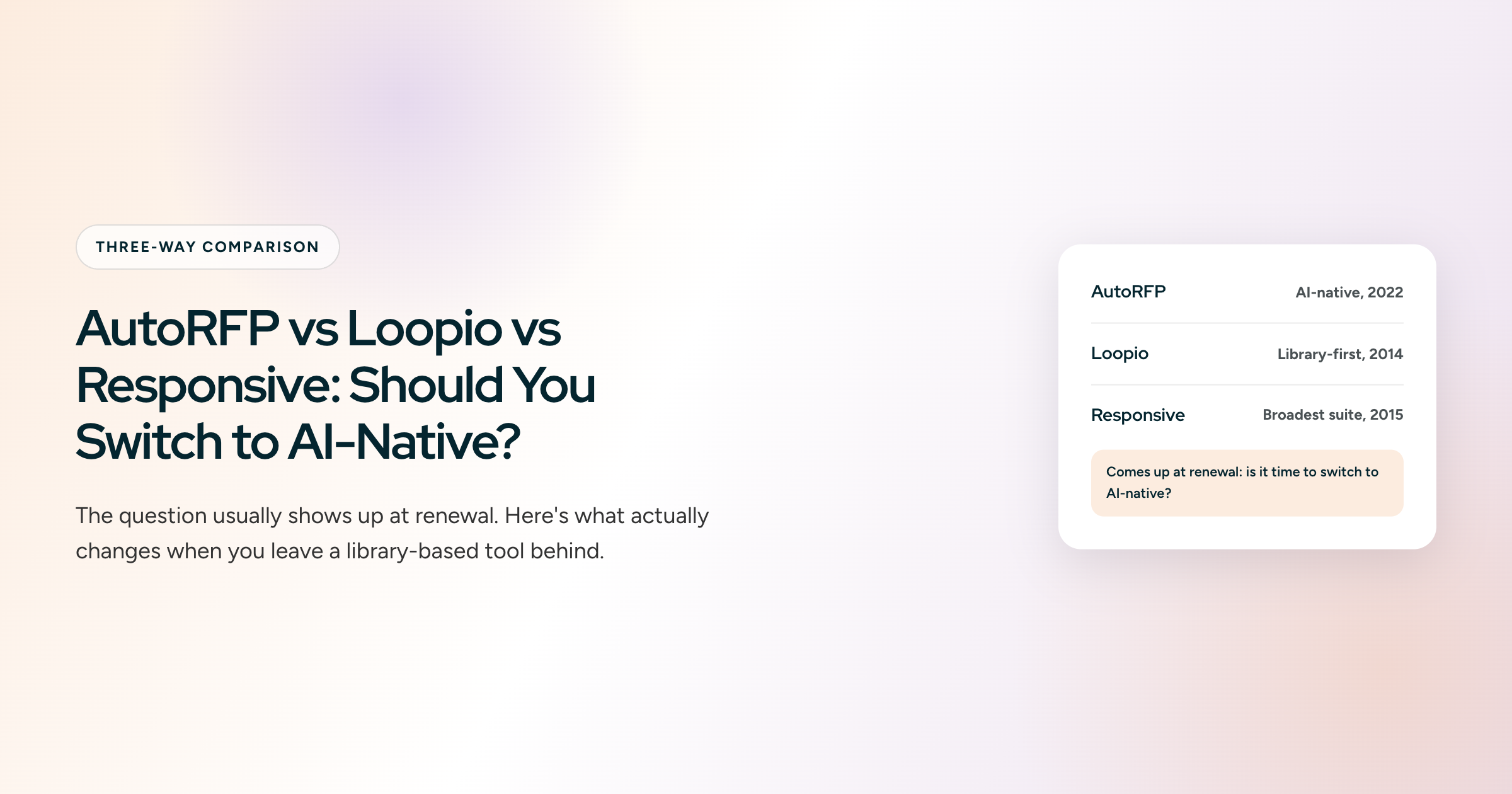
AutoRFP vs Loopio vs Responsive usually comes up at renewal, when a team on Loopio or Responsive asks whether an AI-native tool like AutoRFP would serve it better. Loopio (founded 2014) and Responsive (founded 2015 as RFPIO) are library-based request for proposal (RFP) platforms that added AI later. AutoRFP (founded 2022) was built AI-native from the start. Inventive AI is an AI-native RFP platform that drafts cited answers from your connected company knowledge and flags conflicting or outdated content before it reaches a buyer.
Key takeaways
- AutoRFP is the AI-native challenger: project-based pricing with unlimited users, published plan prices, and drafts that score their own sources.
- Loopio is library-first: strong portal coverage through SmartFill, with accuracy that depends on how well someone maintains the Library.
- Responsive is the broadest suite: RFQs, buy-side requests, a Trust Center, and the longest certification list, which AutoRFP deliberately doesn't cover.
- Inventive AI drafts from live documents and checks them against each other: no library to migrate or maintain, at $830/month, billed annually, with unlimited users.
AutoRFP vs Loopio vs Responsive at a glance
Checked against each vendor's own pricing, security, and comparison pages and G2 in November 2026.
What should you check before switching from Loopio or Responsive?
List what your current tool does that you'd miss, then test the new one against it.
- Your library export: confirm you can export every approved answer, with owners and tags, in a format the new tool imports.
- Your request types: list whether you answer RFQs or buy-side requests, since AutoRFP doesn't cover them.
- Your portals: list the portals your biggest buyers use and check each one against the new tool's coverage.
- Your certifications list: check which certifications your buyers require from every vendor.
- Your contributor count: count every subject matter expert (SME) and approver, then price both seat-based and project-based models.
- A side-by-side draft: run one recent RFP through both tools before your renewal date.
What actually changes when you move from a library tool to AutoRFP?
The library stops being the center of the work. In Loopio and Responsive, a team curates approved answers and the AI drafts from them. In AutoRFP, approved content syncs from the systems your team already uses, and approved answers feed back in automatically.
- Who maintains content: Loopio and Responsive need a named library owner and review cycles. AutoRFP still keeps an owned library, but with less manual upkeep, per AutoRFP.
- How drafts are checked: AutoRFP scores each answer twice, once for its sources (Trust Score) and once for how fully it answers the question (Feedback Score). Loopio uses a Confidence Pulse, and Responsive a TRACE Score.
- What happens on gaps: AutoRFP routes unsupported questions to a person instead of drafting around them.
How hard is it to migrate from Loopio or Responsive to AutoRFP?
The tool setup is quick. The cleanup is what takes time.
- AutoRFP's timeline: it says teams see first AI-drafted answers within 48 hours of bringing content in, and it offers a free two-week proof of concept on your own RFPs.
- What slows it down: G2 reviewers warn that a patchy library means weeks of cleanup before drafts improve, so duplicates and stale answers from Loopio or Responsive should be cleared before the move.
- What you leave behind: Loopio's Onboarding Manager and Responsive's 25+ APMP-certified Professional Services consultants, if your team relies on hands-on services.
Which covers more procurement portals: AutoRFP, Loopio, or Responsive?
Loopio covers the most portals. AutoRFP covers the big procurement suites.
- Loopio: SmartScan imports portal questions and SmartFill pushes approved answers back across 170+ portal providers.
- AutoRFP: its Portal Agent pulls questions from Ariba, Workday, and Coupa.
- Responsive: relies on a browser extension for portal questionnaires.
If your buyers use smaller or industry-specific portals, check each one before you switch.
What does AutoRFP not do that Loopio or Responsive does?
AutoRFP is deliberately narrower. It's built for teams answering RFPs, RFIs, security questionnaires, and due diligence questionnaires (DDQs), and it says so plainly.
- RFQs and buy-side requests: out of scope for AutoRFP, and covered by Responsive.
- Highly bespoke bids: AutoRFP says it's less suited to sectors like AEC and US government contracting, where answers don't follow repeatable patterns.
- Program-wide reporting: Responsive's reporting is built for presenting results to leadership across many teams.
How do AutoRFP, Loopio, and Responsive pricing compare?
AutoRFP charges by project, while Loopio and Responsive charge partly by person.
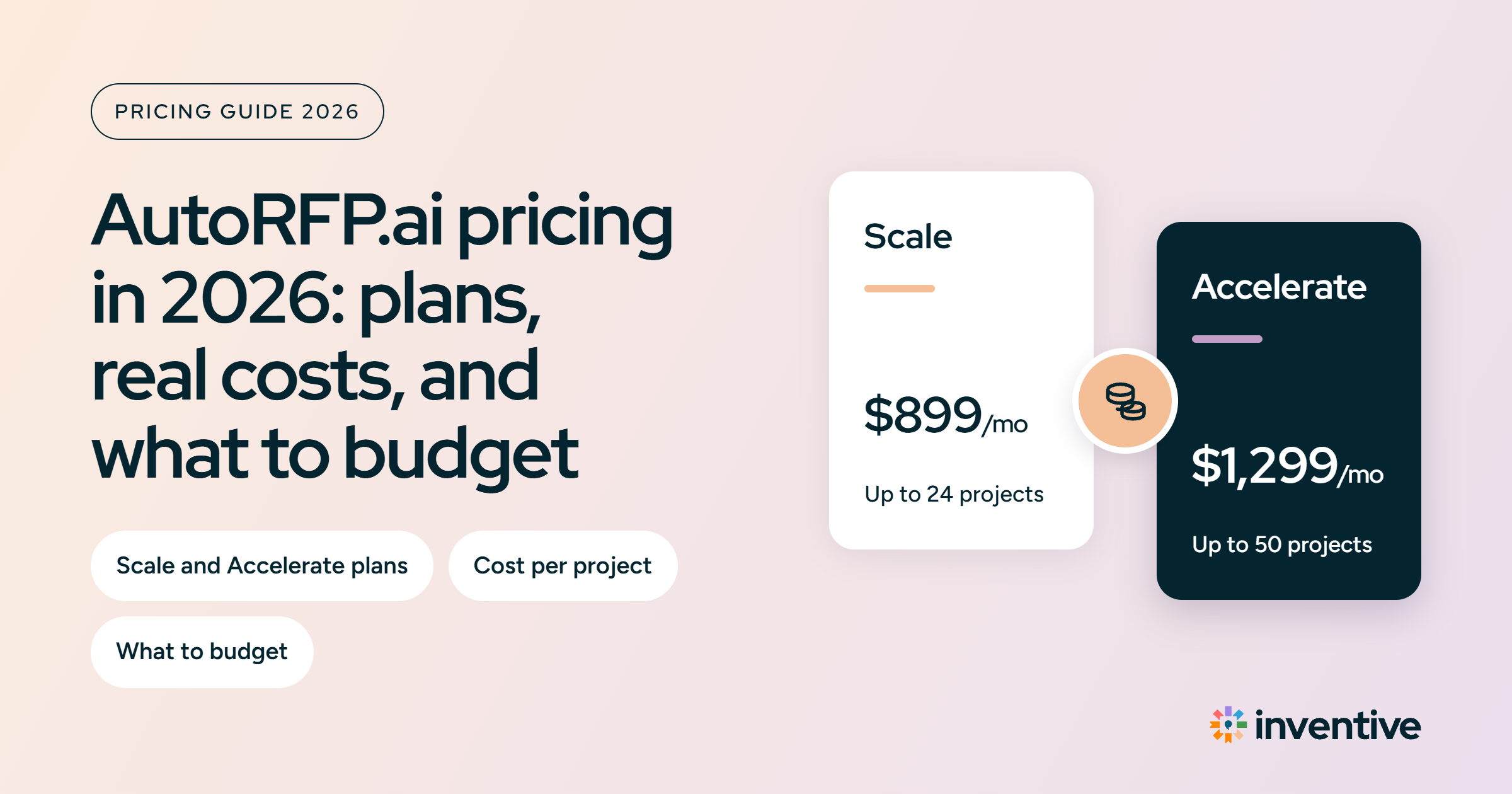
- AutoRFP: AutoRFP pricing is published. Scale costs $899/month for 24 projects a year and Accelerate $1,299/month for 50, billed annually, with unlimited users.
- Loopio: custom quotes across Foundations, Enhanced, and Enterprise. Foundations includes 10 seats, with onboarding packages and translations as add-ons. Vendr data puts Loopio pricing at a median of $24,318 a year across 144 purchases.
- Responsive: a platform fee plus user licenses. Emerging starts from $10,000, and Vendr reports a median contract of $14,750 a year across 133 purchases.
For a team with many occasional contributors, project pricing usually costs less. For a small team running many RFPs, seat pricing can.
How does AutoRFP compare with Loopio and Responsive head to head?
AutoRFP vs Loopio: which is better?
AutoRFP fits teams that want less library work and project pricing. Loopio fits teams with a dedicated Library owner and many portal submissions.
- Content: AutoRFP syncs approved content from your systems. Loopio centers on a curated Library with review cycles.
- Portals: Loopio covers 170+ providers. AutoRFP covers Ariba, Workday, and Coupa.
- Cost: Loopio's Foundations plan includes 10 seats. AutoRFP includes unlimited users.
AutoRFP vs Responsive: which is better?
AutoRFP fits sales and presales teams focused on answering. Responsive fits organizations running many request types, including RFQs and buy-side work.
- Scope: Responsive covers RFQs and buy-side requests. AutoRFP doesn't.
- Security: Responsive lists ISO 27701 and ISO 42001 on top of SOC 2 and ISO 27001.
- Services: Responsive offers a large Professional Services team. AutoRFP offers a free two-week proof of concept.
Is there an RFP tool that skips the library entirely?
Yes. Inventive AI is an AI-native RFP platform that drafts cited answers from your connected company knowledge and flags conflicting or outdated content before it reaches a buyer. Instead of migrating a library, teams connect the documents they already maintain.
Best features
- No library to migrate: connects SharePoint, Google Drive, Confluence, and Notion through one Knowledge Hub, and treats an exported Loopio or Responsive library as one more source.
- Conflict detection: the AI Content Manager flags contradictions, duplicates, and outdated content across sources before they reach a draft.
- Answers you can verify: each AI-drafted answer cites the exact passage with a confidence score, and gaps are flagged for an SME.
Limitations
- Analytics: reporting and dashboards are the most common G2 request.
- Scope: built for answering RFPs and questionnaires, not for buy-side requests.
Pricing: $830/month, billed annually, with unlimited users.
G2 rating: 4.9 out of 5 from 88 reviews, and rated #1 Easiest to Use in G2's RFP category.
Proof:
- Druva: moved its 60-person SE team off Responsive in under a month, after a one-week pilot.
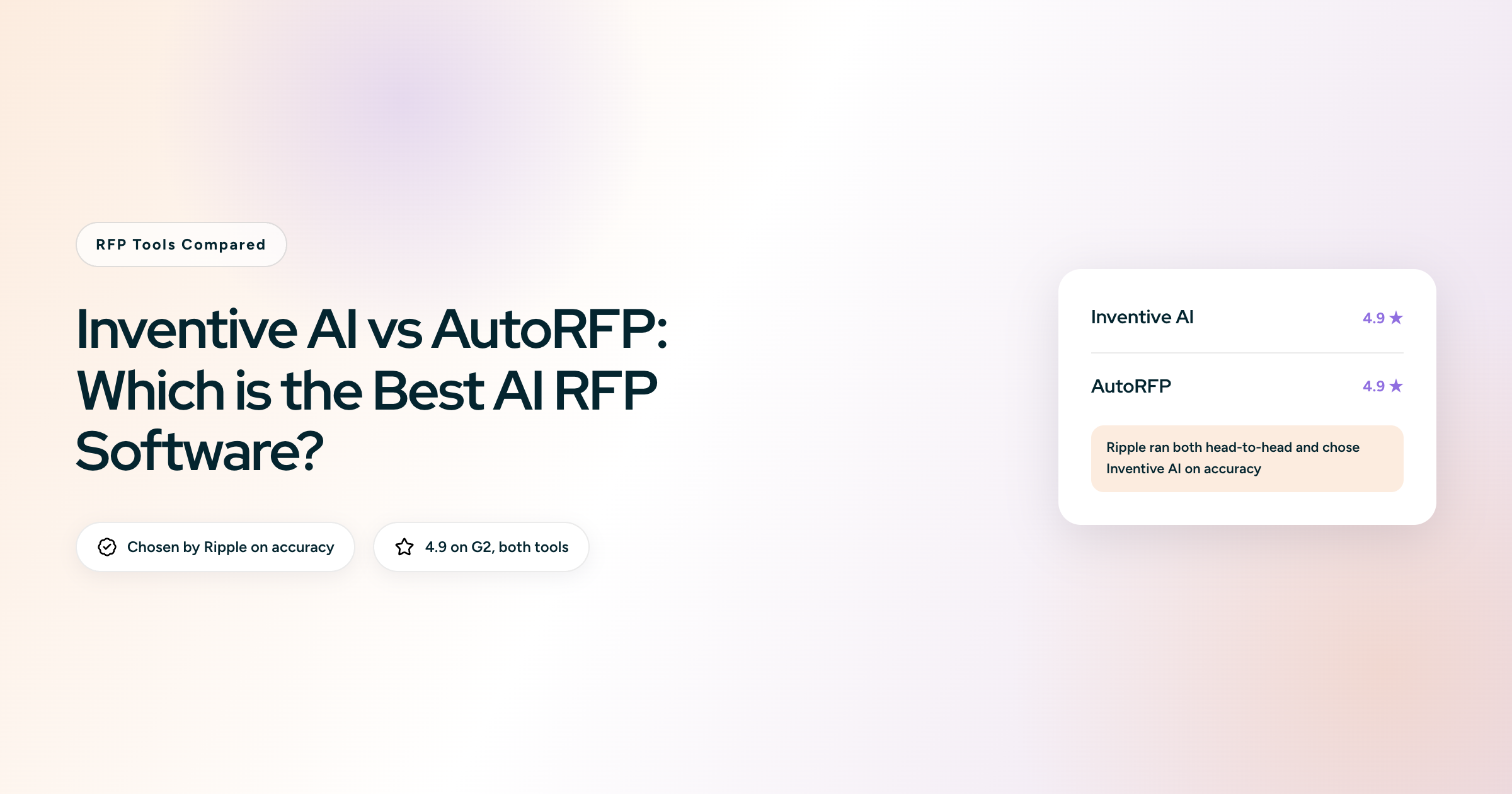
- Ripple: chose Inventive AI over AutoRFP after a head-to-head pilot, then rolled it out to 150 people.
What do G2 reviewers say about AutoRFP, Loopio, and Responsive?
AutoRFP has the highest score but the smallest review base. Loopio and Responsive have hundreds more reviews, and their complaints center on content accuracy and learning curve.
AutoRFP vs Loopio vs Responsive: which should you choose?
The right answer depends on what you'd lose by switching.
- Stay on Loopio: if you submit through many portals and have a dedicated Library owner. Teams outgrowing library upkeep can compare Loopio alternatives.
- Stay on Responsive: if you handle RFQs, buy-side requests, or need its certifications and services. Teams weighing a move can compare Responsive alternatives.
- Switch to AutoRFP: if your work is RFPs and questionnaires, your buyers use Ariba, Workday, or Coupa, and you want every contributor included.
- Switch to Inventive AI: if you'd rather draft from live documents than migrate and maintain any library.