Business Process Management (BPM) RFI/RFP Template: Win BPM Deals

Winning BPM contracts starts with a clear, well-structured RFI and RFP response. Organized submissions help vendors demonstrate platform capabilities, compliance, and scalability while making it easy for buyers to evaluate.
Responding can be challenging when buyers expect detailed proof of workflow automation, integration readiness, and process expertise. Providing concise, accurate, and measurable information ensures your proposal communicates operational maturity and reliability.
In this blog, you’ll learn how buyers use BPM RFI and RFP templates to evaluate solutions and how you can use structured response templates to submit organized, evidence-based proposals.
BPM RFI Template: How Buyers Analyze Vendor Capabilities?
This BPM RFI template helps buyers gather structured information about vendor capabilities before formal evaluation. It focuses on understanding platform fit, integration readiness, and process expertise while enabling consistent comparison across multiple vendors.
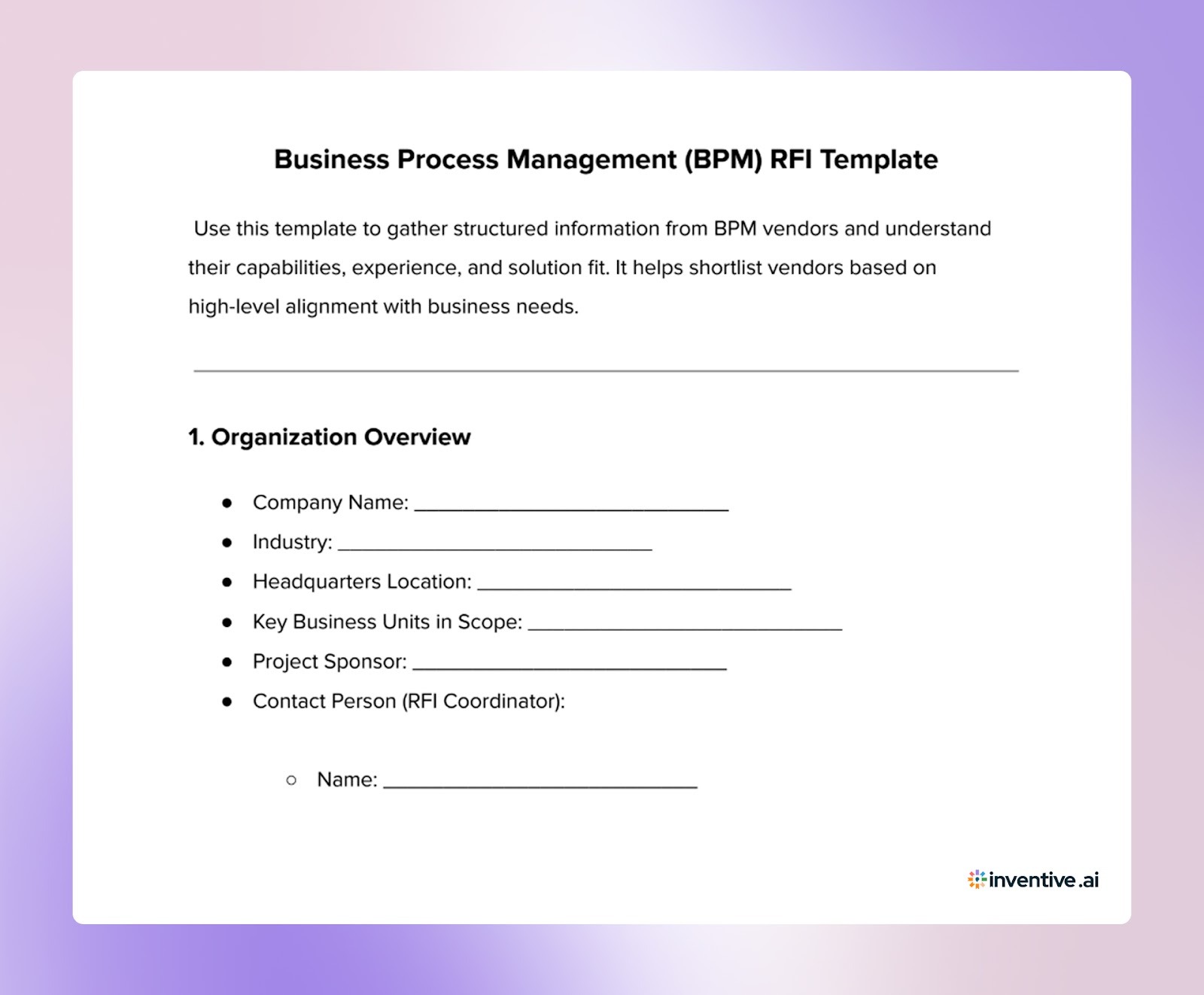

- Organization Overview: Provides vendor context on your company structure, stakeholders, and primary point of contact for coordination. Ensures vendors understand who is involved and how to communicate.
- RFI Objectives: Defines the business problems and expected outcomes driving the BPM initiative. Helps vendors align their responses to your goals and priorities.
- Current State Assessment: Captures your existing processes, tools, and inefficiencies. Enables vendors to assess gaps and propose relevant capabilities.
- Scope of BPM Initiative: Outlines processes, users, and scale of implementation. Helps vendors estimate solution fit, complexity, and feasibility.
- Functional Capability Requirements: Lists required BPM features with priority levels. Allows vendors to map capabilities directly to your expectations for comparison.
- Integration & Technical Environment: Defines system landscape, APIs, deployment preferences, and security needs. Ensures vendors confirm compatibility with your IT environment.
- Reporting, Analytics & Compliance: Specifies reporting needs, KPI tracking, and regulatory requirements. Helps vendors demonstrate governance, visibility, and support for compliance.
- Vendor Information Requested: Standardizes the information you expect from vendors, including capabilities and experience. Enables consistent evaluation across all responses.
- Budget & Timeline: Provides optional financial and timeline expectations. Helps vendors align proposals with your planning constraints.
- Submission Instructions: Defines how and when vendors should respond. Ensures structured, comparable, and timely submissions.
This stage only filters vendors at a high level. The real competition begins when buyers start comparing in detail. Let’s look at how structured RFPs drive final vendor selection.
BPM RFP Template: How Buyers Shortlist and Select BPM Vendors?
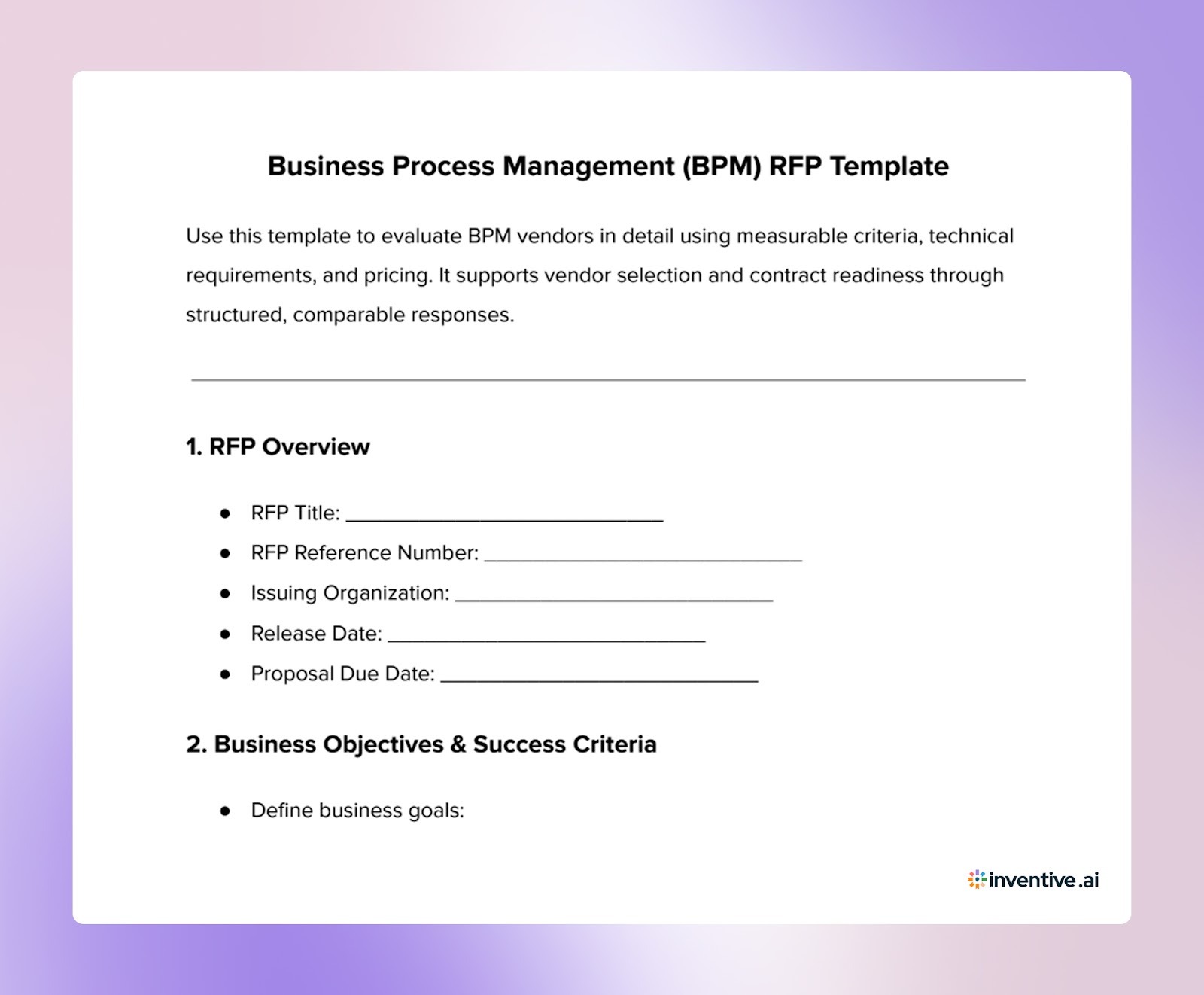
The BPM RFP template enables buyers to conduct a detailed evaluation of shortlisted vendors. It defines clear requirements, scoring criteria, and deliverables to support accurate comparison, risk assessment, and final selection decisions.

When you respond to a BPM RFI or RFP, clarity and structure matter as much as the solution itself. The response templates below show how you can organize your submission to match the buyer’s evaluation framework.
BPM RFI Response Template: Showcase Capabilities to Get Shortlisted (for Vendors)
Use this template to present your BPM capabilities in a format aligned with how buyers review RFI submissions. You should use it to clearly show platform fit, relevant experience, and your ability to meet initial qualification criteria.
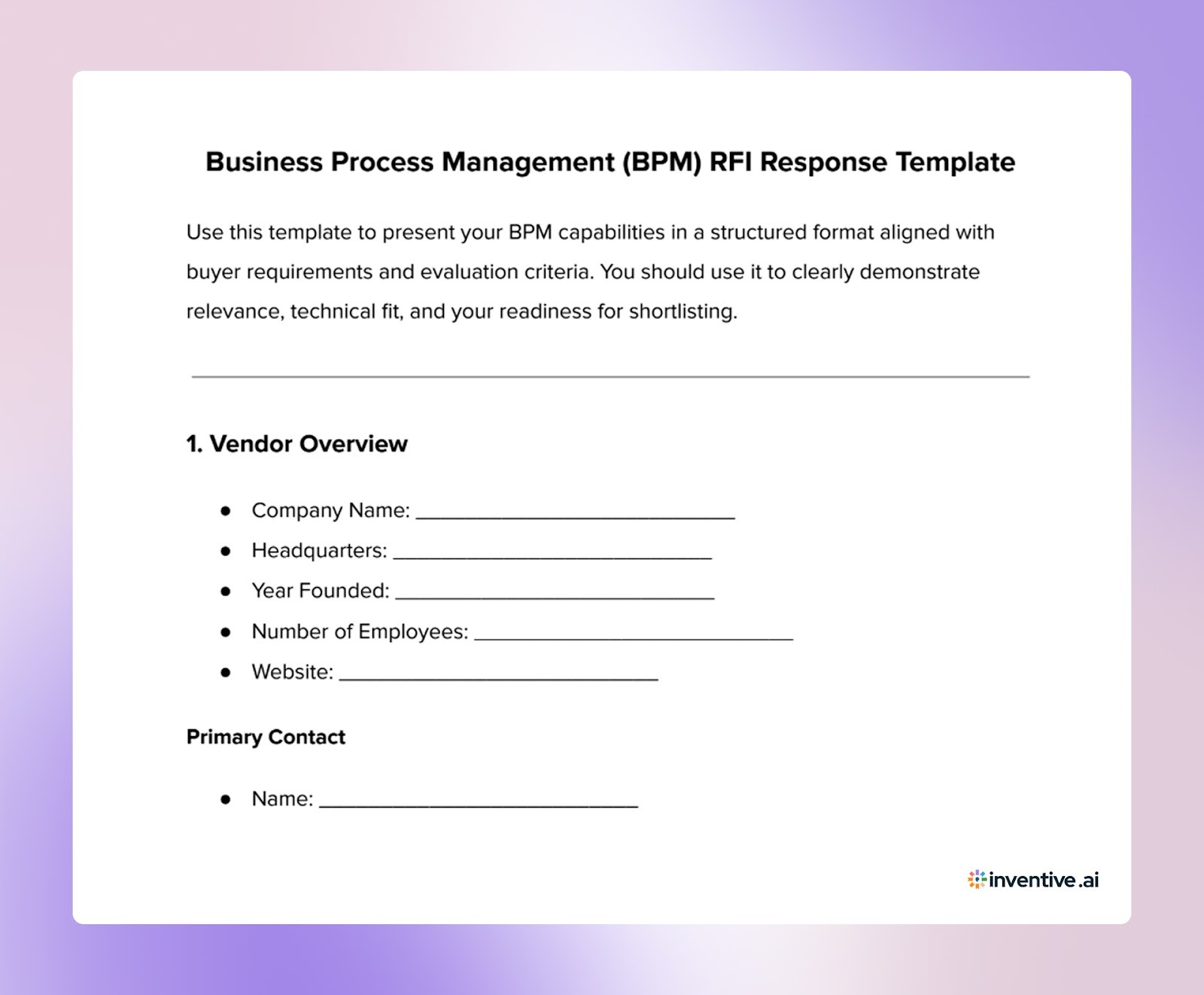

- Vendor Overview: Use this section to provide your company details and primary contact information. Ensure accuracy so buyers can validate credibility and reach out easily.
- Executive Summary: Summarize your BPM solution and its alignment with buyer objectives. Focus on strengths, relevant experience, and clear differentiators.
- Understanding of Buyer Requirements: Show that you understand the buyer’s challenges and expected outcomes. Clearly state assumptions to avoid misalignment later.
- BPM Platform Overview (Capabilities & Features): Describe your core capabilities and key features in a structured way. Ensure your response directly aligns with common BPM expectations, such as automation and modeling.
- Industry Experience & Use Cases: Highlight relevant industries, use cases, and past implementations. Use examples that closely match the buyer’s context to strengthen relevance.
- Integration & Technical Architecture: Explain how your platform integrates with existing systems and fits into different environments. Emphasize scalability, flexibility, and deployment options.
- Security, Compliance & Analytics: Provide details on certifications, data protection, and reporting capabilities. Ensure you address governance, visibility, and compliance expectations.
- Implementation Approach: Outline your high-level delivery model, timelines, and client involvement. Keep it realistic and aligned with typical BPM project expectations.
- Support, Maintenance & Pricing: Describe your support structure, SLA approach, and optional pricing model. Focus on clarity to help buyers assess long-term viability.
- Additional Information & Declaration: Include roadmap highlights and innovation areas to show future readiness. Complete the declaration to confirm the accuracy and accountability of your response.
A strong RFI response gets you shortlisted, but it does not secure the deal. The next stage demands precision, proof, and compliance. Let’s see how to structure a winning RFP response.
BPM RFP Response Template: Submit Responses That Win Deals (for Vendors)
Use this template to respond directly to buyer requirements with detailed, measurable, and compliant information. You should use it to map your solution to evaluation criteria, provide evidence, and strengthen your position during final vendor selection.
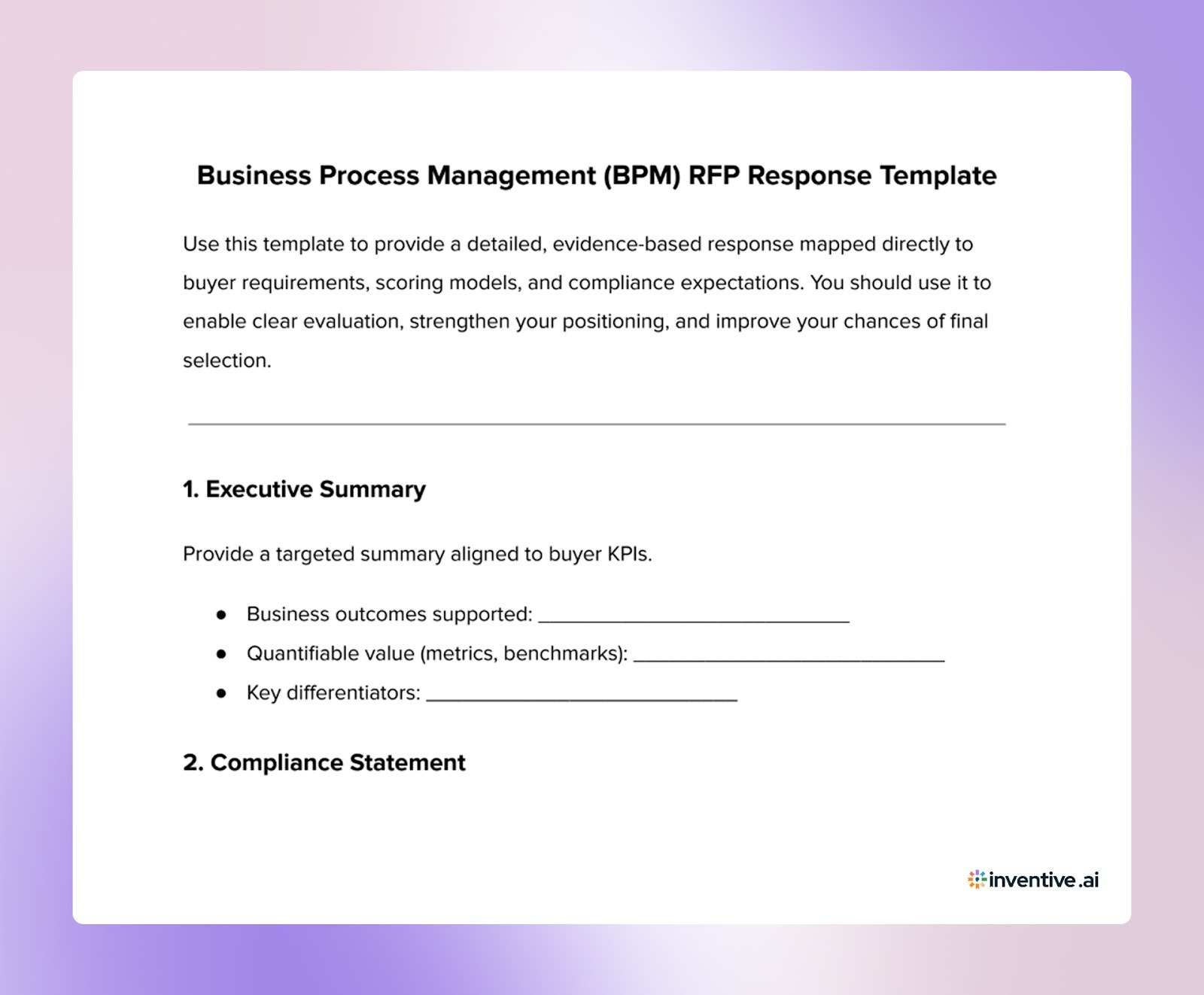

- Executive Summary: Use this section to align your solution with buyer KPIs and expected outcomes. Clearly highlight measurable value and what differentiates your offering.
- Compliance Statement: Indicate your level of compliance across all requirement categories. Be precise, as this section directly impacts scoring and shortlisting.
- Functional Response: Map your capabilities to each requirement with clear responses, configuration details, and supporting evidence. Ensure accuracy to enable side-by-side comparison.
- Technical Architecture & Integration: Describe your system architecture, integration approach, and scalability. Focus on how your solution fits the buyer’s technical environment.
- Security & Compliance: Provide certifications, encryption standards, and regulatory alignment. Ensure your response addresses enterprise security and governance expectations.
- Implementation Plan: Outline your delivery approach, timeline, and resource structure. Clearly define responsibilities to show execution readiness.
- Service, Support & Pricing: Detail your support model, SLA commitments, and full pricing breakdown. Ensure transparency to support cost and reliability evaluation.
- Value Proposition & Differentiation: Clearly explain why your solution stands out. Focus on competitive advantages and innovation that align with buyer priorities.
- Risk Management & References: Identify potential risks and mitigation strategies, and support your claims with relevant client references and measurable outcomes.
- Legal, Assumptions & Submission: State contractual acceptance, key assumptions, and dependencies. Include supporting documents and finalize with an authorized declaration.
Also Read: RFP Evaluation Criteria: Guide with Examples and Scoring Best Practices
When you respond to a BPM RFI or RFP, certain mistakes in documentation, metrics, or compliance evidence can lower your evaluation score. Here’s how you can avoid losing points.
5 Common Pitfalls to Avoid When Responding to BPM RFI and RFPs
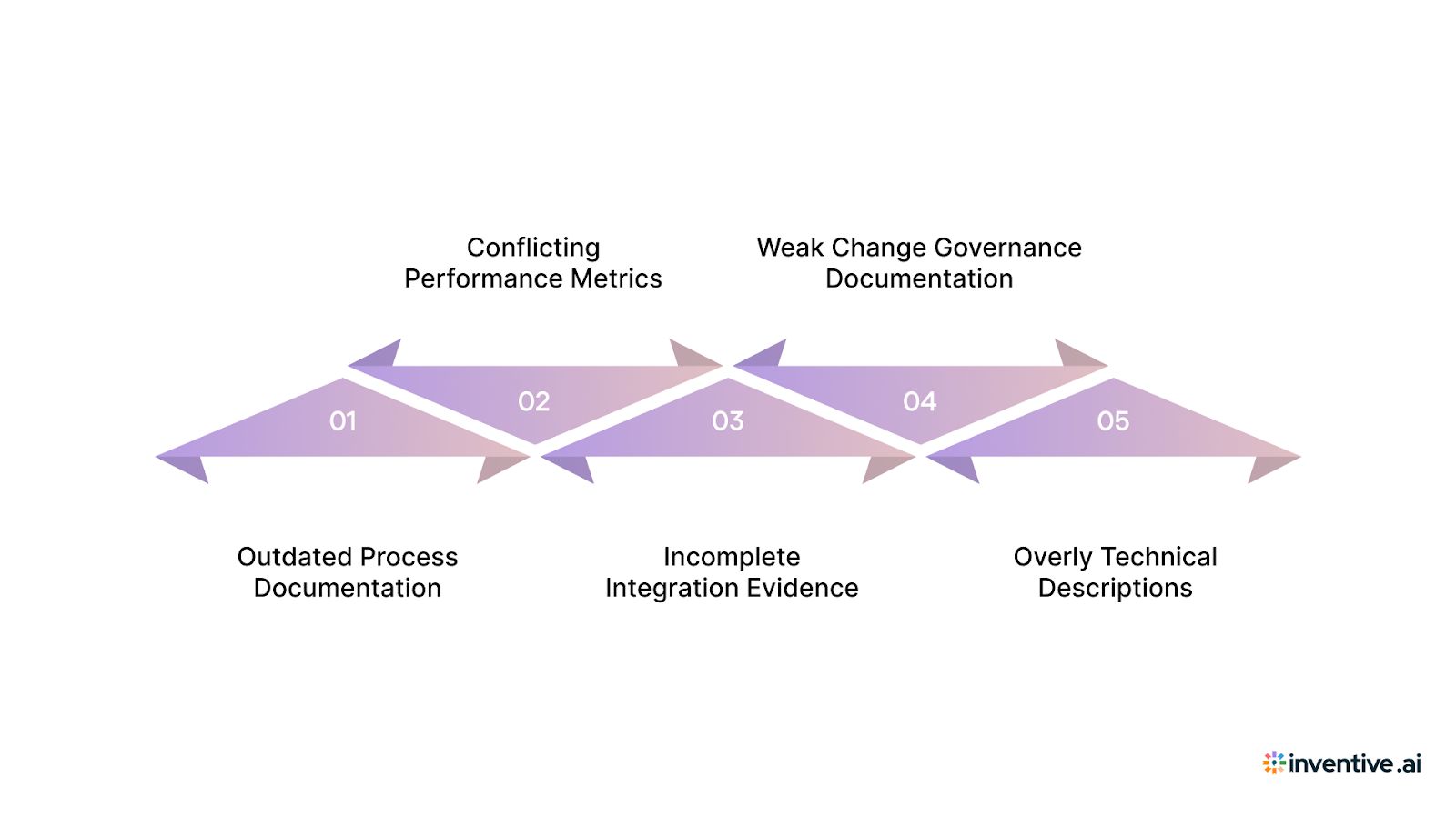
When responding to a BPM RFI or RFP, buyers look for measurable evidence of your process management expertise, workflow efficiency, and integration capabilities. Submissions that are incomplete, inconsistent, or poorly structured can lower your evaluation score.
1. Outdated or Inaccurate Process Documentation
Using legacy process maps, outdated workflow diagrams, or obsolete SOPs misrepresents your operational maturity.
Fix: Provide validated, current process models, workflow diagrams, and SOPs that reflect real-time operations and continuous improvement practices.
2. Conflicting Performance Metrics Across Sections
Discrepancies in automation coverage, cycle times, SLA adherence, or exception handling can confuse evaluators.
Fix: Align all reported KPIs, process throughput, and SLA metrics with a single source of operational data. Ensure consistency between system performance, monitoring, and reporting sections.
3. Incomplete Integration and Automation Evidence
Claiming BPM capabilities without demonstrating system orchestration, API integration, or automated workflows raises credibility concerns.
Fix: Include detailed system integration diagrams, workflow automation examples, and orchestration evidence across ERP, CRM, or other enterprise applications.
4. Weak Change Management and Governance Documentation
Failing to show structured change control, approval processes, or governance mechanisms increases perceived operational risk.
Fix: Share process governance frameworks, approval workflows, version control practices, and examples of process optimization or improvement initiatives.
5. Overly Technical or Unstructured Descriptions
Excessive technical jargon or long narratives without measurable outcomes can obscure your capabilities.
Fix: Use structured, concise language with specific metrics such as process throughput, automation percentage, error reduction, and KPI achievement. Focus on operational impact and efficiency.
Also Read: Top 10 Best RFI Software and Tools for 2026: Features, Pricing & more
As BPM RFI and RFP volumes increase, maintaining consistent process documentation, performance metrics, and integration details manually is challenging. This is where intelligent automation plays a critical role.
How Inventive AI Simplifies BPM RFI and RFP Responses?
Responding to BPM RFIs and RFPs manually can be slow and error-prone, especially when process documentation, workflow metrics, and past submissions are spread across multiple teams. Inventive AI centralizes this information in a unified knowledge hub and uses AI-powered drafting to generate structured, accurate responses based on historical BPM proposals and RFI and RFP data.
Key Capabilities of Inventive AI:
2x Higher Response Quality
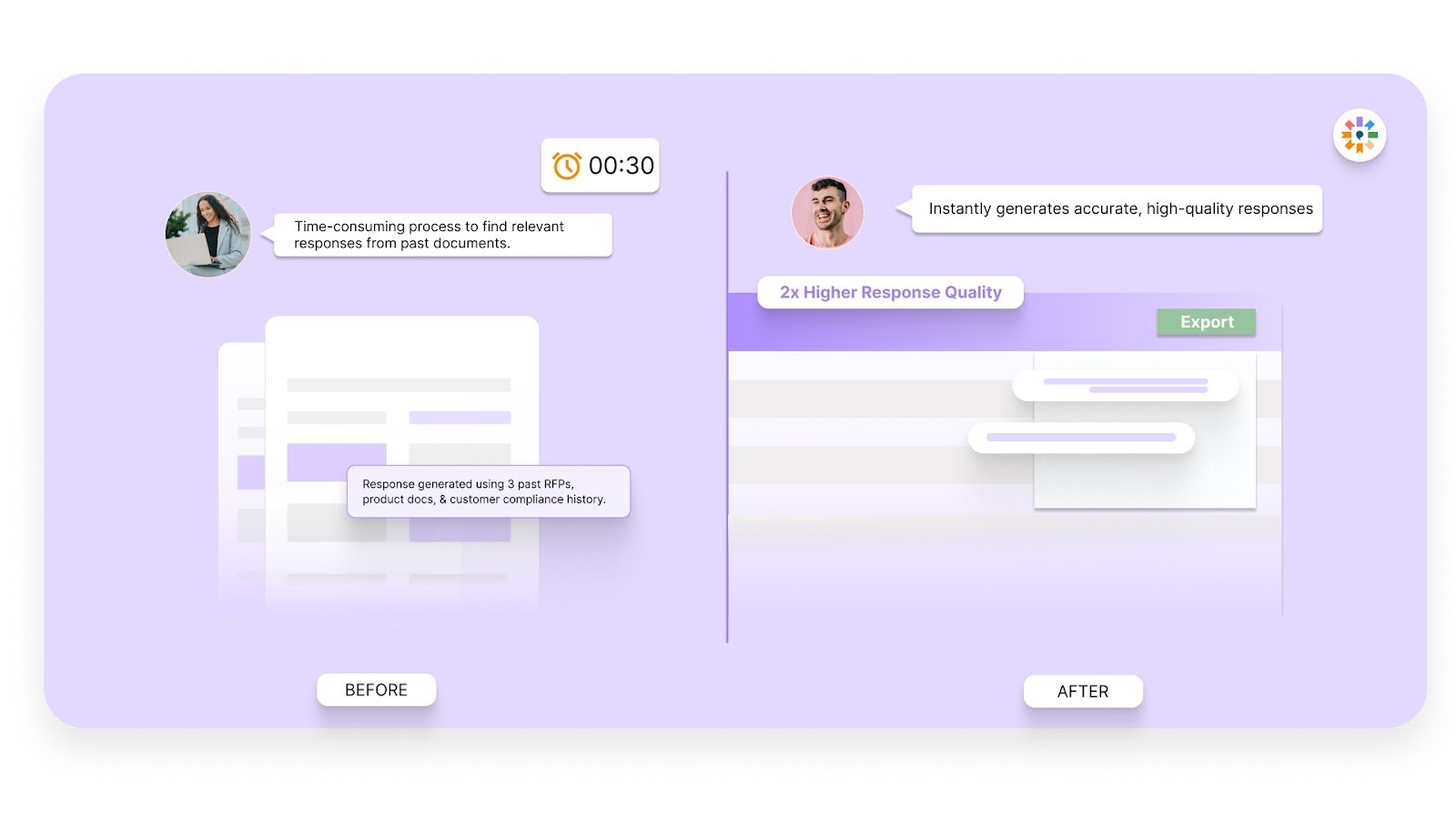
Multi-agent AI generates structured, complete responses that typically require minimal revision, improving submission consistency and enabling RFPs to be completed up to 90% faster.
Context-Awareness
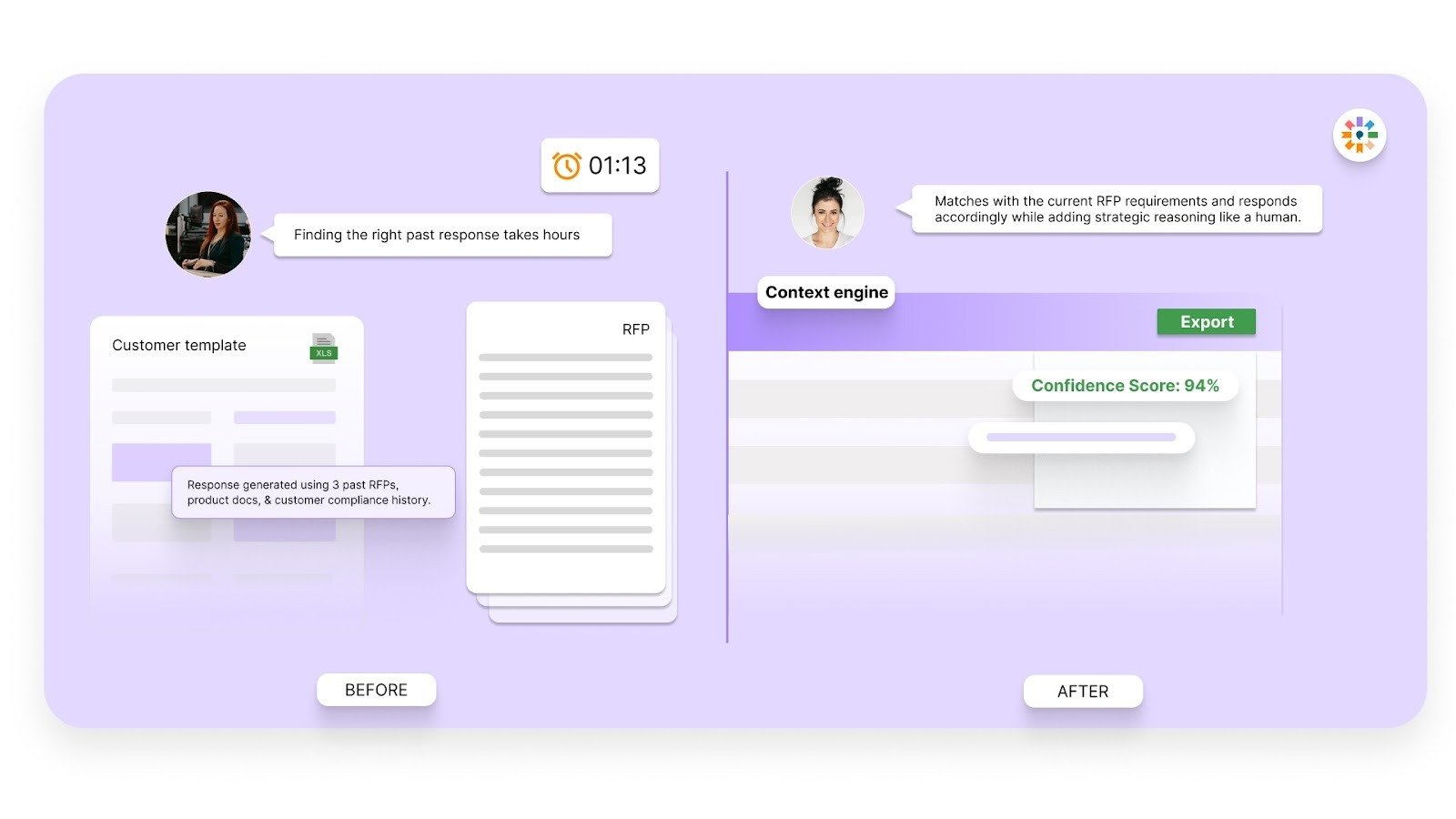
Inventive AI evaluates the entire RFP, including scope, compliance requirements, and evaluation criteria. Responses align with project-specific requirements rather than relying on static boilerplate, helping vendors achieve up to 50% higher win rates.
Instant Conflict Detection Before Submission
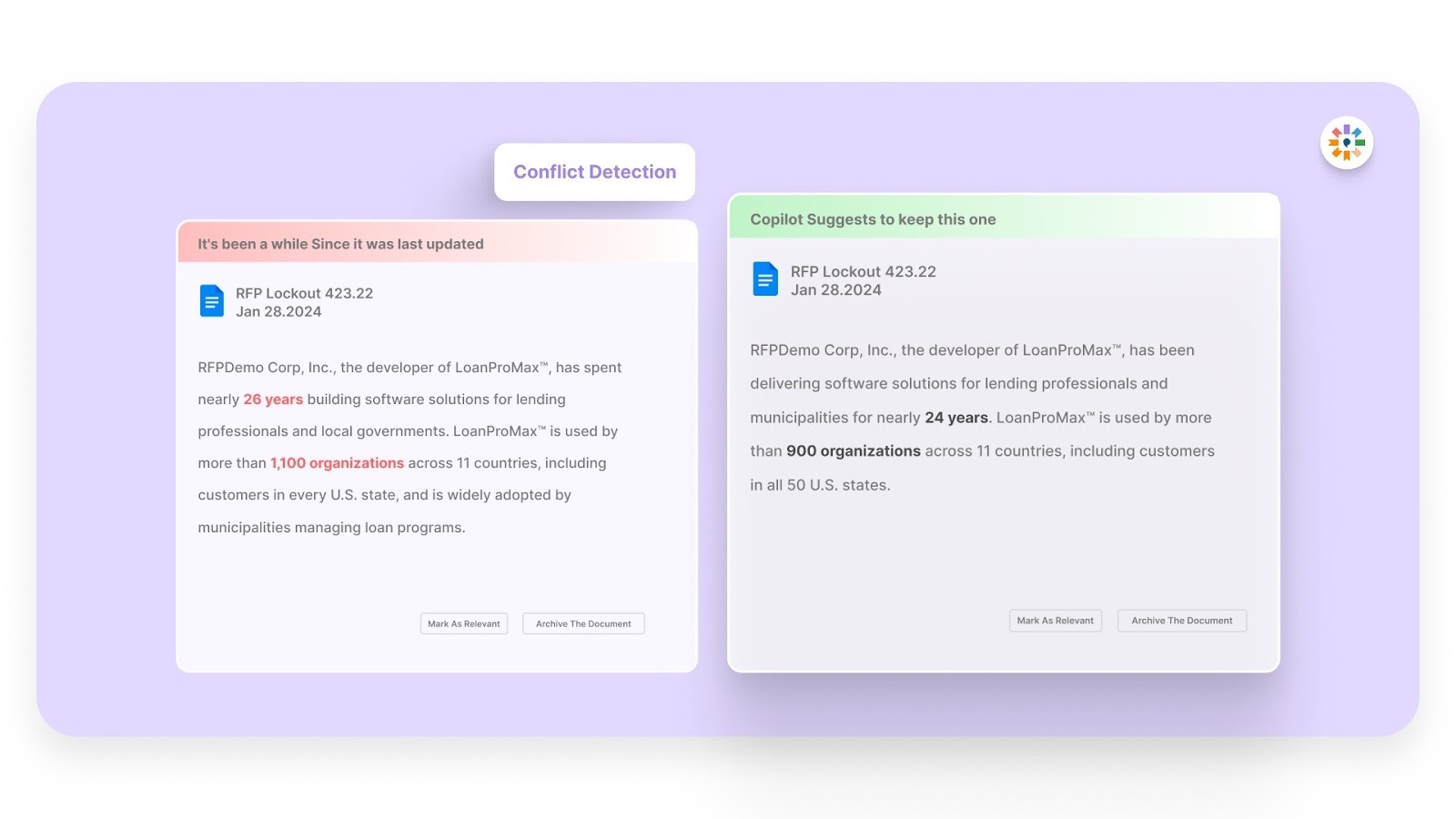
Avoid costly mistakes by having Inventive AI identify and resolve any inconsistencies or conflicts in your responses before submission, ensuring that everything is aligned and accurate.
Outdated Content Detection
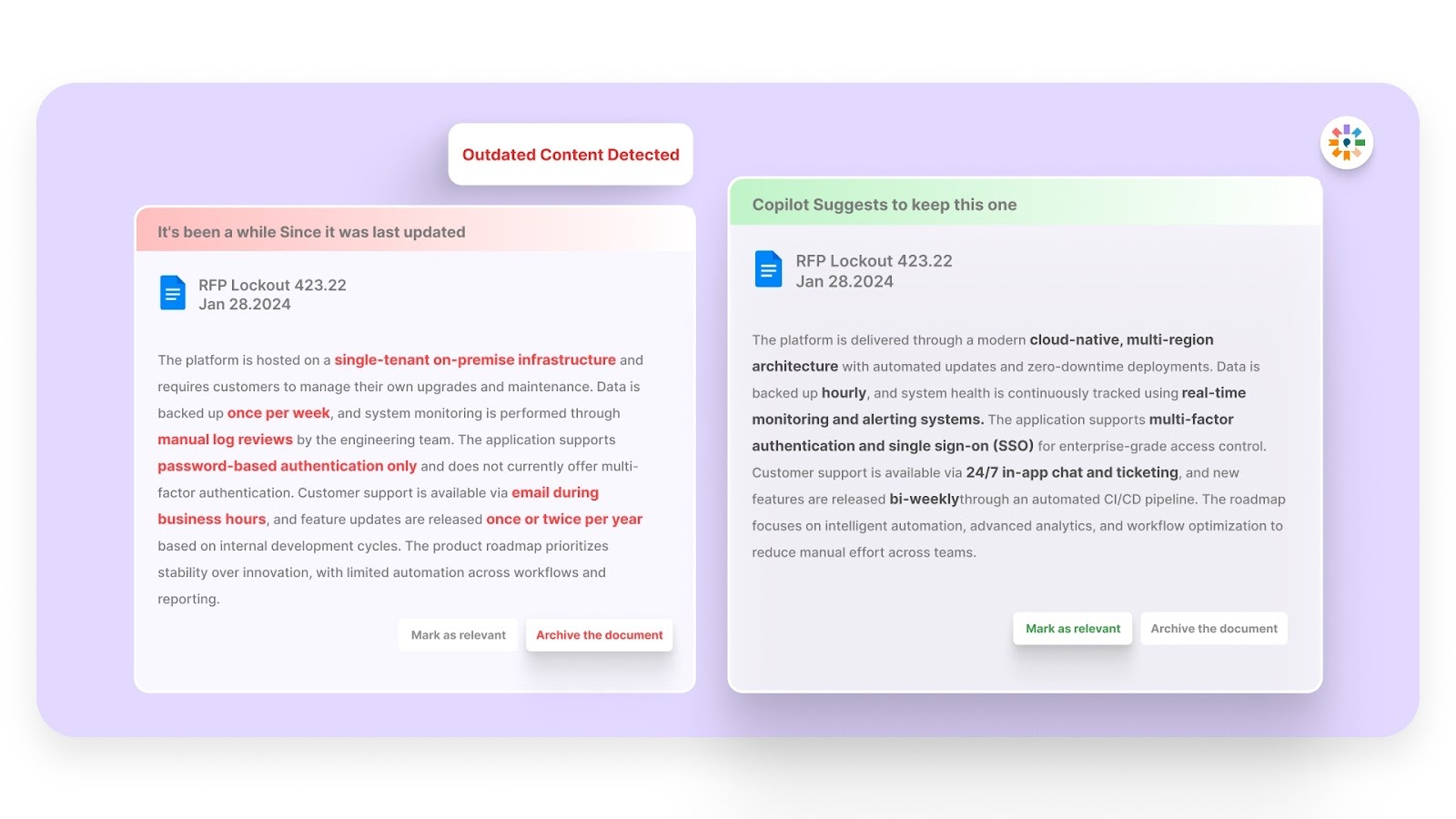
Never submit outdated information again. Inventive AI automatically flags and updates any content that is no longer relevant, so your responses stay fresh and aligned with the latest industry standards.
Narrative-Style Proposals
Say goodbye to fragmented, disjointed answers. Inventive AI ensures your proposals are cohesive, professional, and tell a compelling story that resonates with the buyer.
Simple, Easy-to-Use Interface
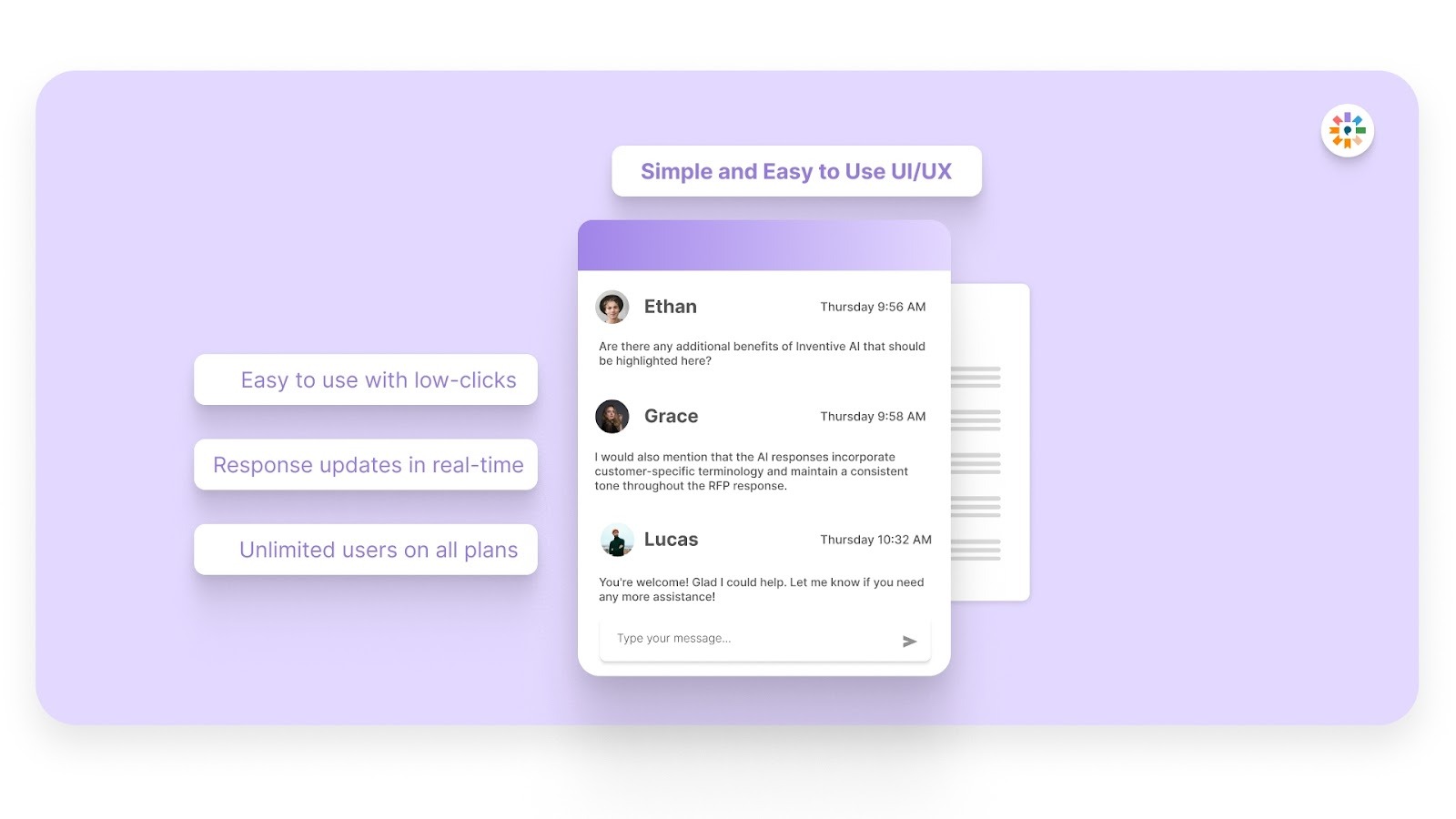
Inventive AI is designed for real proposal teams, not just technical users. Stakeholders across HR, sales, legal, and compliance can contribute without training overhead, reducing coordination friction and keeping responses moving forward.
FAQs
1. How should you prepare before responding to a Business Process Management (BPM) RFI/RFP template?
Before responding, review the entire BPM RFI/RFP template to understand the buyer’s objectives, evaluation criteria, and required capabilities. Gather process documentation, workflow metrics, integration details, and compliance evidence so your responses are accurate, consistent, and aligned with the buyer’s requirements.
2. What information do buyers typically prioritize when evaluating BPM RFI/RFP responses?
Buyers often prioritize clear evidence of workflow automation capabilities, system integration support, scalability, and security controls. They also evaluate implementation methodology, governance practices, and measurable process improvements, such as reduced cycle time, increased automation coverage, and improved operational reliability.
3. How detailed should responses be when completing a Business Process Management (BPM) RFI/RFP template?
Responses should provide enough technical and operational detail for evaluators to verify platform capabilities without becoming overly lengthy. Include concise explanations, relevant metrics, and supporting diagrams where necessary so buyers can quickly validate workflow automation, integration, and governance capabilities.
4. What common evaluation factors influence vendor selection in BPM RFI/RFP processes?
Beyond feature coverage, buyers often assess implementation risk, integration flexibility, scalability, and long-term platform viability. Vendors that demonstrate structured deployment plans, reliable support models, and proven BPM project outcomes typically perform better during the evaluation process.
5. Can vendors include optional features or enhancements in their BPM RFI/RFP responses?
Yes. Vendors can highlight optional features, advanced analytics, AI-driven automation, or value-added modules in a separate section. Clearly distinguishing these from core requirements helps buyers understand additional benefits without confusing mandatory capabilities with optional enhancements

.avif)

%2010%20Free%20Response%20Templates%20By%20Industry%20%26%20Service.jpg)