The Ultimate Fuel RFI Template and Vendor Response Guide (2026)
.jpg)
A Fuel RFI arrives in your inbox. Immediately, the buyer starts asking for specifics on supply capacity, delivery coverage, pricing models, and safety compliance. This usually triggers a frantic internal search as your team pulls data from logistics, operations, and sales to piece together a response.
It’s a familiar, exhausting cycle, especially since most buyers ask the same core questions every time. Despite this overlap, many vendors still find themselves starting from a blank page for every new request.
That’s where a Fuel RFI template changes the game. By using a pre-structured format for supplier responses, you can stop reinventing the wheel and start responding with precision.
In this guide, we’ll break down what a Fuel RFI template should include, how buyers use them to filter vendors, and how your team can use templates and AI-powered RFP software to hit deadlines faster than ever.
Fuel RFI Template for Buyers: What Procurement Teams Send Fuel Suppliers
A Fuel RFI helps buyers gather information from fuel suppliers before moving to the RFP stage. The template below includes the main sections buyers usually request, which vendors can also review when preparing responses.
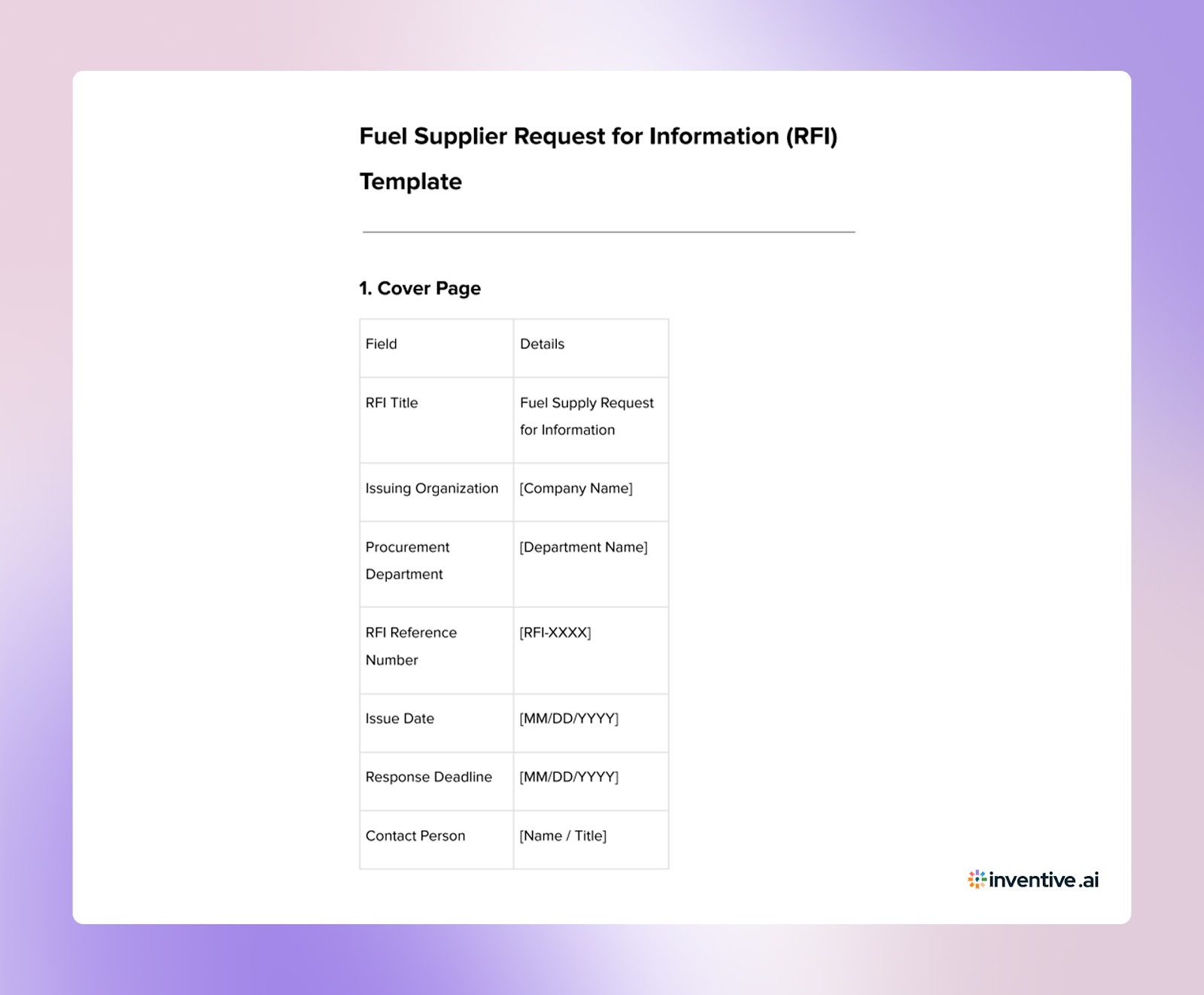

Inside A Fuel RFI Template
Every Fuel RFI is different because each buyer has different supply needs. However, most Fuel RFI templates contain several common sections.
Typical components include:
1. Company overview: The buyer asks vendors to provide company background, years in operation, service regions, and core fuel supply capabilities.
2. Fuel supply capabilities: The buyer asks vendors to describe available fuel types, supply capacity, storage facilities, and production capabilities.
3. Delivery and logistics coverage: The buyer requests information about delivery locations, transportation networks, fleet capabilities, and refueling infrastructure.
4. Supply reliability and capacity planning: Vendors may be asked to explain how they manage supply continuity, peak demand periods, and emergency fuel requirements.
5. Compliance and safety standards: Suppliers must describe regulatory compliance, environmental policies, safety certifications, and operational safety procedures.
6. Pricing models and contract terms: The buyer asks about pricing approaches such as spot pricing, index-linked pricing, or long-term supply contracts.
7. Technology and reporting capabilities: Some RFIs request details about fuel tracking systems, reporting dashboards, or digital tools used for supply management.
8. Operational experience: The buyer asks vendors to share case examples, industry experience, and references from similar fuel supply contracts.
These sections help buyers evaluate supplier capabilities and determine which vendors should proceed to the RFP stage.
Also Read: Top 10 Best RFI Software and Tools for 2026: Features, Pricing & more
A Practical Fuel RFI Response Template In 2026 (for Vendors)
The template below provides a ready format for Fuel RFI responses that you can download and customize. Your team can complete the required sections rather than creating a new response each time.
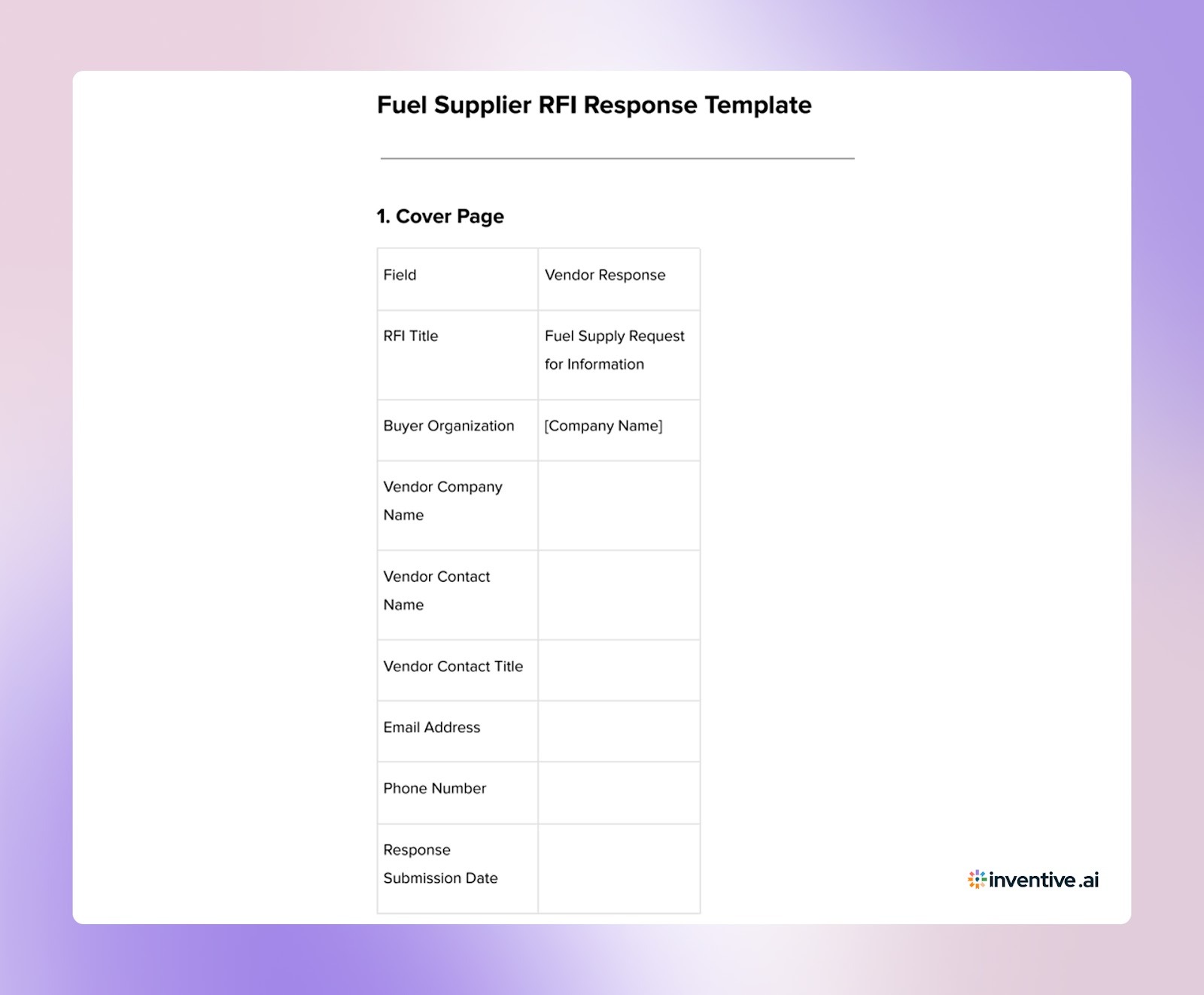

7 Ways To Strengthen Your Fuel RFI Response With These Customization Tips
A response template gives your team a starting point. However, buyers still expect responses that match their specific fuel supply needs. You should review and adjust the template before submitting your response.
Here are several ways to customize your Fuel RFI response.
1. Review the buyer’s supply requirements: Read the RFI carefully and update sections to reflect the requested fuel types, delivery locations, and estimated supply volumes.
2. Highlight relevant supply experience: Replace generic examples with contracts similar in scale, industry, or geographic coverage. This helps the buyer see your relevant experience.
3. Update logistics and delivery capabilities: Describe transportation networks, storage facilities, and delivery infrastructure that support the buyer’s locations.
4. Align pricing with the buyer’s requested format: Adjust the pricing section to match the pricing models or contract terms specified in the RFI.
5. Include measurable operational metrics: Provide data on delivery reliability, supply capacity, safety records, or on-time delivery performance.
5. Reference compliance and safety standards: Explain regulatory compliance, safety certifications, and environmental policies relevant to fuel supply operations.
6. Add location-specific supply capabilities: Highlight regional supply hubs, terminals, or distribution partners that support the buyer’s operational footprint.
Customizing these sections helps present a response that aligns more closely with the buyer’s evaluation criteria.
Key Benefits Of Using A Fuel RFI Response Template
Responding to RFIs becomes easier when your team uses a prepared framework.
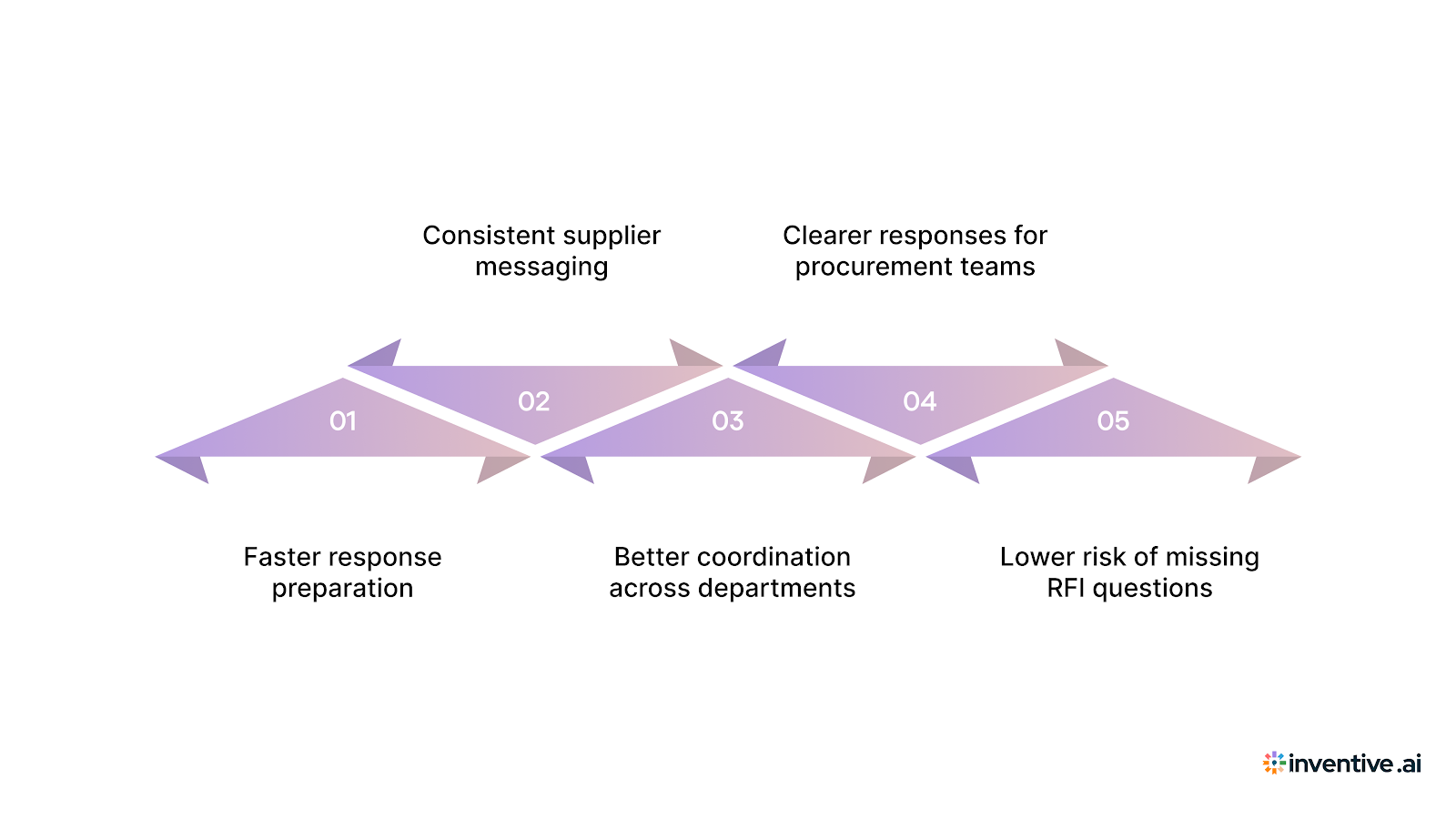
A response template helps organize information and speed up response preparation.
Key benefits include:
1. Faster response preparation: Your team reuses approved content instead of rewriting supplier capabilities each time.
2. Consistent supplier messaging: Every response reflects the same company capabilities and operational positioning.
3. Better coordination across departments: Sales, logistics, and operations teams contribute information using the same document format.
4. Clearer responses for procurement teams: Structured answers make it easier for buyers to review supplier capabilities.
5. Lower risk of missing RFI questions: Templates include common response sections used in most procurement RFIs.
Using a response template saves time while improving response quality.
Also Read: The Ultimate Guide to Crafting Data Management RFP Responses
5 Fuel RFI Mistakes That Can Remove Suppliers From Consideration
Even experienced suppliers make mistakes when responding to Fuel RFIs. These mistakes can reduce the chance of progressing to the RFP stage.
Avoid these issues.
1. Sending generic responses: Buyers want answers that match their fuel supply needs. Reference their locations, volumes, and delivery requirements.
2. Leaving sections incomplete: Answer every question in the RFI. Missing information makes it harder for the buyer to evaluate your capabilities.
3. Using outdated supplier information: Update pricing models, logistics coverage, and operational data before submitting your response.
4. Ignoring the buyer’s evaluation criteria: Review how the buyer plans to assess suppliers. Address those criteria clearly in your response.
5. Submitting the response close to the deadline: Prepare your response early and review it before submission. This helps avoid errors and missing information.
Avoiding these mistakes helps present a clearer and more competitive response to the buyer.
Craft Fuel RFI Responses 2X Faster With Inventive AI
Fuel RFIs often include detailed questions about supply capacity, logistics networks, pricing models, and compliance standards. Your team must gather information from operations, logistics, compliance, and sales teams.
Inventive AI helps vendors prepare Fuel RFI responses faster by using company knowledge and previous responses.
1. 2× Higher Quality Responses

Fuel RFIs often repeat similar supplier questions across different procurement processes. Inventive AI reviews previous responses, operational documents, and company knowledge sources to generate stronger response drafts. Your team spends less time rewriting common answers and more time reviewing the final response.
2. Context Engine
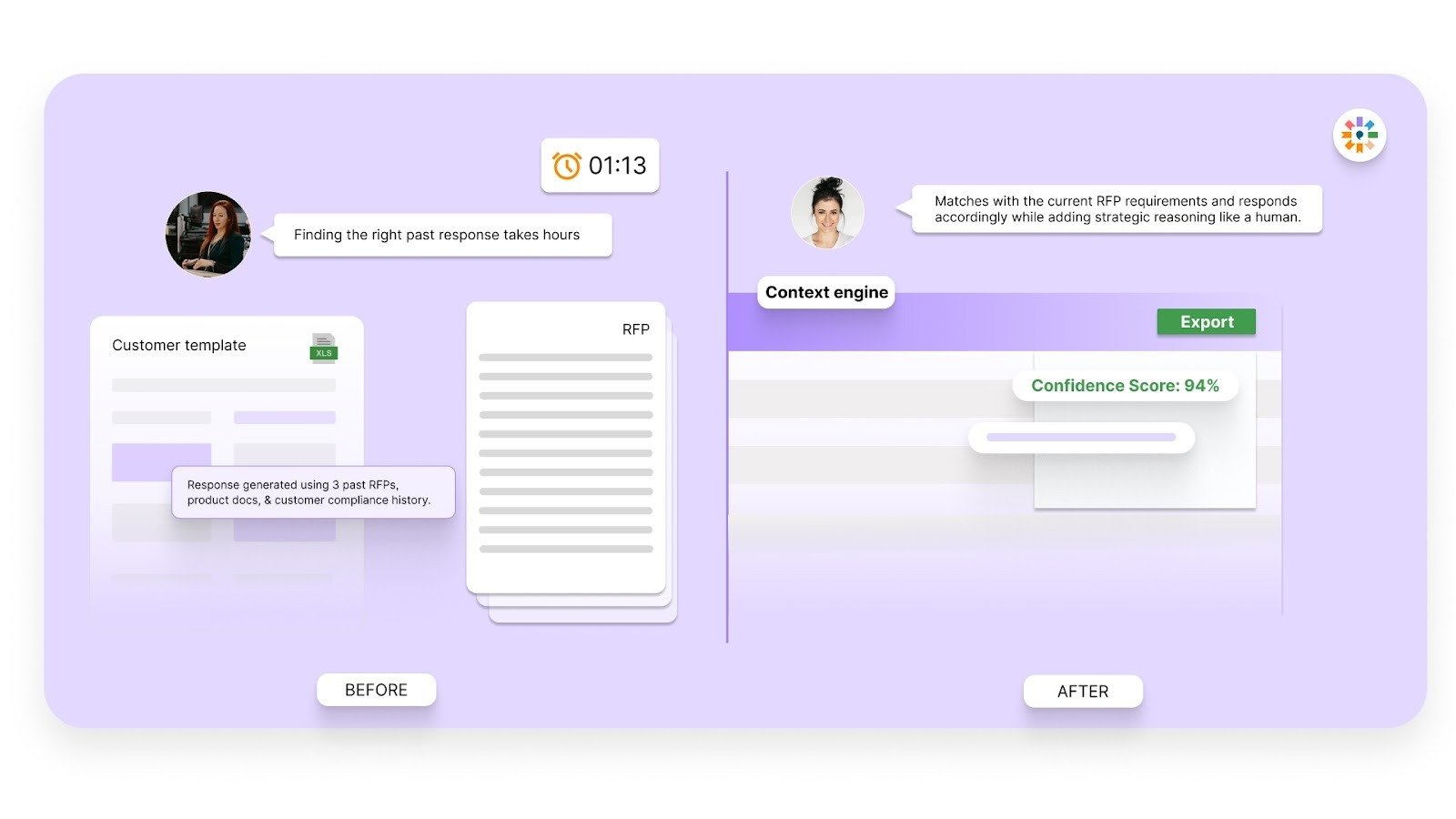
Fuel RFIs include multiple detailed supplier questions. Inventive AI reads the buyer’s questions and pulls relevant information from your internal documents and past proposals. This helps your team respond faster while keeping answers aligned with the buyer’s requirements.
3. Conflict Detection
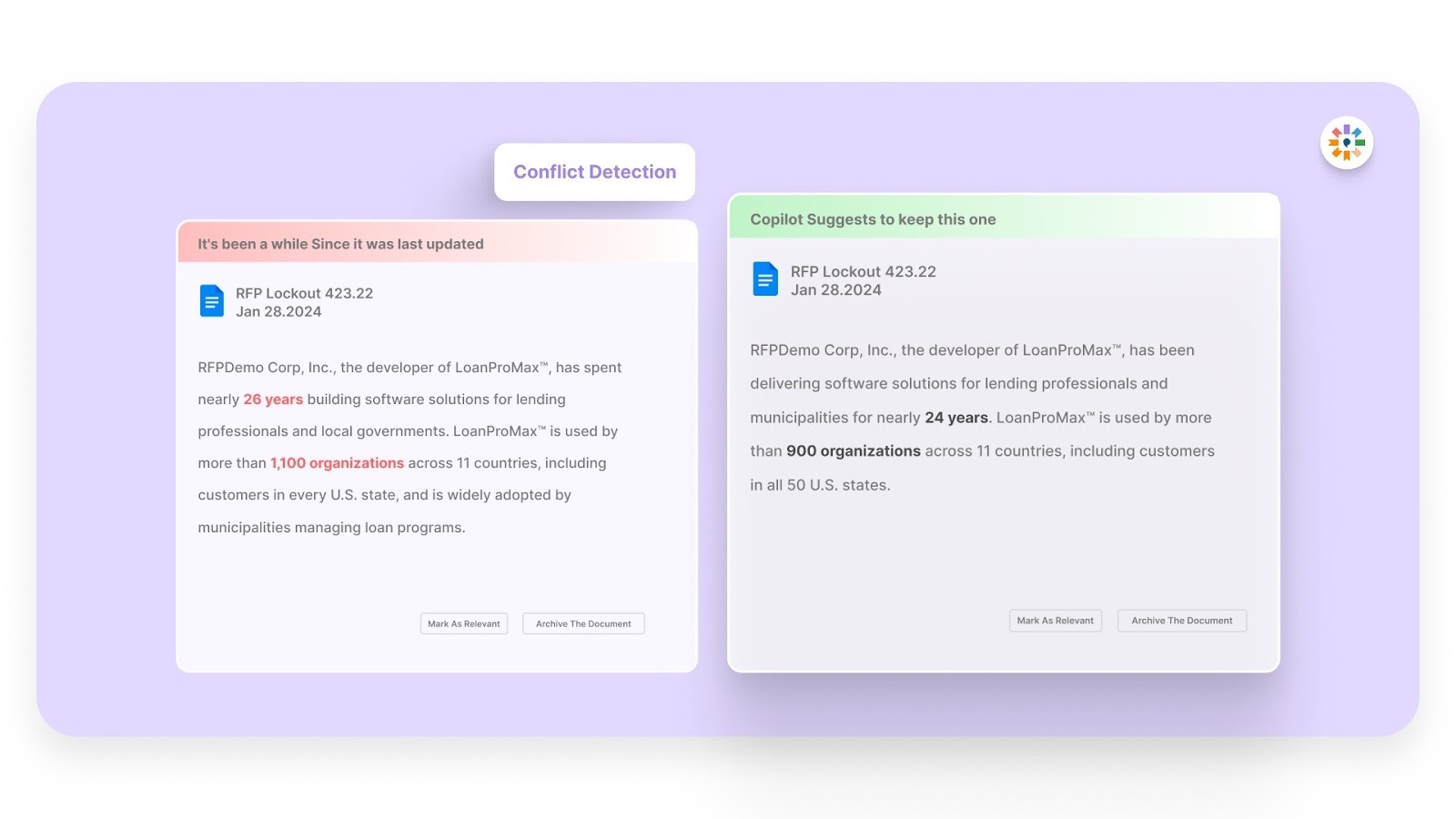
Supplier information often exists across multiple documents and departments. Inventive AI identifies conflicting details before they appear in your response. This helps avoid inconsistent information about supply capacity, logistics coverage, or pricing models.
4. Outdated Content Detection
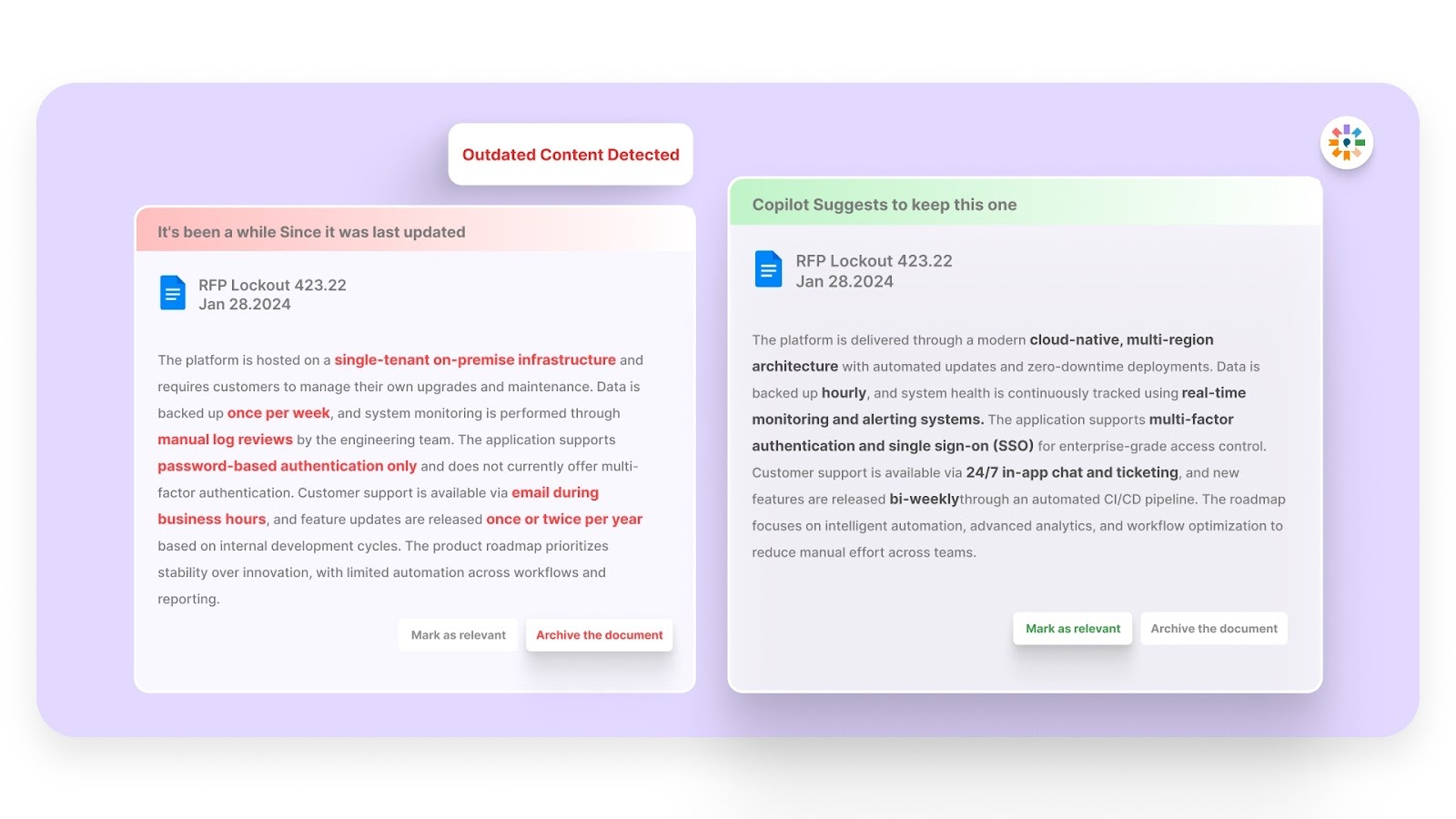
Fuel supply responses often include operational data, certifications, and compliance details. Inventive AI flags outdated information stored in your knowledge base. Your team can update these sections before submitting the response.
5. Simple, Easy-to-Use Interface
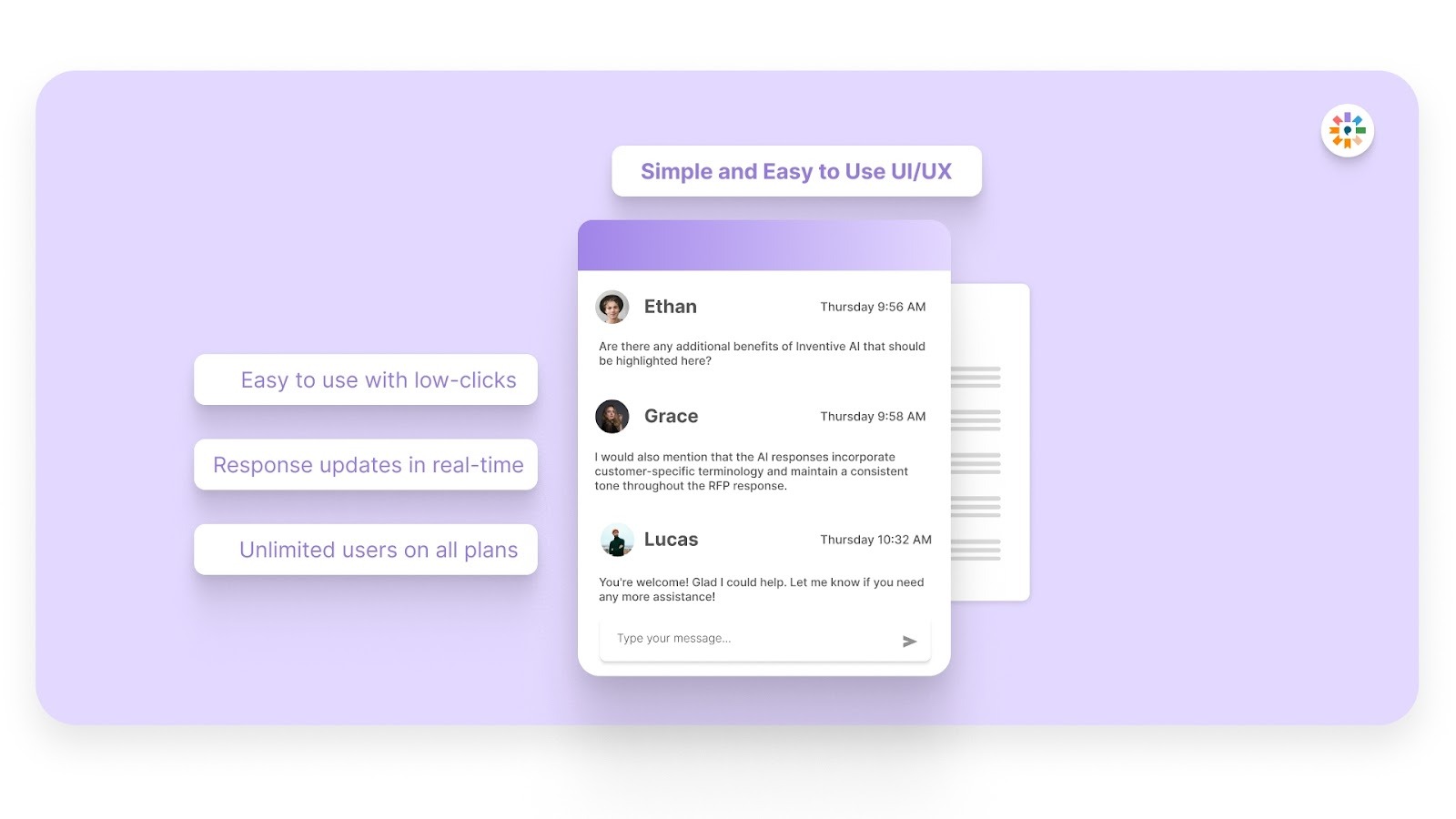
Fuel RFI responses often require input from sales, logistics, operations, and compliance teams. Inventive AI allows teams to collaborate on one platform while preparing responses. This makes it easier to gather inputs and complete the RFI before the deadline.
6. Narrative-Style Proposals
Move beyond basic spreadsheets with polished, long-form content. Whether it is a pitch deck or a business summary, Inventive AI ensures your proposal reads like a unified story rather than a list of disconnected answers.
Using AI-powered RFP response software, vendors can generate first drafts 10× faster with 95% accuracy while preparing stronger Fuel RFI responses.
Frequently Asked Questions (FAQs)
1. What types of companies typically issue Fuel RFIs?
Fuel RFIs are often issued by organizations that rely on large fuel volumes for operations. These may include transportation companies, airlines, shipping operators, construction firms, utilities, and large fleet operators.
2. How is a Fuel RFI different from a Fuel RFP?
A Fuel RFI is an information-gathering document used early in the procurement process. A Fuel RFP is a formal request where buyers invite selected suppliers to submit pricing proposals and contract terms.
3. What industries require large-scale fuel RFIs?
Fuel RFIs commonly appear in industries that depend on a continuous fuel supply. These include aviation, maritime transport, logistics, mining, construction, and public transportation sectors.
4. What happens after suppliers submit responses to a Fuel RFI?
After reviewing responses, the buyer evaluates supplier capabilities and shortlists vendors. Selected suppliers are often invited to participate in the next stage, which is usually a formal Fuel RFP.
.avif)



%2010%20Free%20Response%20Templates%20By%20Industry%20%26%20Service.jpg)

.jpg)