AutogenAI pricing in 2026: cost, pricing model, features, and limitations
What AutogenAI costs in 2026, how per-seat pricing adds up as your team grows, what you pay for, and what the alternatives are.
AutogenAI does not publish public pricing. It sells enterprise contracts by custom quote, priced per seat with a minimum seat commitment. Third-party estimates put it around $30,000+ per year. AutogenAI is a generative AI platform for writing bids, proposals, tenders, and grant applications. This guide covers what it costs, how the per-seat model adds up as your team grows, what you actually pay for, and whether a general tool like ChatGPT could do the job instead.
Key takeaways
- AutogenAI uses custom, quote-based enterprise pricing with no public price list..
- Estimates put it near $30,000+ per year at entry, about $5,000 to $6,000 per seat, with a five-seat minimum.
- Because it is priced per seat, the cost climbs every time you add a user. Giving a whole team access gets expensive fast.
- On G2, AutogenAI holds 4.3/5 across 172 reviews, with praise for speed and criticism of the learning curve and occasional accuracy gaps.
- A general AI tool like ChatGPT/Claude can draft, but it carries real accuracy and data-security risks for bids, which is why teams move to purpose-built platforms like AutogenAI or Inventive AI.
How much does AutogenAI cost?
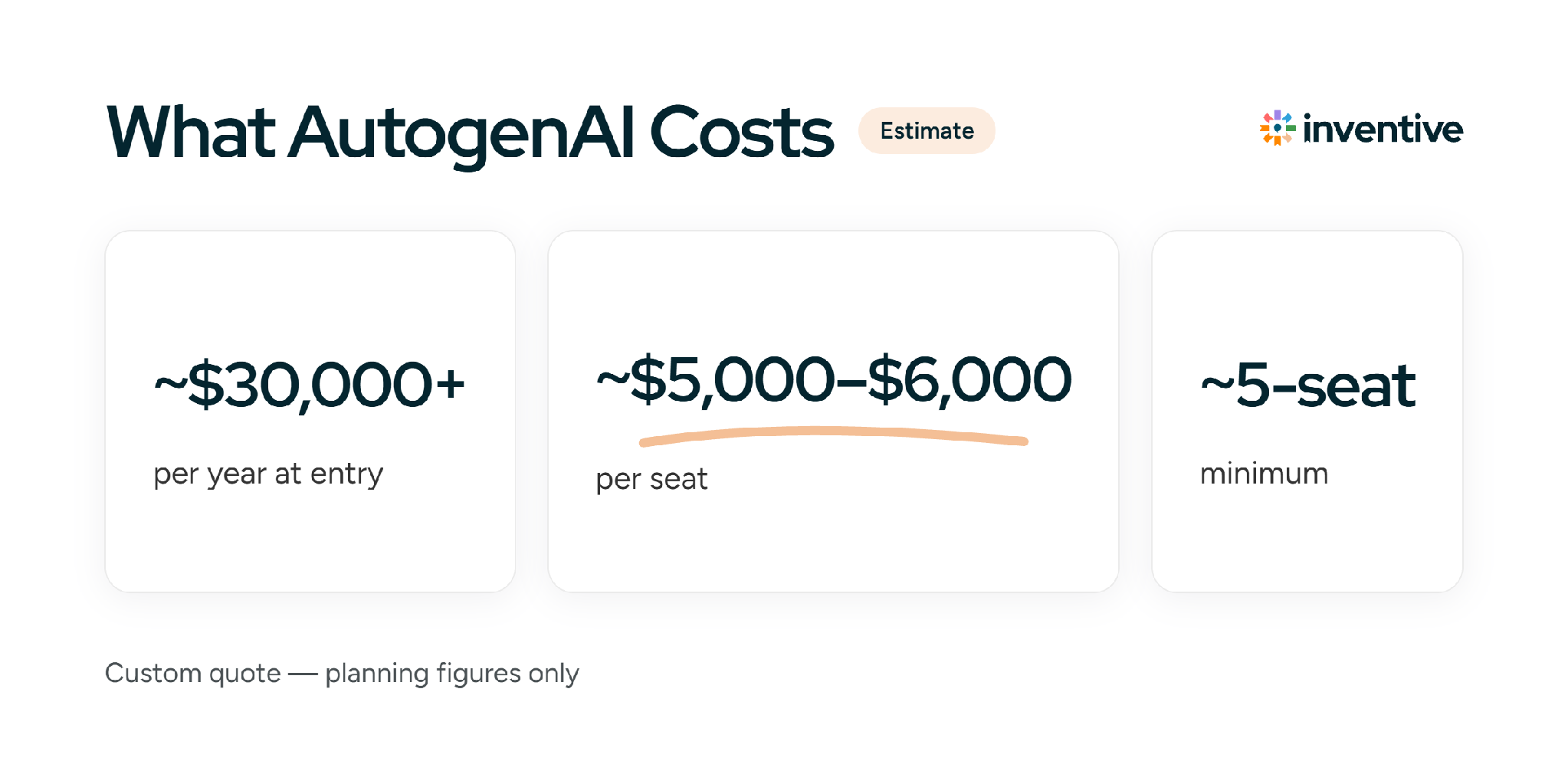
AutogenAI does not list prices publicly. Software Advice, Capterra, and Vendr all send you to the vendor for a quote. Independent estimates put entry pricing around $30,000+ per year, with per-seat costs of roughly $5,000 to $6,000 and a minimum of about five seats. Treat these as planning figures, since your real quote depends on seats, modules, and setup.
AutogenAI's pricing model: per seat with a seat minimum
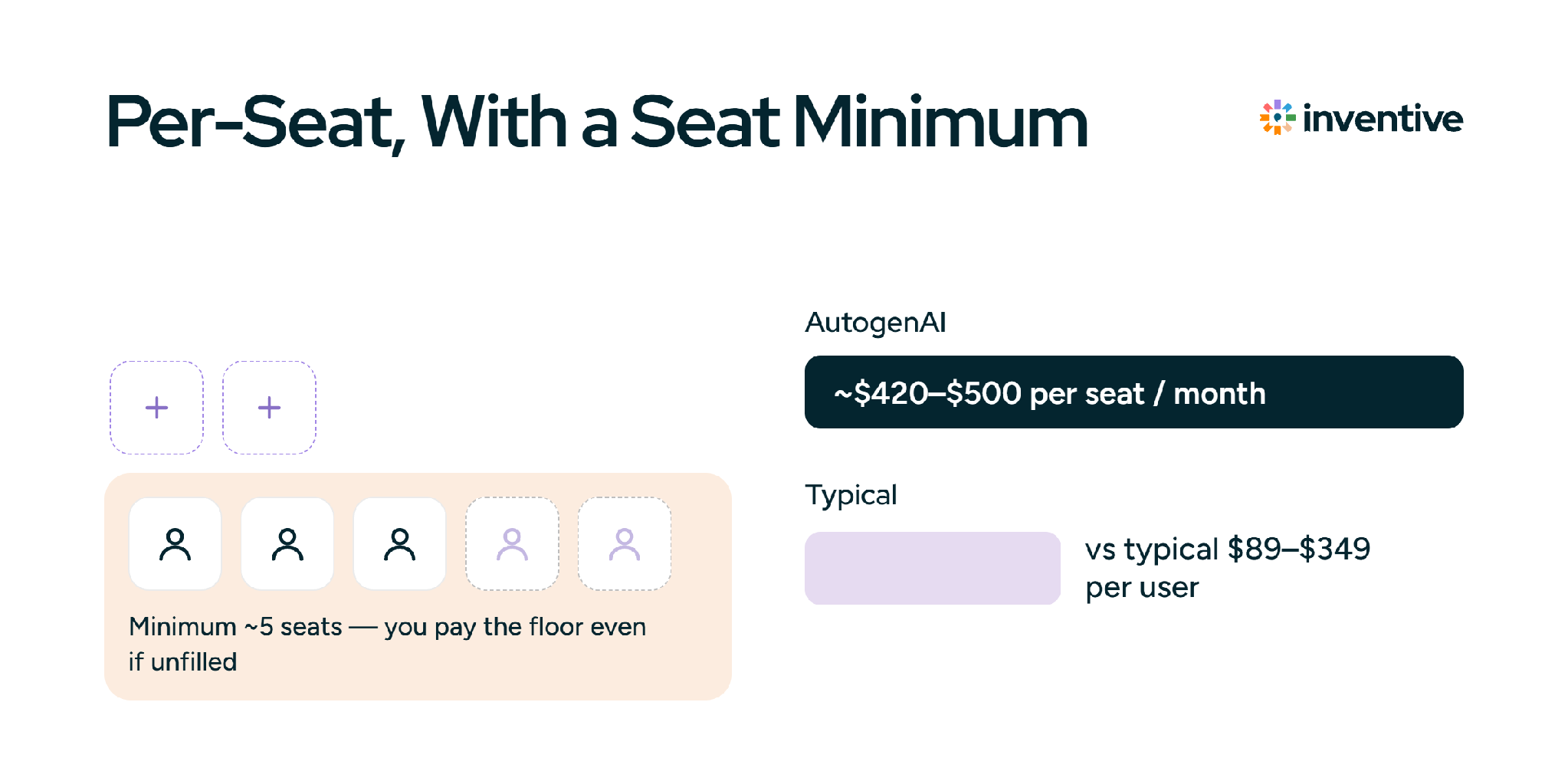
AutogenAI charges per user, and a minimum seat commitment sets the floor on the contract. That rewards a small, dedicated bid team and gets costly when you want proposal writers, sales, and subject-matter experts all working in the tool. At roughly $5,000 to $6,000 per seat a year, a single seat costs about $420 to $500 a month, well above the typical $89 to $349 per-user range for enterprise proposal software.
What AutogenAI costs by team size
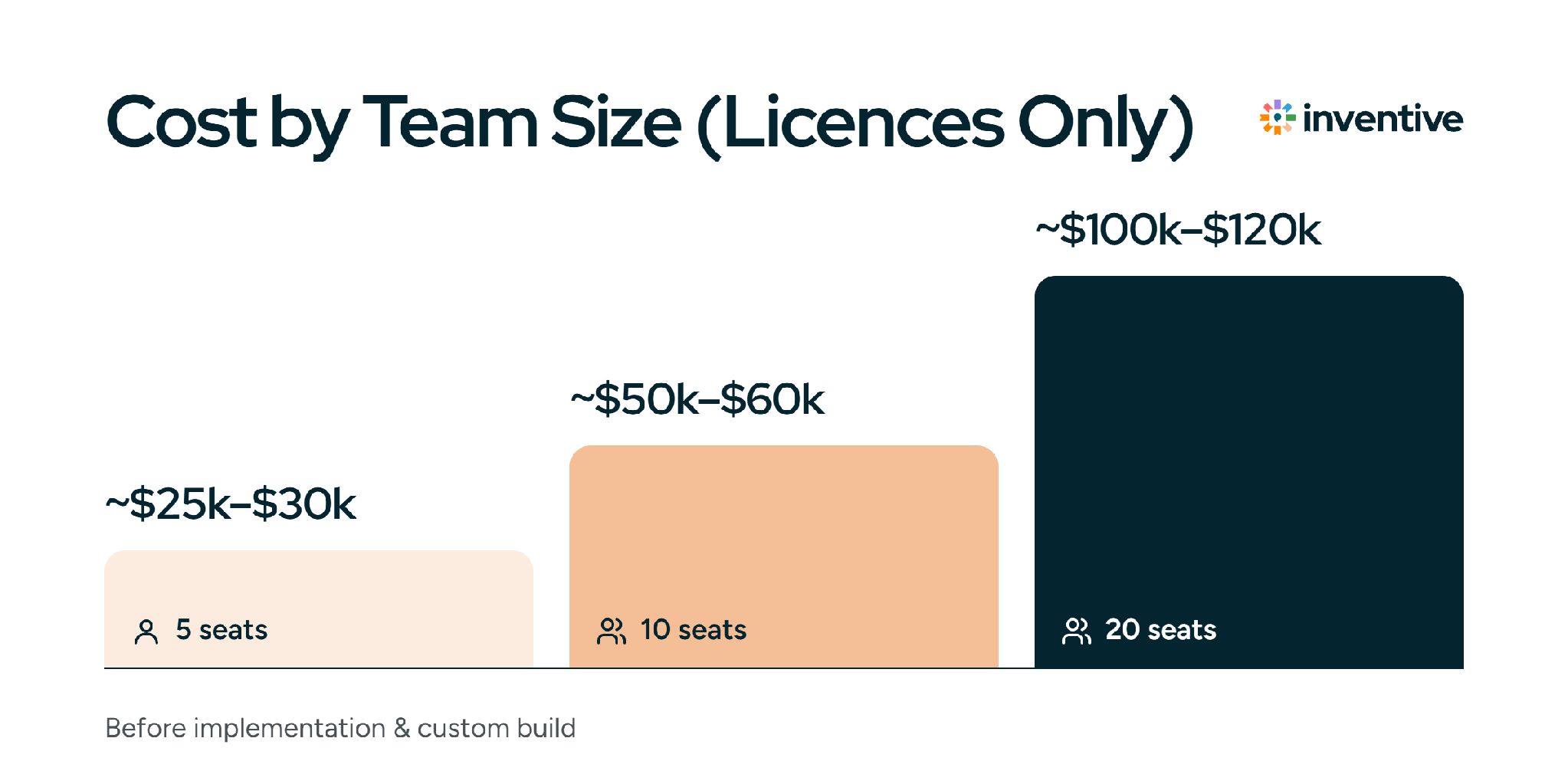
Because pricing is per seat, the math scales quickly. Using the estimated $5,000 to $6,000 per seat and a five-seat minimum, here is roughly what different team sizes would pay in licences alone, before implementation and any custom build:
These are estimates for licences only. The point is the shape of the model: every new user adds cost, so giving occasional contributors access is expensive. Teams that want everyone in the tool often compare per-seat pricing against flat, unlimited-user plans.
What's included in AutogenAI's pricing
AutogenAI is built for long-form bid and proposal writing, and the subscription covers the tools for that work: rapid first-draft generation, its Dynamic Language Engines tuned to your organization's voice, storyboarding to plan a response, content libraries with evidence sourcing, multi-LLM routing, and collaboration and review. What is often quoted on top: extra modules, implementation and onboarding, and the custom language engine build. Confirm which of these sit inside your base price.
Additional and hidden costs to budget for
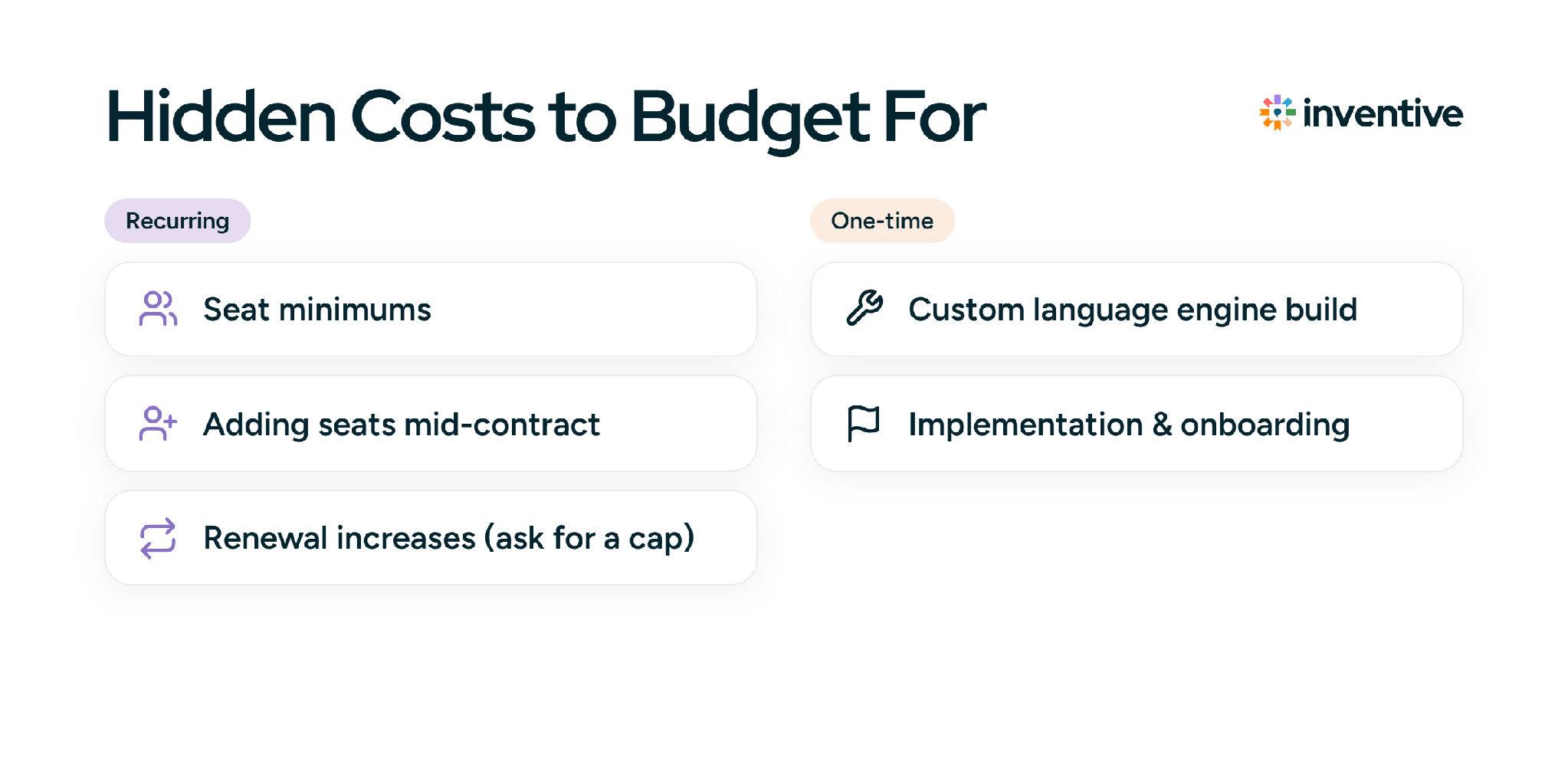
The per-seat licence is only part of what you will pay in year one. These are the extra costs that often surface during the sales process or after you sign, so it helps to ask about each one before you commit.
Seat minimums.
AutogenAI sets a floor on the number of seats you buy, commonly around five. You pay for every seat in that minimum whether or not your team fills them, so a three-person team still pays the five-seat price. Ask what the minimum is and whether it can flex down at renewal.
Custom language engine build.
AutogenAI's main draw is a language model tuned to your organization's voice and content. Building and training that engine is setup work, and it is usually a one-time cost on top of the licences rather than something included in the seat price. Ask what the build covers and whether future retraining costs extra.
Implementation and onboarding.
Getting the platform live means connecting your content, configuring workflows, and training the team. This is typically quoted as a separate one-time fee. Confirm exactly what it includes, how long it takes, and whether ongoing training is part of it or billed later.
Adding seats mid-contract.
Because pricing is per seat, growing the team during the contract means buying more seats, often at the list rate rather than any discount you negotiated upfront. If you expect to add people, ask to lock in the per-seat price for the full term so mid-year growth does not cost more.
Renewal increases.
Annual price uplift at renewal is standard for enterprise software, and it can be significant if it is not capped. Ask for a written cap on the yearly increase, for example, no more than 5 to 7 percent, in your first contract so year two does not jump.
AutogenAI vs Microsoft AutoGen: not the same tool
Two different products, similar names. AutogenAI (autogenai.com) is a commercial platform for writing bids and proposals. Microsoft AutoGen is an open-source framework for building multi-agent AI applications. If you are researching proposal software, AutogenAI is the one you want. If you are a developer building AI agents, that is Microsoft AutoGen.
Key features you’ll get with AutogenAI pricing
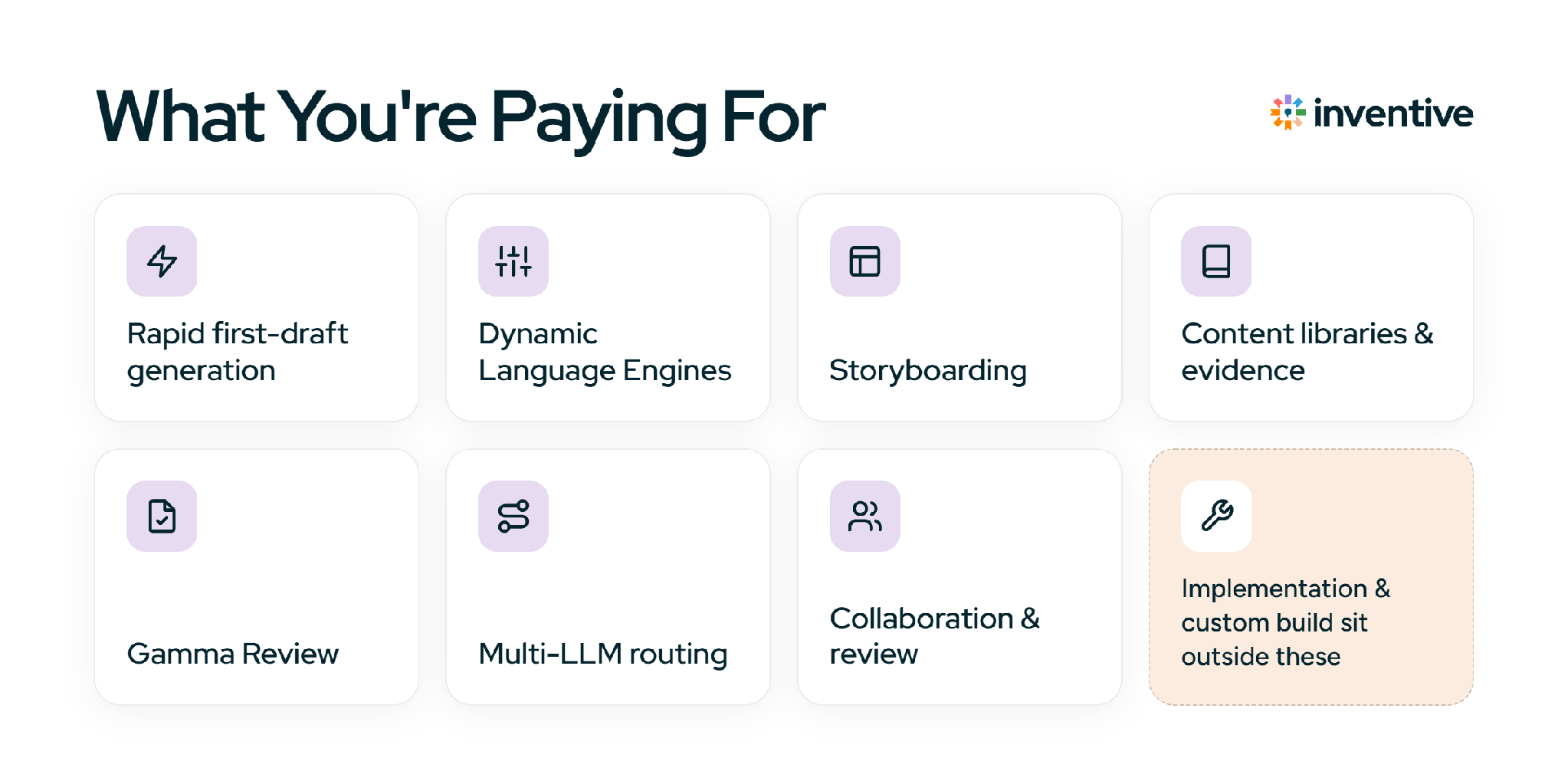
AutogenAI is built for writing long-form bids, proposals, tenders, and grant applications. These are the core capabilities included in the platform.
- Rapid first-draft generation. Drafts long-form proposal and bid content from your prompts and source material, so writers start from a draft instead of a blank page.
- Dynamic Language Engines. A language model tuned to your organization's tone, terminology, and past content, so drafts sound like your team rather than generic AI.
- Storyboarding. Plan and structure a response before drafting, mapping sections to the questions or evaluation criteria.
- Content libraries and evidence sourcing. Store approved content and pull in supporting evidence, case studies, and proof points as you write.
- Gamma Review. AutogenAI's review tool checks a draft against the requirements and flags where it can be improved before submission.
- Multi-LLM routing. Routes work across different underlying language models rather than relying on a single one.
- Collaboration and review. Shared drafting, comments, and review steps so writers, reviewers, and subject-matter experts can work on a response together.
Setup, training, and a custom Dynamic Language Engine build are usually part of the onboarding rather than the day-to-day feature set, so confirm what is included in your quote.
Also Read: Best AI Tools to Write Proposals in 2026
Can you just use ChatGPT or Claude to write proposals instead?
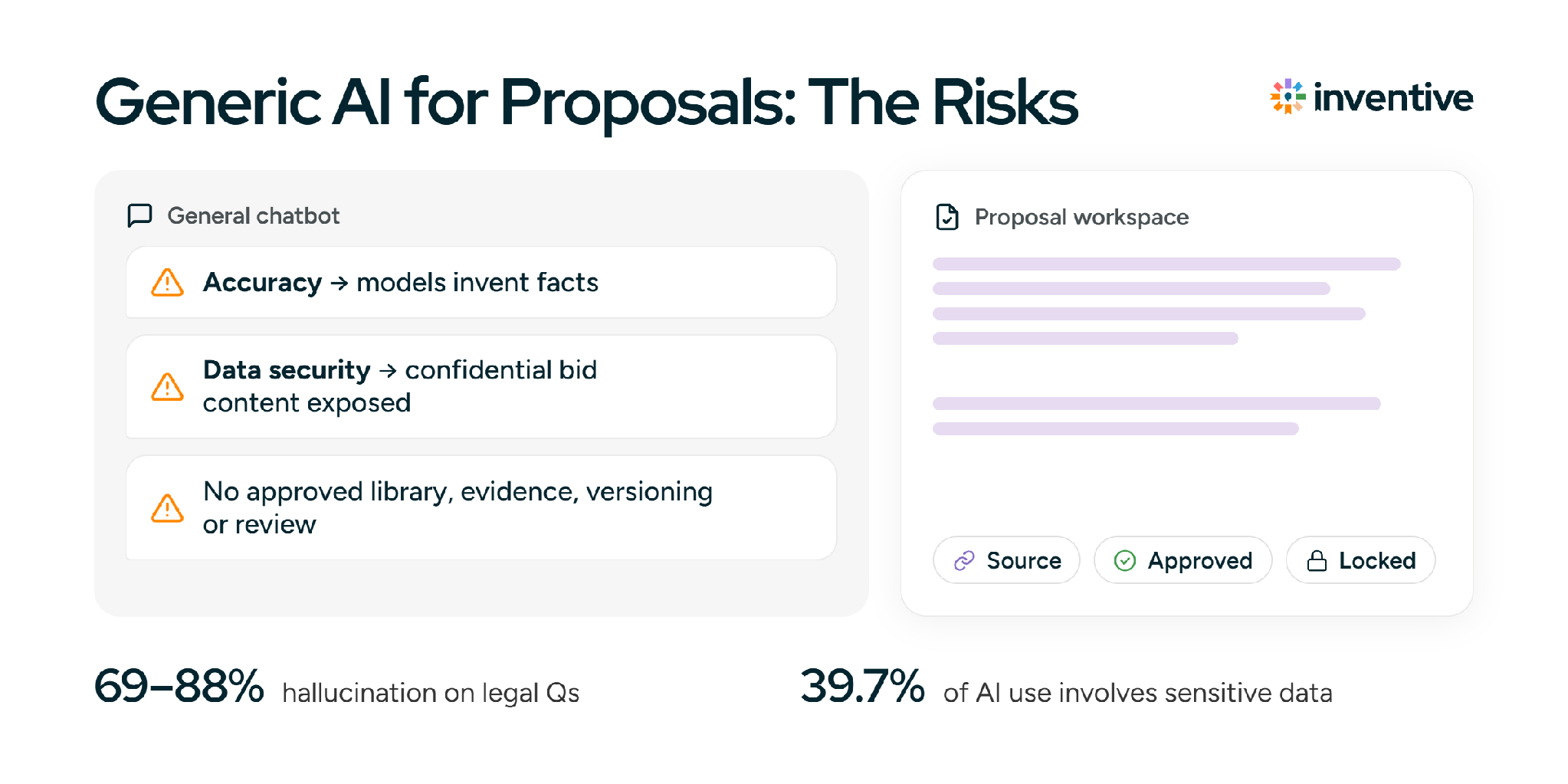
Many teams try this before buying anything, since a general AI chatbot is cheap and already on hand. It can produce a readable first draft. For a bid you actually submit, two risks show up fast.
Accuracy. General-purpose models invent facts. A Stanford study found leading models hallucinated on 69% to 88% of specific legal questions. A bid is full of exactly the kind of precise claims that get checked: compliance statements, past performance, certifications, technical specs. An unverified draft is a liability, not a shortcut.
Data security. Bids contain confidential pricing, customer names, and past-performance detail, often under NDA. Cyberhaven found 39.7% of workplace AI interactions involve sensitive data, and about a third of ChatGPT use runs through personal accounts outside company control. Pasting bid content into a consumer tool can breach client agreements and expose your win themes.
On top of that, a general chatbot has no library of your approved content, no evidence sourcing, no version control or reviewer workflow, and no way to flag outdated claims. You rebuild context from scratch every time.
A general model is fine for brainstorming and rough outlines. For a response you submit, a purpose-built RFP response platform adds the approved content, security, and review controls that bids and RFPs require. AutogenAI does this for long-form bid writing. Inventive AI does it for RFP, RFI, DDQ, and security-questionnaire responses.
What reviewers say about AutogenAI
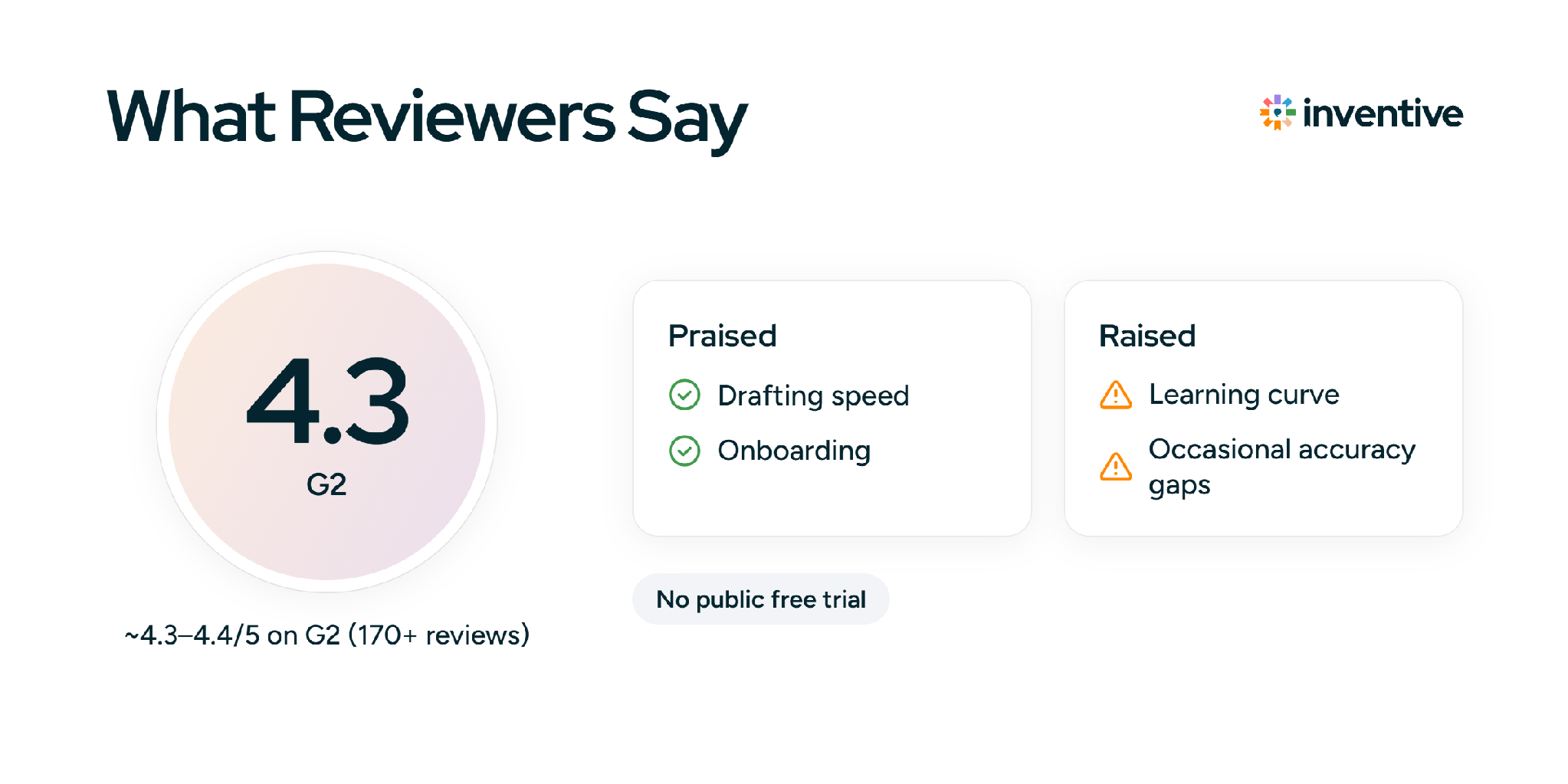
On value-for-money and ratings, AutogenAI holds about 4.4/5 on G2 across ~140+ reviews, with users praising drafting speed and onboarding support. Capterra lists the product but shows no user reviews and confirms the contact-vendor pricing model with no free trial. As with most enterprise proposal software, the strongest signal on price and fit comes from a reference call with a customer close to your size and use case.

AutogenAI vs Inventive AI: side-by-side pricing comparison
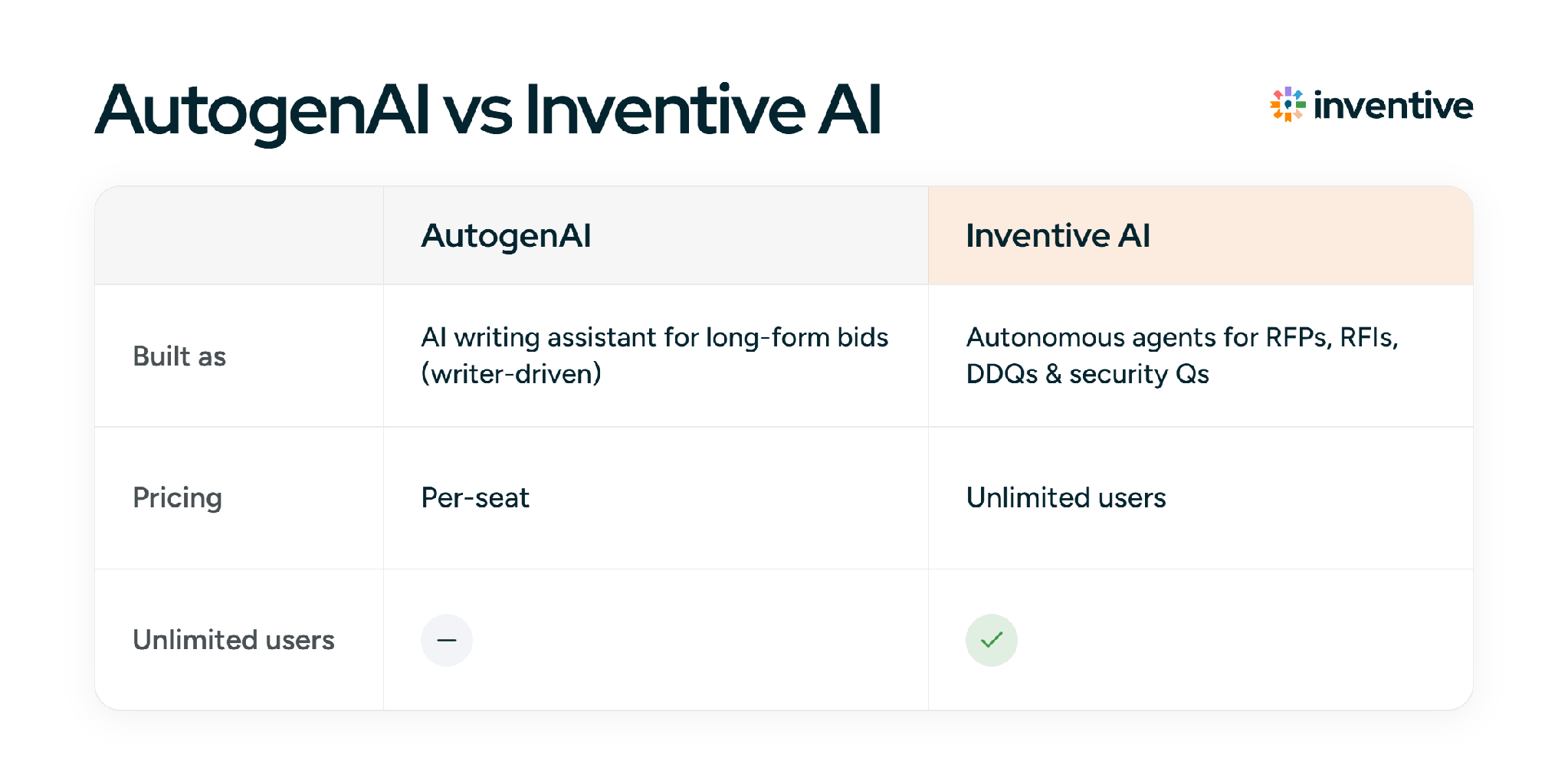
The two tools solve different problems. AutogenAI is an AI writing assistant for long-form bids, proposals, tenders, and grants, where a writer drives the draft. Inventive AI is an autonomous agent platform for RFP, RFI, DDQ, and security-questionnaire responses, where agents run the work from intake to validation and humans approve.