HeyIris vs Arphie (2026): Features, Pricing, and Which to Choose
HeyIris vs Arphie compared on cited drafts, procurement portals, proposals, security, support, and pricing, with a clear pick for each team type
HeyIris and Arphie automate RFP responses through AI, but target different workflows. HeyIris drafts RFPs, proposals, SOWs, security questionnaires, and DDQs, and auto-fills procurement portals using a browser extension. Arphie generates question-by-question responses for RFPs, security questionnaires, and DDQs, attaching source references and confidence scores to every answer.
This HeyIris vs Arphie comparison breaks down drafting features, portal support, security, integrations, pricing, and customer reviews to help you choose the right tool for your team.
TL;DR: Arphie vs HeyIris by team type
- HeyIris fits teams that write proposals and SOWs alongside RFPs, and teams that answer questionnaires inside portals such as OneTrust, ProcessUnity, and Vanta.
- Arphie fits presales and security teams answering RFPs, security questionnaires, and DDQs sent as Excel or Word files, with setup averaging about 1 month on G2.
- HeyIris charges per active user with unlimited submissions, while Arphie prices by concurrent projects and lists $36,000 to $60,000+ a year on its own site.
- Teams that need conflicting sources flagged before review can trial Inventive AI from $830/month, billed annually, with unlimited users.
HeyIris vs Arphie at a glance
HeyIris covers more document types and fills portals directly, while Arphie puts a confidence score on every response and exports finished work into the buyer's original file.
Based on vendor websites, G2, and Gartner Peer Insights, as of October 29, 2026.
What is HeyIris?
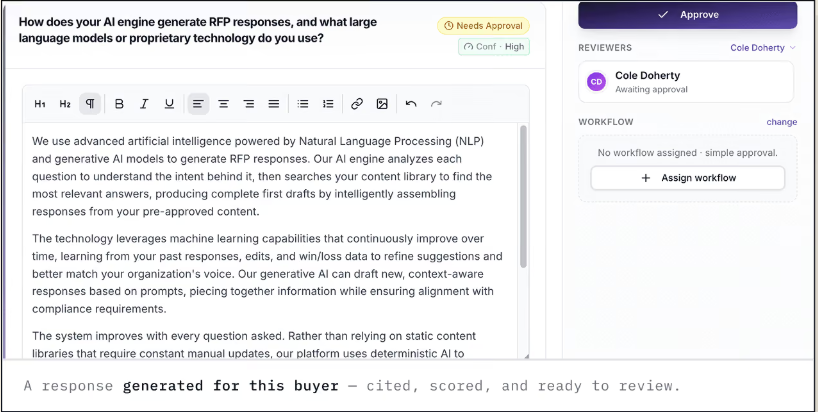
HeyIris is AI-native software that drafts RFPs, RFIs, RFQs, SOWs, business cases, security questionnaires, and DDQs using a company's approved content. It writes narrative responses in the team's voice with citations and allows tone customization by section, question, or submission.
Iris also evaluates opportunity fit with a Go/No-Go score, extracts deal context from Gong, Zoom, and Microsoft Teams transcripts, and fills procurement portal forms via a browser extension. This makes it ideal for teams handling both proposals and questionnaires.
What is Arphie?
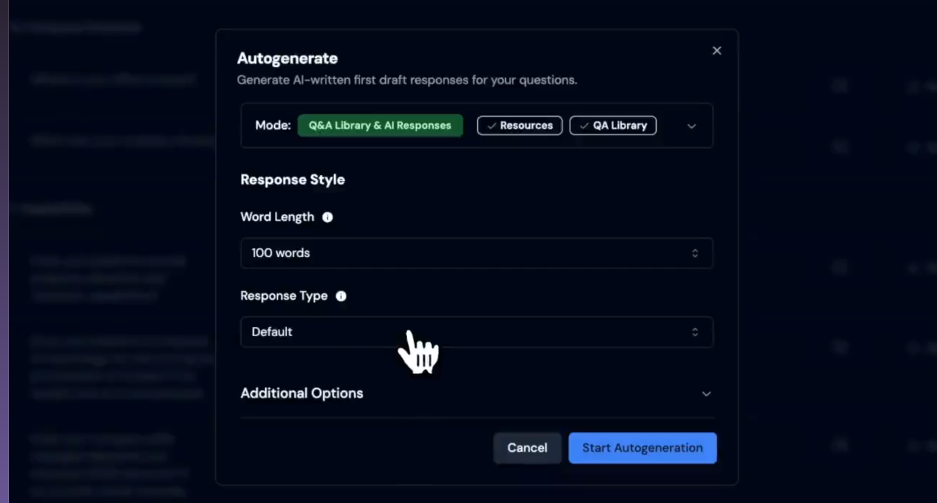
Arphie is an AI-native response platform for RFPs, RFQs, security questionnaires, and DDQs. It generates first-pass responses question by question, with source references and confidence scores for review. Its workflow is centered on structured questionnaires rather than the broader proposal and portal workflows supported by HeyIris.
How do HeyIris and Arphie turn sources into a first draft?
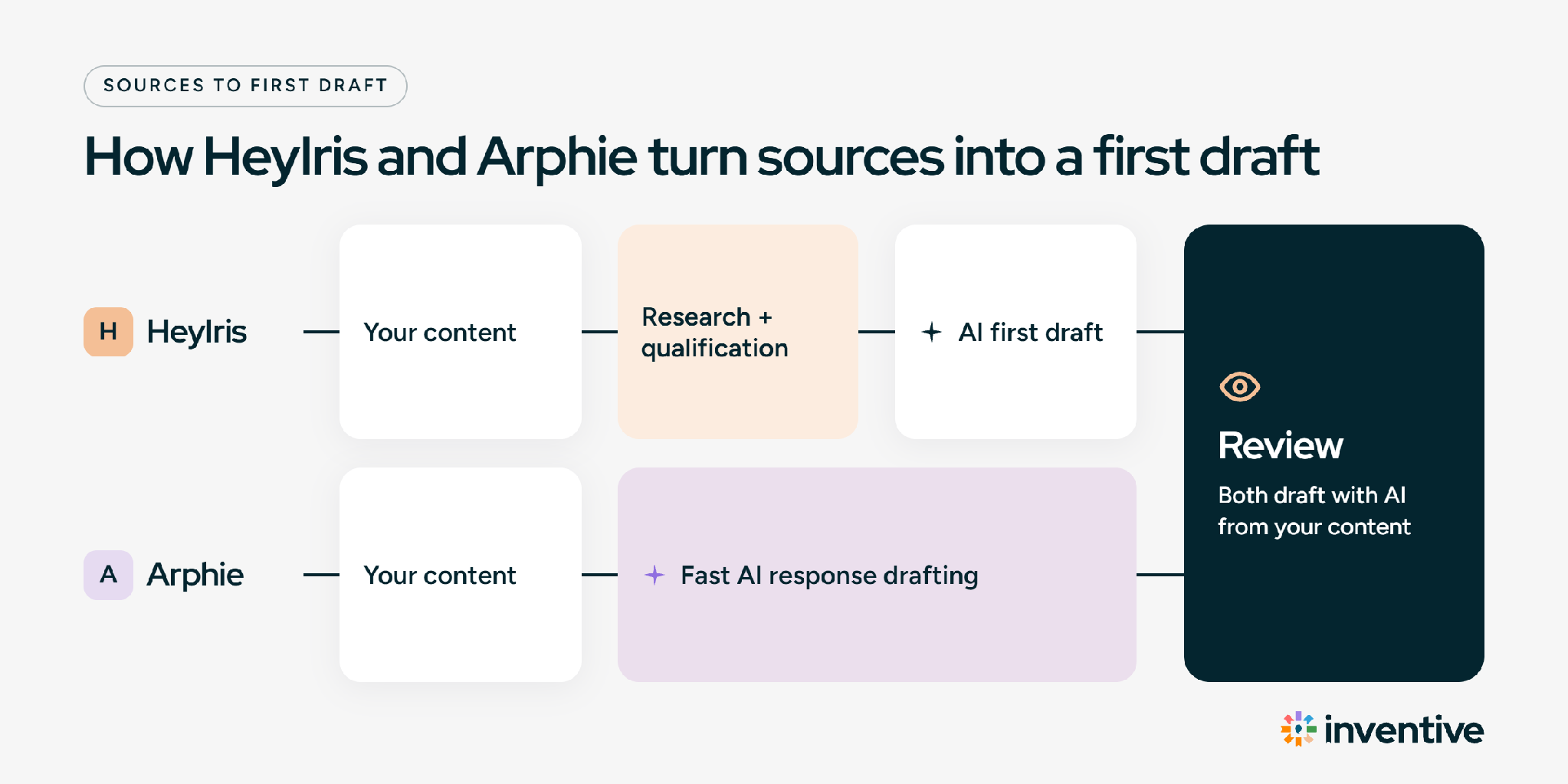
Both tools draft responses from connected sources with citations. HeyIris creates narrative drafts using configured tone settings and sales transcripts (Gong, Zoom, Teams), whereas Arphie generates individual Q&A responses with confidence scores.
Each tool has distinct drawbacks according to G2 reviews. HeyIris can mix up company and product details when source information overlaps. Arphie offers fewer import and export options and struggles with portal-hosted questionnaires.
Efficient drafting directly impacts sales productivity, as Salesforce's State of Sales report shows reps spend over 60% to 70% of their time on non-selling tasks such as administrative work, research, and manual drafting.
HeyIris features, limitations, pricing, and reviews
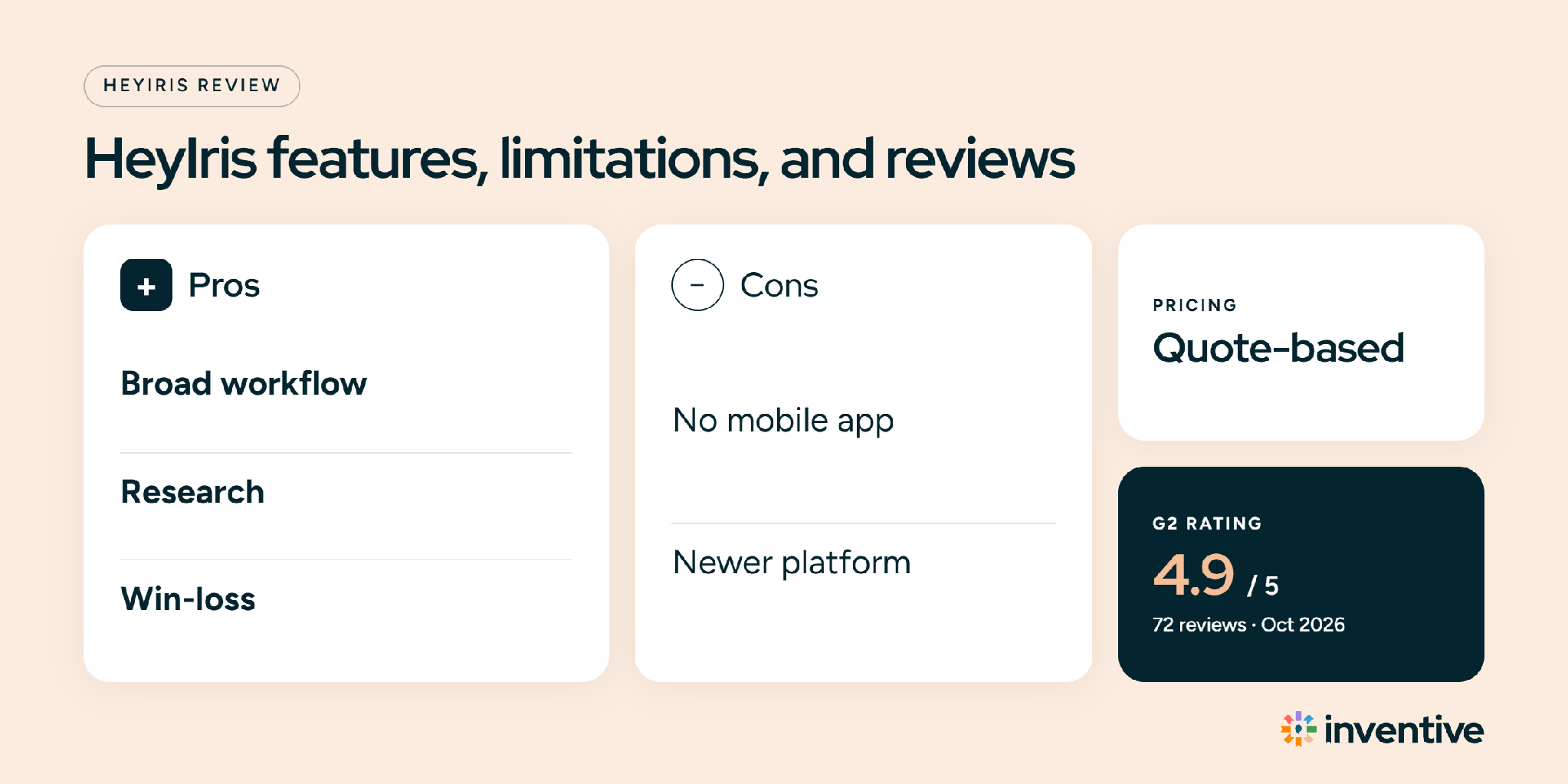
HeyIris's strengths are document range, portal autofill, and a dedicated customer success manager. Its weaknesses, based on G2 reviews, are limited project management features and accuracy that depends on a clean knowledge base.
HeyIris key features
- Narrative drafting: Drafts in the team's voice with a citation on every claim, and adjusts tone by section, question, or full submission.
- Portal autofill: A browser extension fills portal fields in place, including dropdowns and radio buttons, in portals such as ProcessUnity, OneTrust, and Vanta. Autopilot also fills buyer spreadsheets directly in Excel or Google Sheets.
- Go/No-Go fit score: Scores how well an opportunity fits before the team commits to a response.
- Deal context: Pulls from call transcripts in Gong, Zoom, and Microsoft Teams, plus CRM notes and email.
- Review controls: Question-level permissions, in-line comments, version history, approvals, and an audit trail, with expiring and stale language flagged.
HeyIris limitations
Based on G2 reviews of Iris (as of October 2026):
- Project management features are thin for complex deals, lacking native workflow controls and mobile access.
- Drafts can sound robotic and aggregate multiple past answers rather than selecting the most relevant response, requiring manual edits to adjust tone.
- Output quality relies entirely on knowledge base depth; incomplete or outdated documentation results in thin answers.
- Lacks automated conflict detection across sources, leaving reviewers to catch contradictory or stale entries manually.
- Application integrations and connectors are limited compared to enterprise platforms.
HeyIris pricing
One plan priced per active user, with unlimited RFPs, proposals, DDQs, and security questionnaires. The plan includes SSO, SAML, and SCIM; a dedicated customer success manager; implementation; and MCP access.
HeyIris ratings and reviews.
As of October 29, 2026:
- Gartner Peer Insights: 4.9/5 from 17 ratings
- G2: 4.9/5 from 72 reviews
- Time to go live: G2 doesn’t publish an average for Iris; reviewers describe anywhere from a day to a week.
Reviewer rates Iris 4/5 for auto-answer and automatic field mapping, but says setup was clunky and the interface is hard to navigate because features sit in illogical places.
-Alice B, a Solutions Consultant, G2, October 2026
Arphie features, limitations, pricing, and reviews
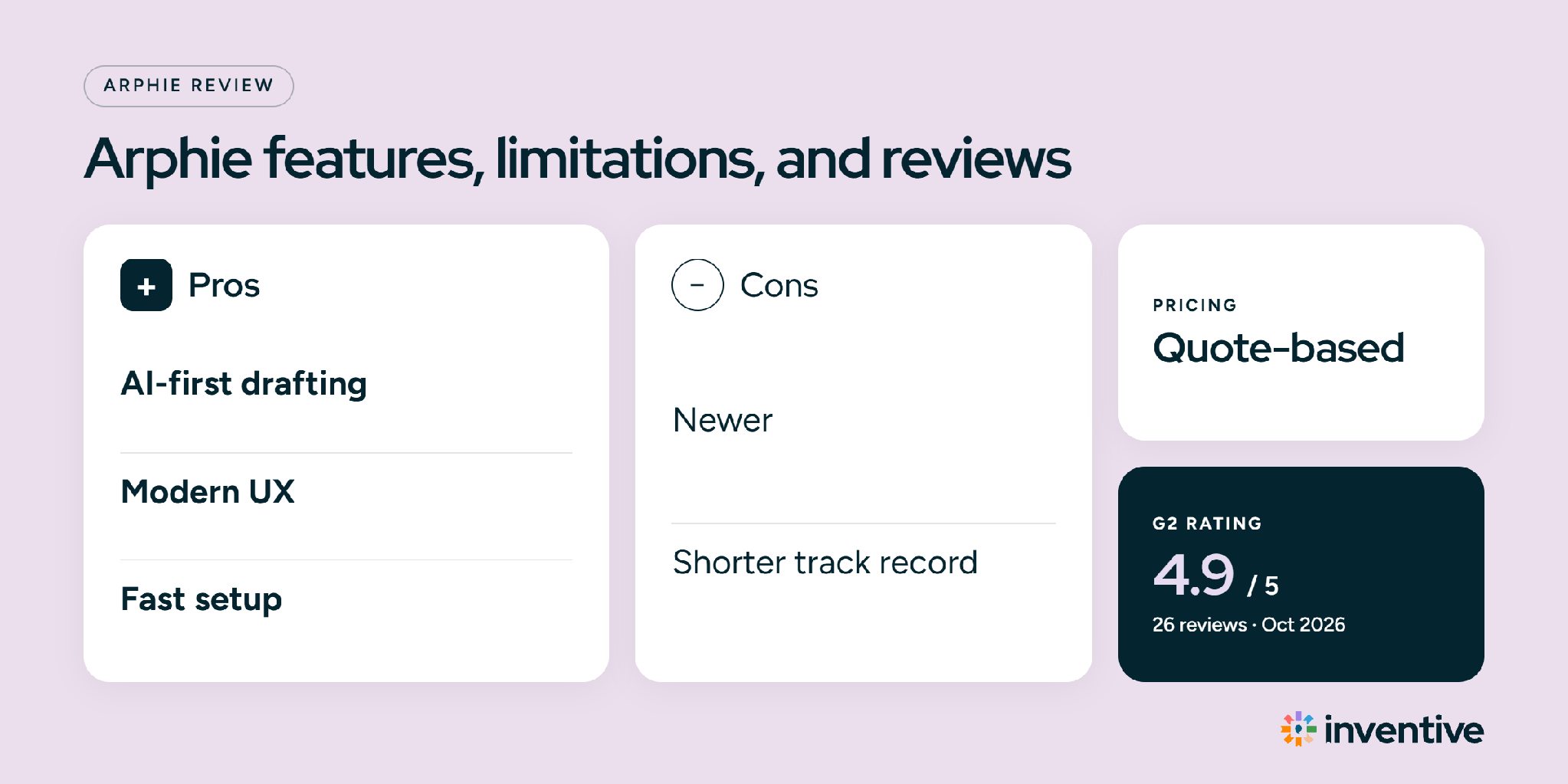
Arphie's strengths are per-response transparency, original-file export, and a short rollout. Its weaknesses, based on G2 reviews, are file handling limits, weak portal support, and thin reporting.
Arphie key features as per G2 reviews
- Cited drafts with confidence scores: Each response cites its exact sources and shows a confidence score.
- Live connectors: Syncs files and folders from Google Drive and website documentation where they live, so teams don’t maintain a separate upload library.
- Smart Merge: Flags duplicate knowledge base entries for merging.
- Fast first drafts: Moves from upload to first drafts in about 15 minutes, per one enterprise reviewer.
- Slack questions: Answers ad-hoc questions in Slack outside a questionnaire.
- Onboarding and support: Teams go live within days, and reviewers report support replies within minutes and same-day bug fixes.
Arphie limitations as per G2 reviews
Based on G2 reviews of Arphie (as of October 2026):
- Import and export options don't cover every file format teams receive.
- Questionnaires hosted in procurement portals don't work well in Arphie.
- Reporting is too limited for teams that want detailed analytics.
Arphie pricing
Arphie's own pages describe two models: pricing by concurrent projects with an annual range of $36,000 to $60,000+ in its comparison table, and seats plus annual DDQ volume for investor relations teams.
Arphie ratings and reviews
As of October 29, 2026:
- Gartner Peer Insights: 5.0/5 from 5 ratings
- G2: 4.9/5 from 26 reviews
An enterprise software user rates Arphie 5/5 for ease of use, but says drafts are slow to generate and importing anything other than spreadsheets is restrictive.
-Verified User in Computer Software, Enterprise, G2, September 2026
Compare HeyIris vs Arphie head-to-head: support, security, integrations, and pricing
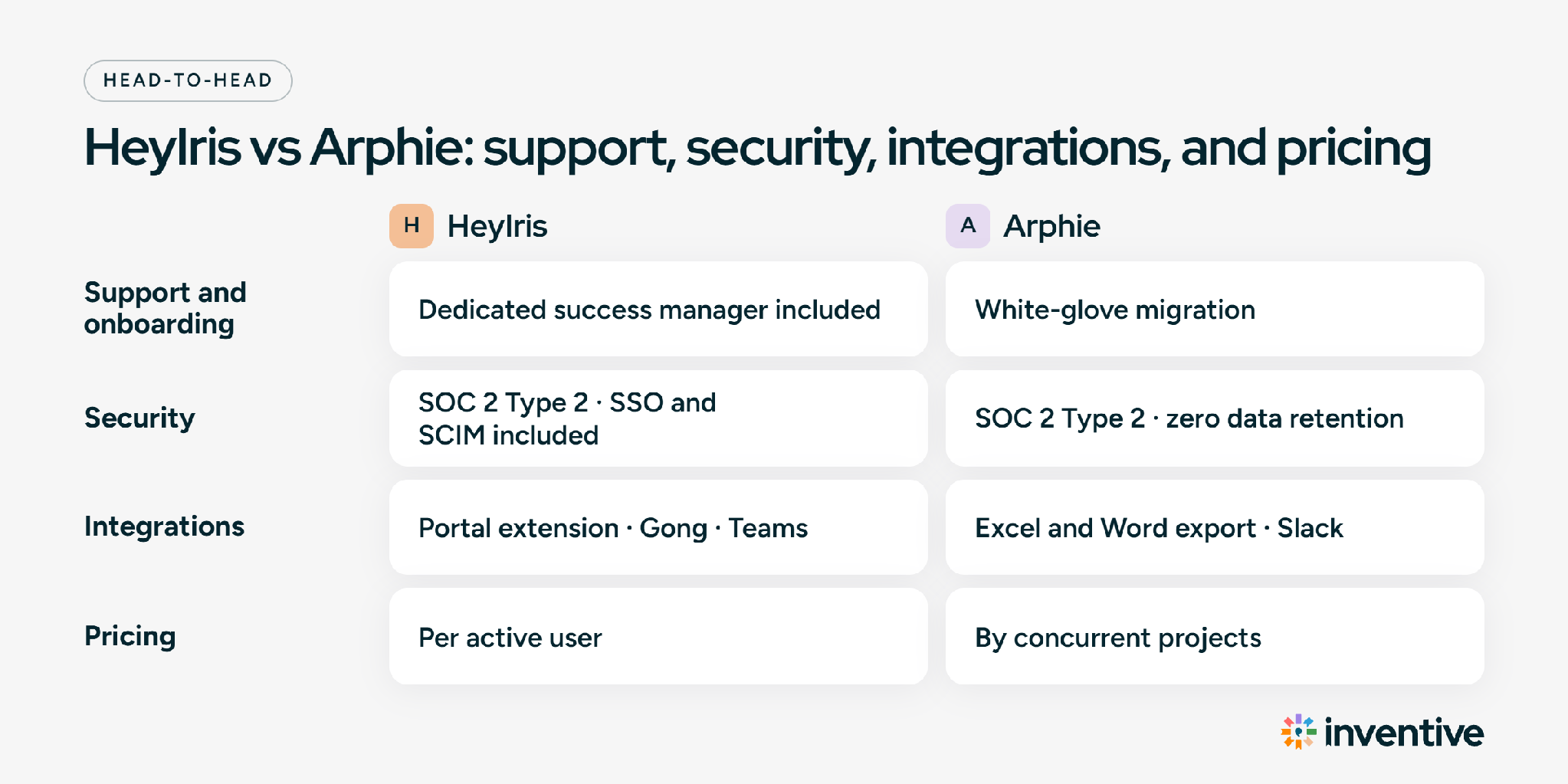
HeyIris gives every customer a dedicated success manager and fills questionnaires directly inside procurement portals. Arphie shares more detail about its security testing and puts finished responses back into the buyer’s original Excel or Word file.
Support and onboarding
Security
Integrations
Pricing
Is HeyIris or Arphie better for security questionnaires and procurement portals?
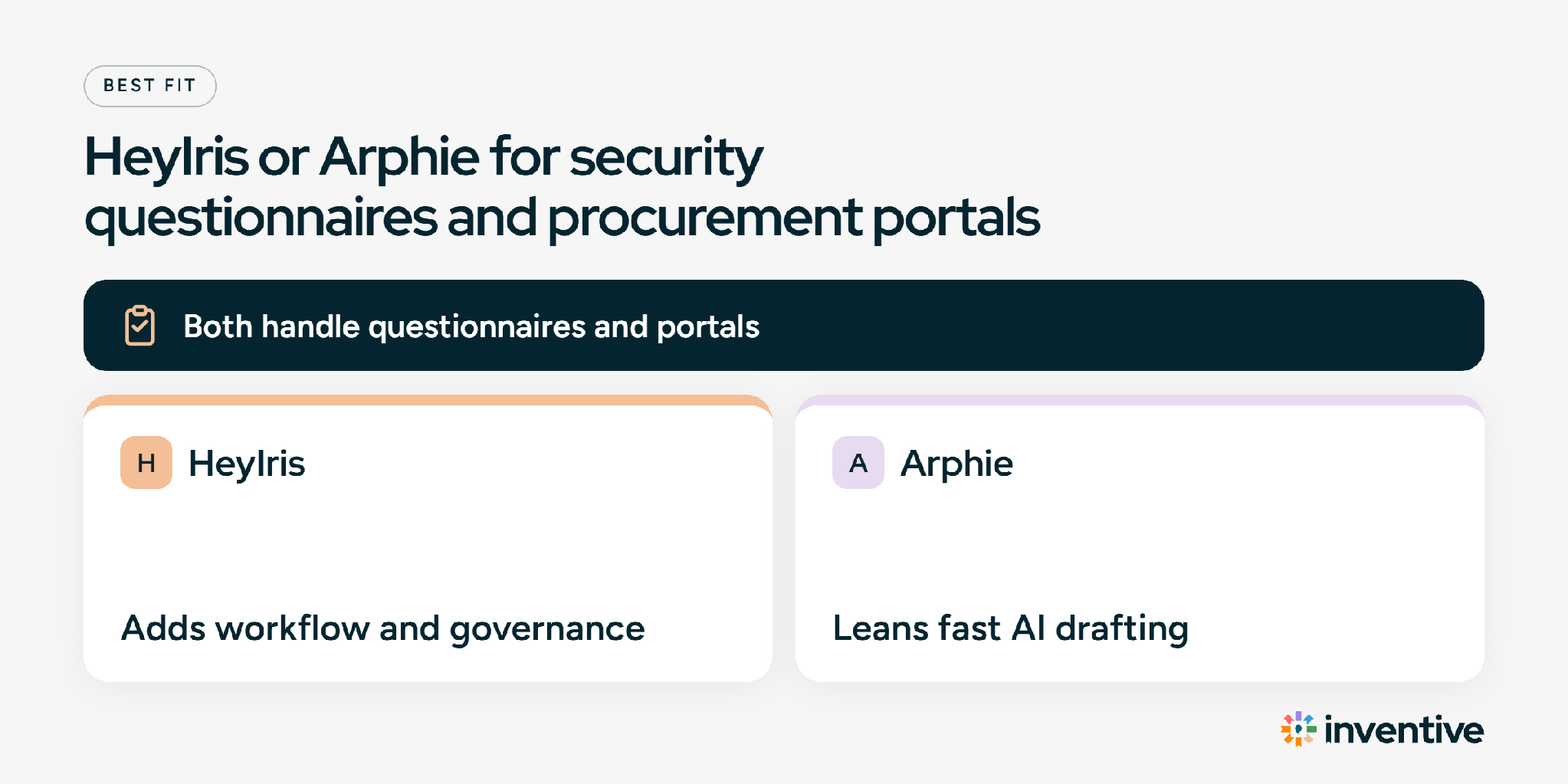
HeyIris is the better fit when questionnaires arrive inside procurement portals, because its browser extension fills portal fields in place. Arphie is the better fit when questionnaires arrive as Excel or Word files, because it writes responses back into the original document with a confidence score on each one.
- Portal questionnaires: HeyIris fills fields in ProcessUnity, OneTrust, and Vanta. G2 reviewers report Arphie handles portal questionnaires poorly.
- Spreadsheet questionnaires: HeyIris fills buyer spreadsheets in Excel or Google Sheets. Arphie exports into the original Excel or Word file.
- Reviewer evidence: Both cite sources. Arphie adds a confidence score to every response; HeyIris adds confidence flags to first drafts.
- Security evidence: HeyIris connects to Vanta and Drata. Arphie draws from document sources such as SharePoint and Confluence.
Buyers have reason to send long questionnaires. Verizon's 2025 Data Breach Investigations Report found third-party involvement in breaches doubled to 30%, across 12,195 confirmed breaches. The guide to answering a security questionnaire covers how proposal teams handle that scrutiny.
Is HeyIris or Arphie better for narrative proposals and SOWs?
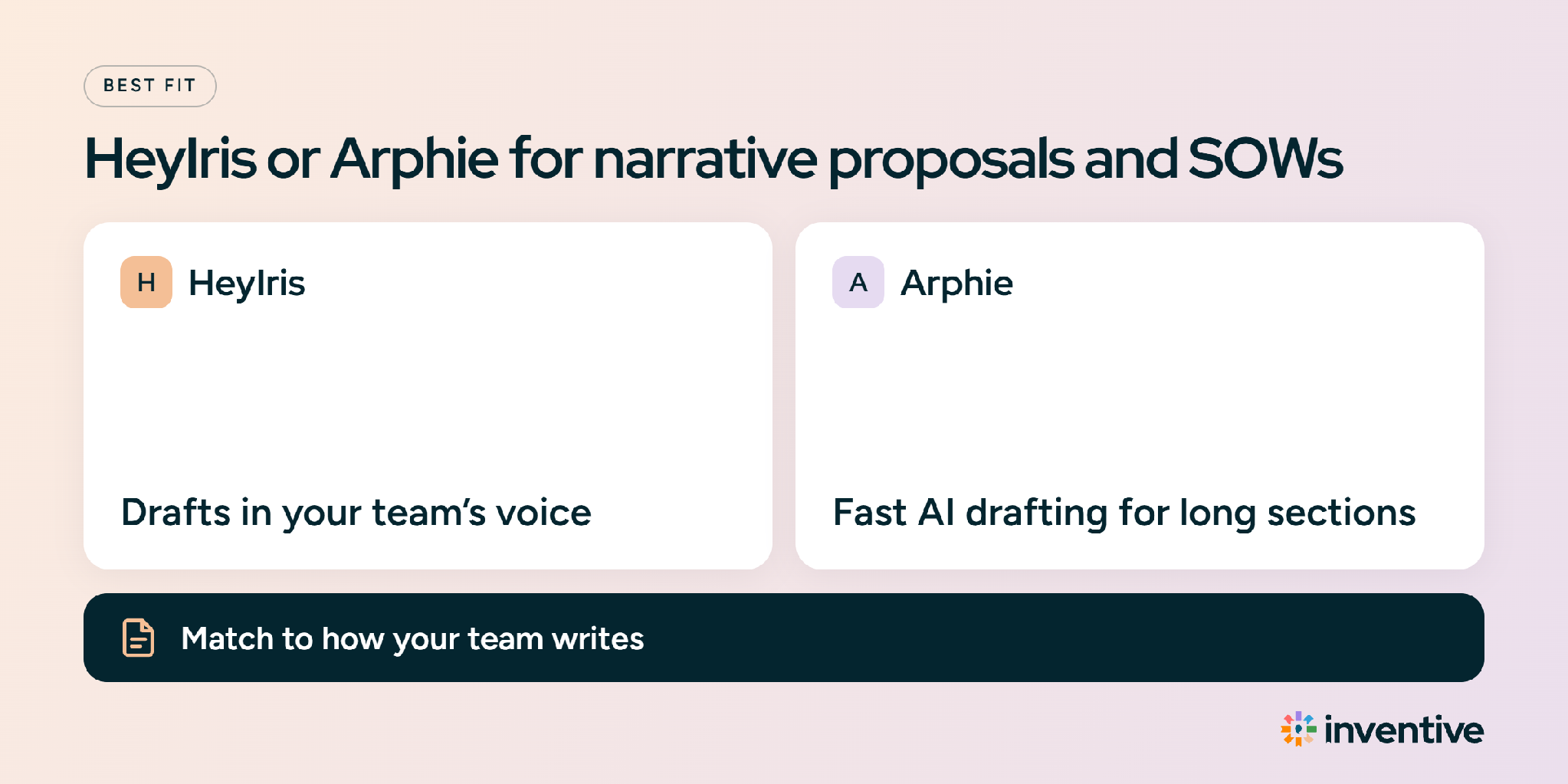
HeyIris is the better fit for proposal work. It lists proposals, SOWs, and business cases as supported document types, writes in the team's voice with adjustable tone, and pulls deal context from call transcripts. Arphie's product pages describe question-by-question drafting with rich-text editing and don't list SOWs or proposals as document types.
Proposal-heavy teams should still run one sample proposal through Iris with their own content before committing.
How to choose between HeyIris and Arphie
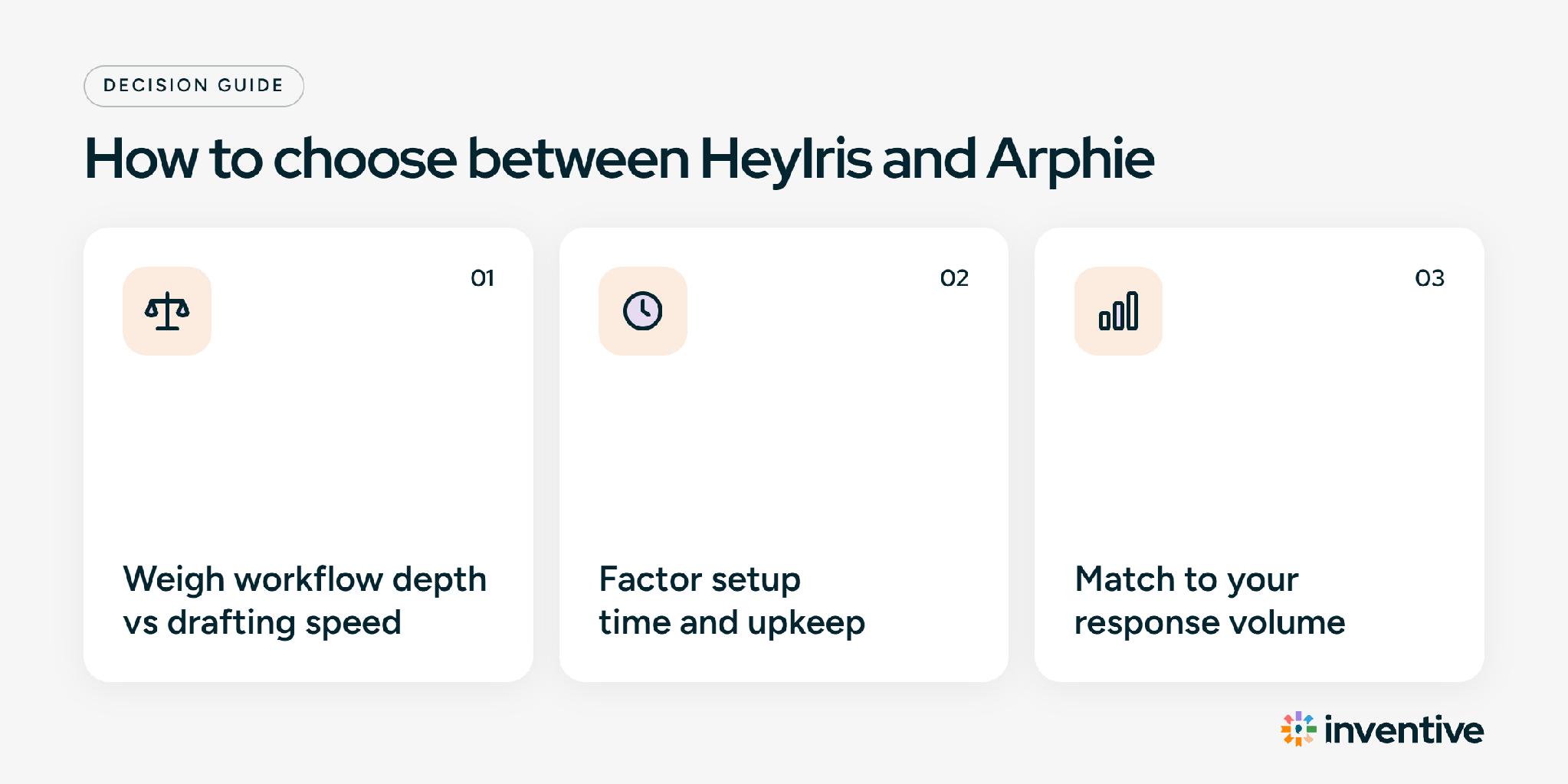
Portal-heavy and proposal-heavy teams lean toward HeyIris, and teams answering spreadsheet questionnaires lean toward Arphie. The table matches common HeyIris vs Arphie scenarios to the better fit.
Questions to ask HeyIris and Arphie before signing
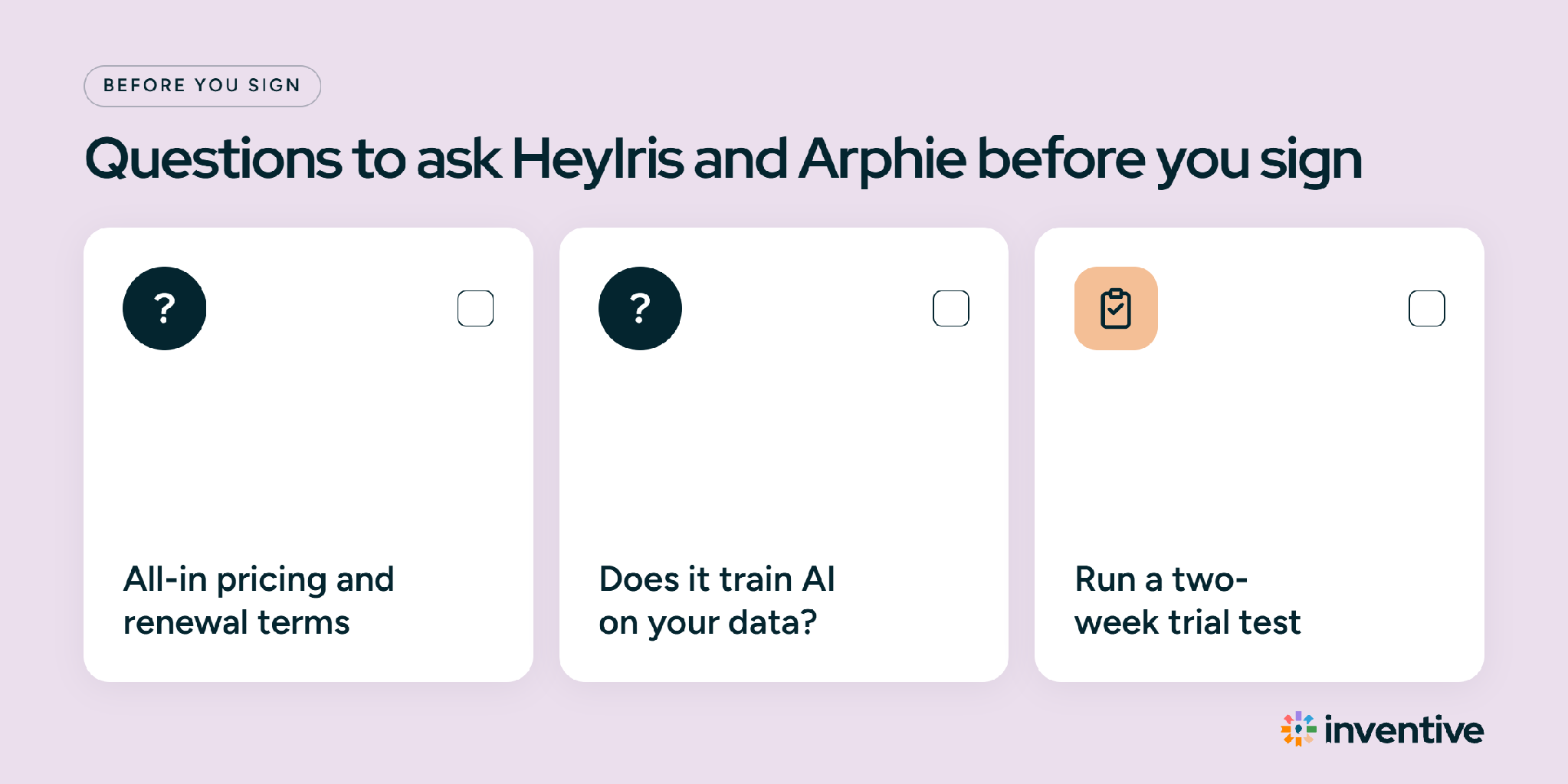
Five questions and a two-week trial show which tool fits the team's workload in a HeyIris vs Arphie evaluation.
Questions to ask both vendors
- Which portals does the tool fill directly, and can we test our buyers' portals during the trial?
- What happens when two connected sources describe the same thing differently?
- What counts as a seat, collaborator, or concurrent project in our contract, and what happens when we exceed it?
- Which document types beyond RFPs and questionnaires does the tool draft today?
- Who is our support contact after onboarding, and through which channel?
A two-week trial test
Use one past RFP and one live security questionnaire with the same approved sources in both tools, then check three results:
- Portal fill: Complete one questionnaire inside a buyer portal and count the fields that still needed manual entry.
- Overlapping sources: Load two documents that describe the product differently and check which version each draft uses, and whether the tool flags the difference.
- Tone control: Draft one narrative section and compare how much editing each output needs to match the team's voice.
Inventive AI: flag conflicting sources before a draft reaches review
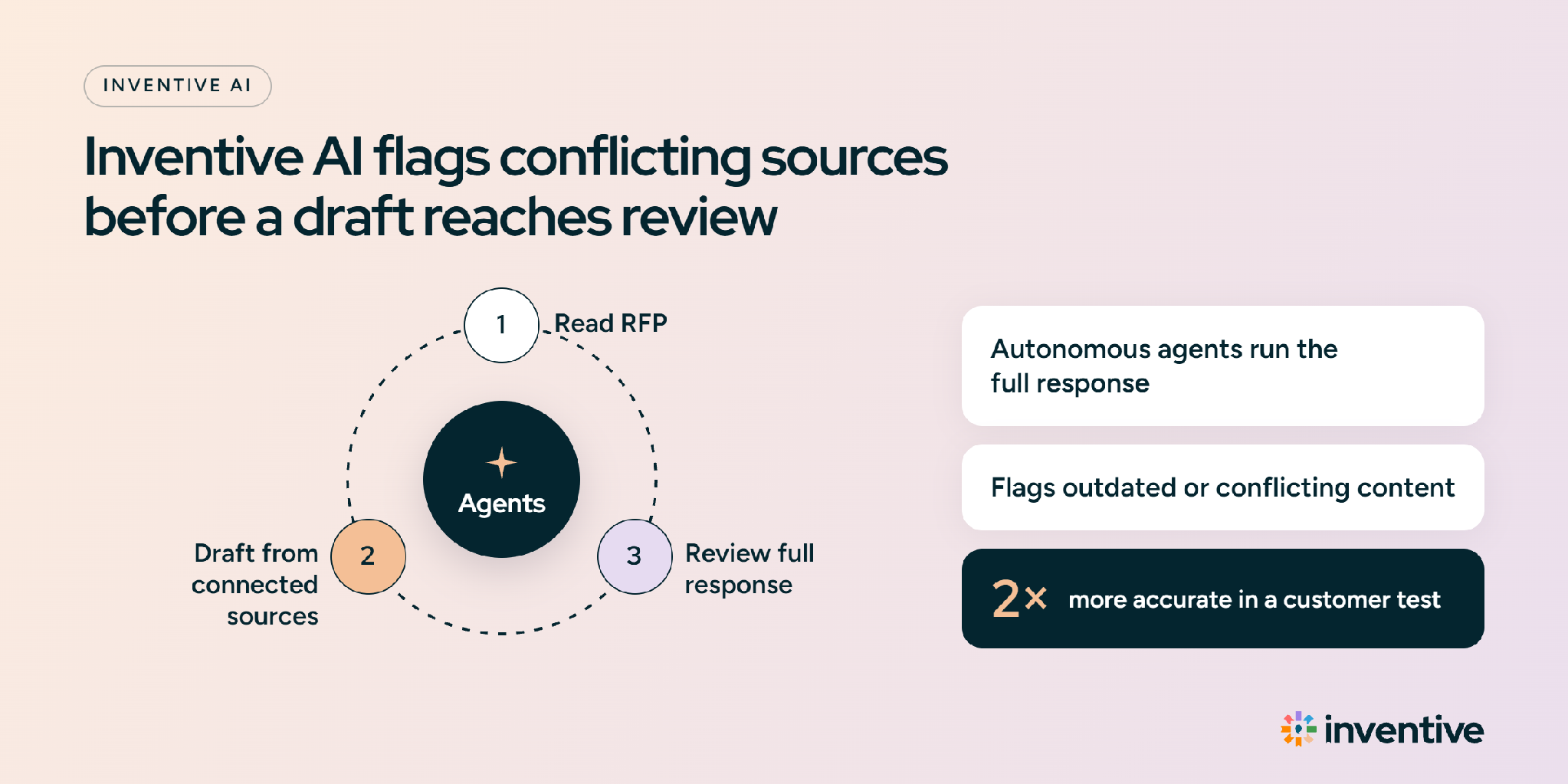
Inventive AI drafts RFP, RFI, DDQ, and security questionnaire responses from the tools a company already uses, such as SharePoint, Google Drive, Confluence, Notion, and Zendesk. Every response carries a citation and a confidence score.
- AI Content Manager: Flags conflicting content, outdated content, and missing sources across the Knowledge Hub, so stale or contradictory information gets fixed before it reaches a draft.
- Full Response Analyzer: Reviews the entire response in one pass before submission. It checks for contradictions between sections, compliance gaps, and requirements that haven’t been addressed.
- Competitive intelligence: Competitor boards track what competitors are doing, so proposal teams can use that context when positioning against them in a response.
- Unlimited users: Pricing starts from $830/month, billed annually, with unlimited users, so SMEs and reviewers can join without extra licenses.
Inventive AI doesn't list Gong or Zoom call transcripts. Teams that build drafts from recorded sales calls should test that workflow during a pilot.
HeyIris vs Arphie: which one to shortlist
HeyIris is the stronger pick for teams that answer questionnaires inside procurement portals or write proposals and SOWs alongside RFPs. Arphie is the stronger pick for teams whose questionnaires arrive as Excel or Word files and who want a confidence score on every response.
Teams still weighing HeyIris vs Arphie for both jobs should run one portal questionnaire and one spreadsheet questionnaire through each tool and compare how much manual work is left.