AutoRFP vs Arphie (2026): Which AI Response Platform Fits Your Team?
RFP tools like AutoRFP and Arphie speed up drafting, but these tools still require manual checks and edits, causing delays and leading to a lot of delays and many RFPs never being completed due to missed deadlines.
Last reviewed: February 2026. This comparison pulls from AutoRFP.ai and Arphie vendor pages, verified G2 and Capterra reviews, and independent third-party write-ups. Both tools are recent AI-native entrants, so their review counts are small and most pricing is quote-based. Features and prices shift quickly, so confirm the current details with each vendor before you commit budget.
TL;DR: AutoRFP vs Arphie
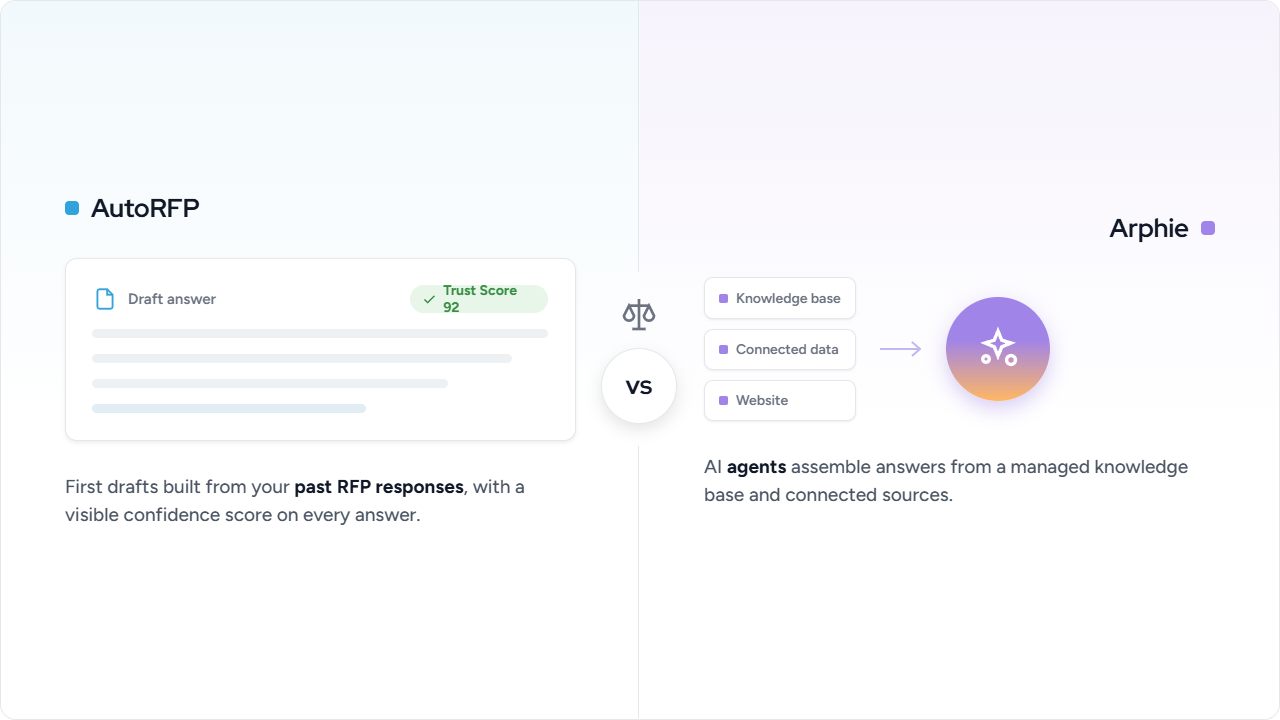
AutoRFP fits teams that want fast AI first drafts built from their past RFP responses, with visible "Trust Scores" and source attribution on every generated answer. Arphie fits teams that want AI agents to assemble answers from a managed knowledge base and connected data sources, with a Slack "quick-ask" agent for ad-hoc questions.
Which one wins is not the right question, it depends on what your team needs: draft-speed off historical responses (AutoRFP) or agent-driven knowledge assembly (Arphie). If you are looking for this category broadly, it is worth reading a wider RFP software comparison guide before committing.
AutoRFP vs Arphie at a Glance
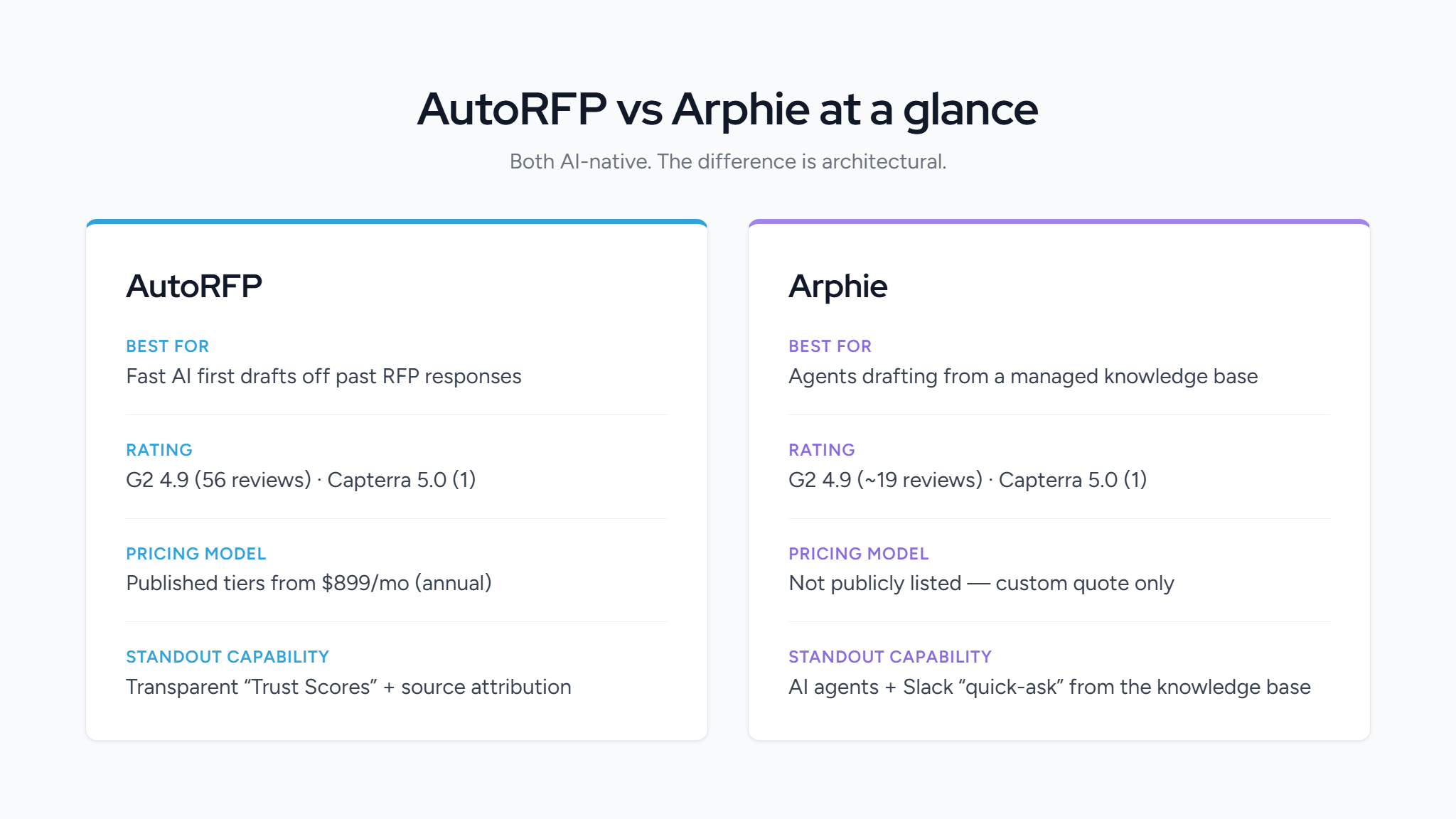
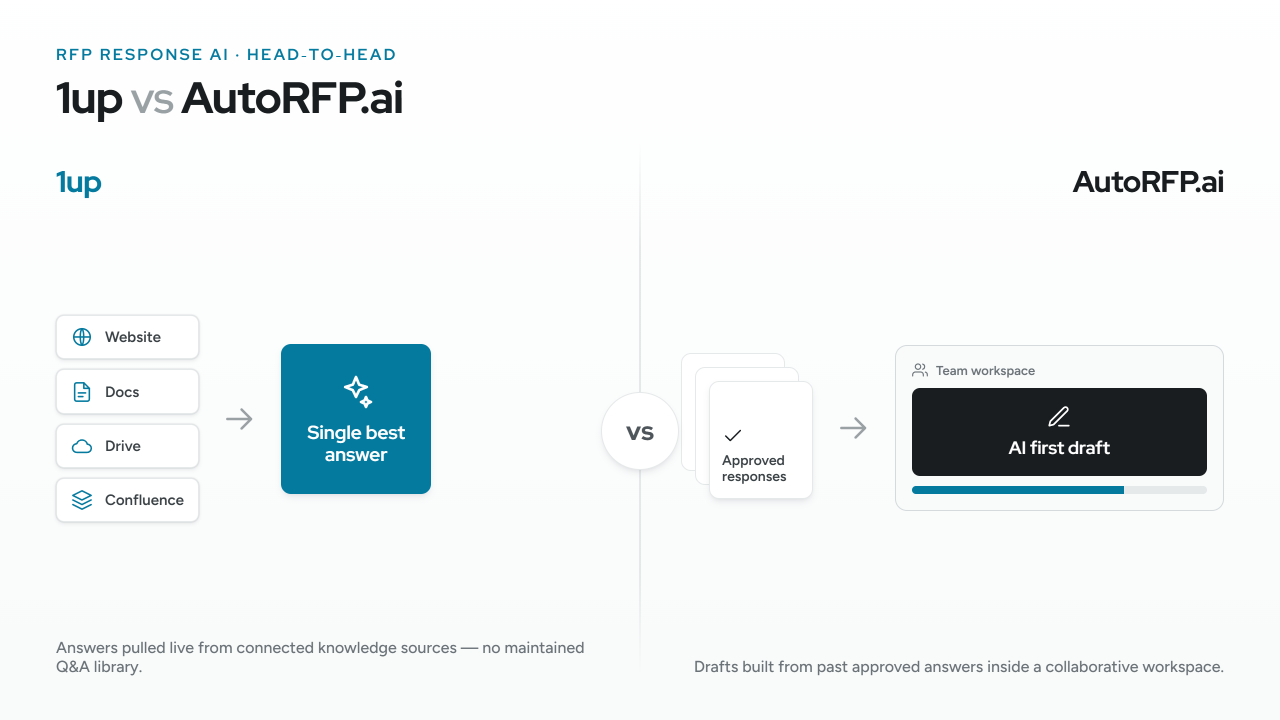
Both platforms are AI-native and both target RFPs, DDQs and security questionnaires. The difference is architectural: AutoRFP leans on drafting from your existing response history, while Arphie leans on agents drafting from a curated knowledge base and connected sources.
| AutoRFP | Arphie | |
|---|---|---|
| Best for | Teams wanting fast AI first drafts off past RFP responses | Teams wanting agents to draft from a managed knowledge base |
| G2 rating | 4.9 (56 reviews, reported — confirm on the live listing) | 4.9 (~19 reviews, reported — confirm on the live listing) |
| Capterra rating | 5.0 (1 review, reported) | 5.0 (1 review, reported) |
| Pricing | Published: Scale $899/mo, Accelerate $1,299/mo (annual), Enterprise custom | Not publicly listed — custom quote only |
| Standout capability | Transparent confidence "Trust Scores" + source attribution | AI agents + Slack "quick-ask" from the knowledge base |
Figures are reported at time of writing; confirm current ratings and pricing with each vendor.
What Should You Consider When Choosing Between AutoRFP and Arphie?
Answer-first: choose on how each tool sources answers, how it controls hallucinations, how it prices, and how well it fits the systems your team already uses. Run these criteria against your own edge cases in a demo.
• AI drafting approach — Does the tool draft from your past responses (AutoRFP) or from a managed knowledge base and connected sources (Arphie)?
• Source of truth — Can you feed it more than prior RFPs? AutoRFP users report being limited to past responses; confirm whether that fits your content spread.
• Hallucination control — Both attach citations and confidence signals. Test whether the tool flags "unknown" or invents an answer on edge cases.
• Conflict detection — Does the platform surface contradicting or outdated content, or leave that to manual review?
• Content governance — Who keeps the answer library accurate, and how much manual upkeep does it demand?
• Narrative-style proposals — Can it produce prose sections, not just Q&A pairs? Verify export formats.
• Workflow automation — How much of intake, tagging and assignment is automated versus manual?
• Collaboration — Assignments, reviewer workflows, SSO — check for your team size.
• Integrations — Match the list to your CRM, content stores and chat tools; see the integrations comparison below.
• Security and compliance — SSO, SOC 2 status, data handling. Ask for current attestations.
• Analytics — Progress tracking, reporting and export. Arphie users report reporting features still maturing.
• Pricing model — Per-project versus per-seat, and what a "project" means. Get quote-only figures in writing before you compare.
• Ease of implementation — Setup time and learning curve. AutoRFP reviewers note an initial curve.
• Enterprise scalability — Volume limits, term commitments and admin controls.
The Detailed Feature-by-Feature Comparison
This is the core of the comparison. Values are drawn from vendor pages and verified reviews; treat quote-only pricing and small review counts as directional.
| Dimension | AutoRFP | Arphie |
|---|---|---|
| Category | AI-native RFP / DDQ / security-questionnaire responder | AI-native RFP / DDQ / security-questionnaire responder |
| AI drafting | AutoRFP-stated ~90% of the first draft from past RFP responses | AI agents draft answers from a managed knowledge base + connected sources |
| Trust / confidence | "Trust Scores" with source attribution on answers | Exact source citations + AI confidence levels |
| Knowledge sources | Past RFP responses (users report no extra doc upload) | Managed knowledge base, connected data, website ingestion |
| Ad-hoc answering | Within workspace | Slack "quick-ask" agent for ad-hoc questions |
| G2 rating | 4.9 (56 reviews, reported) | 4.9 (~19 reviews, reported) |
| Capterra rating | 5.0 (1 review, reported) | 5.0 (1 review, reported) |
| Pricing | Scale $899/mo, Accelerate $1,299/mo (annual); Enterprise custom | Custom quote only (reported flat, per-project, unlimited users) |
| Seat model | Unlimited users on all tiers | Unlimited users per project (reported) |
| Mobile | Web-only (no mobile), reported | Not mobile native yet, reported |
| Export | Standard workspace exports | Limited export; Excel Q&A imports, file import/export pending (reported) |
| CRM integration | Salesforce | Salesforce (reported less mature than some alternatives) |
| Chat integration | Slack, Microsoft Teams | Slack, Front |
| SSO | Okta, Microsoft Entra, Google Workspace | Reported via enterprise setup — confirm |
Figures are reported at time of writing; confirm with AutoRFP and Arphie directly.
Considering a third option? RAD AI reports Inventive AI produced 2× more accurate responses than other RFP AI tools it tested. See how the AI-native approach handles edge cases in a demo.
AutoRFP: Overview, Features and Limitations
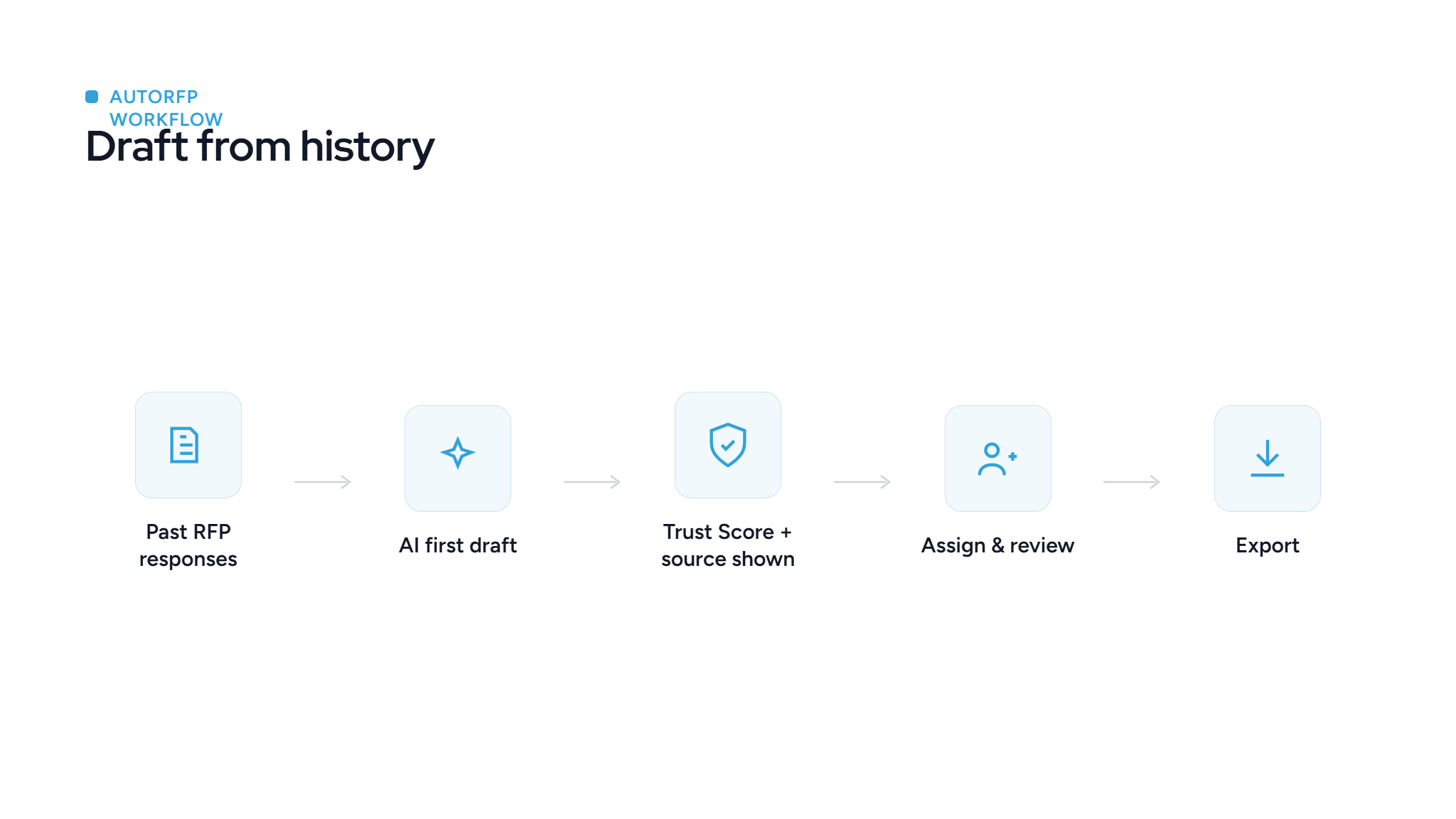
AutoRFP.ai is an AI-native platform for RFPs, DDQs and security questionnaires. Its positioning centers on speed: generating a first draft from your past responses, then showing a confidence "Trust Score" and source for each answer so reviewers know what to check. It pairs that with a collaborative workspace for assignment and review.
Best features
• AutoRFP states it automates roughly 90% of the first-draft response from prior RFPs, cutting manual writing time, per AutoRFP.ai.
• Transparent "Trust Scores" and source attribution on each generated answer.
• Fast, intuitive initial setup; AI reportedly improves as it learns from prior responses.
• Collaboration features: assign answers for review, SSO via Okta, Microsoft Entra and Google Workspace.
• Broad connector list including Salesforce, SharePoint, Confluence, Notion, Seismic and Zendesk.
• Browser extensions for Chrome and Edge for in-context answering.
Limitations (sourced)
• Web-only access with no mobile app, per G2 reviews.
• An initial learning curve reported by users during onboarding.
• Users report you cannot upload source documents beyond past RFP responses, if your content lives across many systems, weigh AutoRFP alternatives that connect to more sources.
• As a newer company, some upload processes reportedly struggle with complex questions (reported as improving).
• Small public review base, so patterns are still forming — validate against your own use.
• Minimum 12-month term on Enterprise agreements (per the pricing page).
Pricing
AutoRFP publishes tiers: Scale at $899/month (paid annually, 24 projects/year) and Accelerate at $1,299/month (paid annually, 50 projects/year), both with unlimited users and all features; Enterprise is quote-based on project volume with a 12-month minimum, per the AutoRFP pricing page. A "project" is one RFP, DDQ, tender or security questionnaire. For a fuller breakdown of tiers, features and user feedback, see this in-depth AutoRFP AI pricing and reviews analysis.
Ratings and reviews
G2 shows 4.9 across roughly 56 reviews (reported — counts vary by filter) on the AutoRFP G2 listing; Capterra shows 5.0 from 1 review on the Capterra listing. No TrustRadius profile was found at review time.
Positive: "Without AutoRFP I simply wouldn't have the time to complete RFP's regularly. It saves an exceptional amount of time." — Capterra
Mixed: "Web only access is somewhat limiting and the initial learning curve is a little challenging." — G2
Arphie: Overview, Features and Limitations
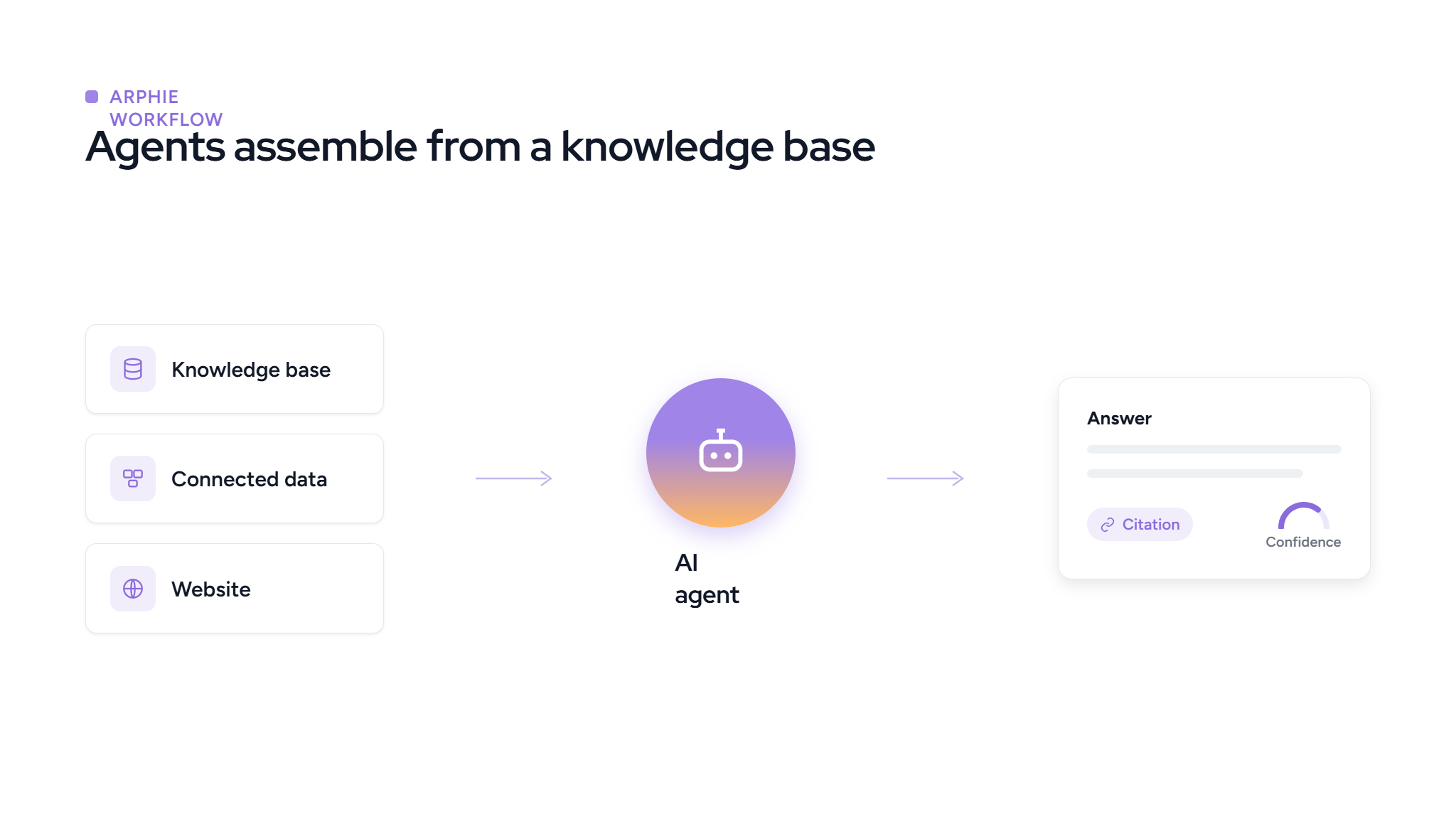
Arphie is an AI-native platform for RFPs, DDQs and security questionnaires built around AI agents. Rather than drafting purely from prior responses, its agents assemble answers from a managed knowledge base and connected data sources, attaching exact source citations and confidence levels. A Slack "quick-ask" agent lets teams pull answers from the knowledge base without opening the app.
Best features
• AI agents draft first answers from the knowledge base with exact source citations and confidence levels.
• Reviewers report a 60–80% reduction in time on large RFPs and questionnaires, per Arphie G2 reviews.
• Slack "quick-ask" agent for ad-hoc questions against the knowledge base.
• Ease of use praised by reviewers, with responsiveness to training.
• Fast support response and resolution times, per reviews.
• Website / web-page ingestion plus connectors for Salesforce, Slack, SharePoint, Confluence, Seismic and Highspot.
Limitations (sourced)
• Not mobile native yet, per G2 reviews.
• Limited export options — reviewers report only Excel imports for Q&A pairs, with broader file import/export and reporting features pending, per the G2 alternatives page.
• Salesforce integration reported as less mature than some alternatives — if CRM depth matters, compare Arphie alternatives and competitors.
• Pricing is quote-only, making budget comparisons harder up front.
• Very small public review base (~19 on G2), so trends are early-stage.
• Reporting and analytics features reported as still maturing.
Pricing
Arphie does not publish prices; all plans are custom quote / "contact us," per the Capterra alternatives listing. Third-party write-ups describe a flat, concurrent per-project model with unlimited users per project rather than per-seat, per SiftHub — treat that as directional, not a fixed price. For a deeper look at features and limitations, see this Arphie pricing and review breakdown.
Ratings and reviews
G2 shows 4.9 across roughly 19 reviews (reported, small sample) on the Arphie G2 listing; Capterra shows 5.0 from 1 review on the Capterra listing. No TrustRadius profile was found at review time.
Positive: "The AI is both powerful and intuitive, and it responds very well to our training."
Mixed: "The least helpful thing about Arphie is that it's not mobile native yet."
Note: Neither tool is mobile native today, AutoRFP is web-only and Arphie is "not mobile native yet" per reviewers. If field teams need to answer on the go, verify the mobile experience in a demo. For a look at how newer agentic platforms handle InfoSec workflows, see this guide to the best AI agent for security questionnaires.
AI Capabilities: How Do AutoRFP and Arphie Draft Answers?
Answer-first: AutoRFP drafts primarily from your past RFP responses; Arphie's agents draft from a managed knowledge base and connected sources. Both attach a confidence signal and source, but the sourcing model differs.
AutoRFP
• Reportedly generates ~90% of the first draft from historical responses.
• Shows a "Trust Score" and source per answer for reviewer confidence.
• Reportedly constrained to past responses as its source material.
Arphie
• AI agents assemble answers from the knowledge base and connected data.
• Attaches exact citations and confidence levels.
• Slack "quick-ask" agent surfaces answers outside the main app.
Note: Both are early on conflict detection and content governance — neither review base describes automatic detection of contradicting or outdated answers as a mature feature. If keeping a large library conflict-free is a priority, test it directly and see how an AI-native platform approaches this in the AutoRFP vs Inventive AI breakdown.
Integrations: How Do AutoRFP and Arphie Connect?
Answer-first: AutoRFP publishes the broader connector list, including Microsoft Teams and multiple SSO providers; Arphie covers the core stack plus website ingestion and Highspot.
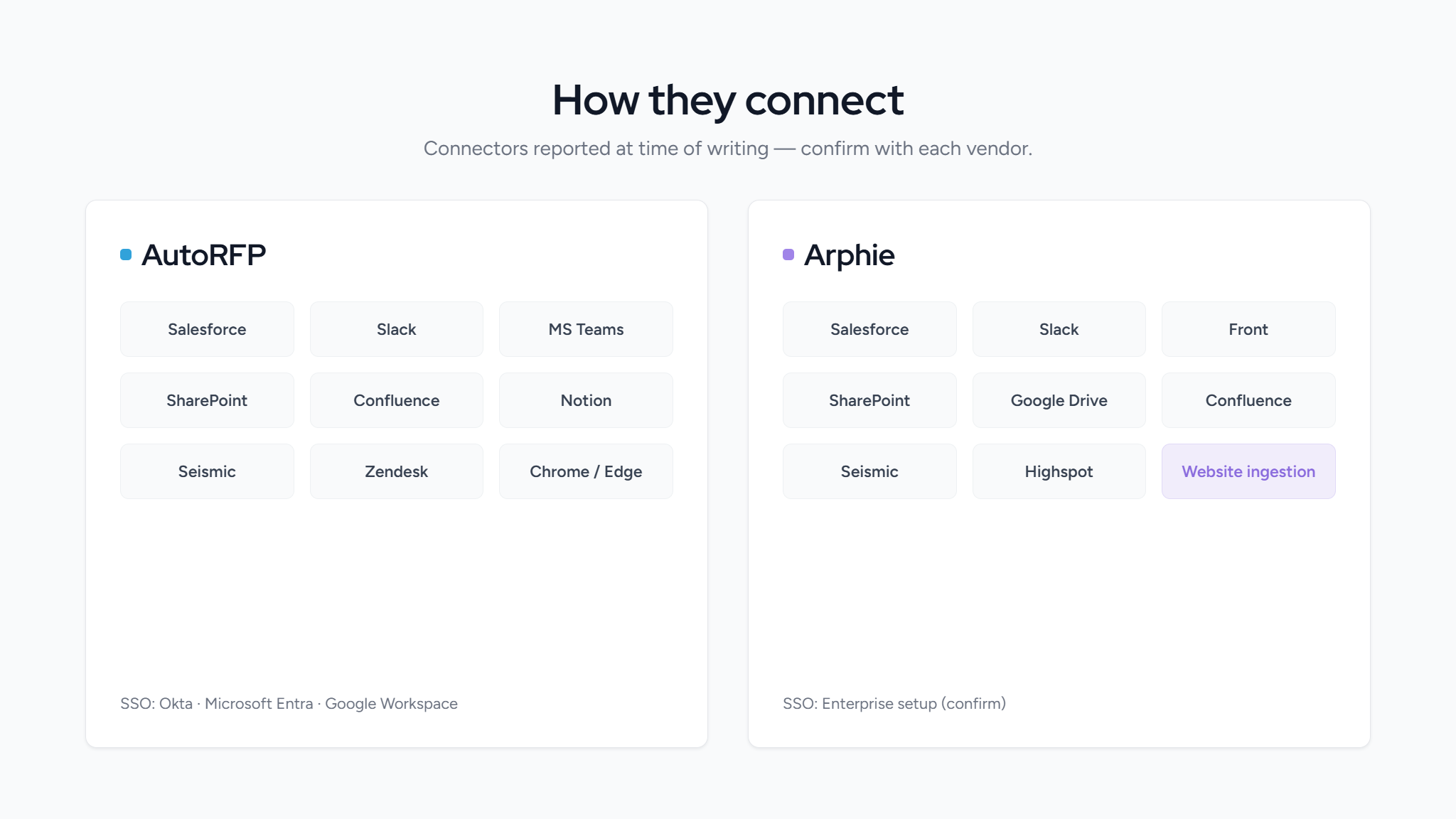
| Integration area | AutoRFP | Arphie |
|---|---|---|
| CRM | Salesforce | Salesforce (reported less mature) |
| Chat | Slack, Microsoft Teams | Slack, Front |
| Content stores | SharePoint, Google Drive, OneDrive, Confluence, Notion, Box | SharePoint, Google Drive, Confluence |
| Enablement | Seismic | Seismic, Highspot |
| Support | Zendesk, Intercom | — |
| Website ingestion | — | Yes |
| SSO | Okta, Microsoft Entra, Google Workspace | Enterprise setup (confirm) |
| Browser | Chrome, Edge extensions | — |
Reported at time of writing; confirm current connectors with each vendor.
Pricing: How Much Do AutoRFP and Arphie Cost?
Answer-first: AutoRFP publishes tiered pricing starting at $899/month billed annually; Arphie is quote-only. Both include unlimited users on their respective models.
• AutoRFP: Scale $899/mo (24 projects/yr) and Accelerate $1,299/mo (50 projects/yr), paid annually, unlimited users; Enterprise is custom with a 12-month minimum, per autorfp.ai/pricing.
• Arphie: No public pricing; custom quote. A reported flat, concurrent per-project model with unlimited users is described by SiftHub — do not treat any figure as fact.
For quote-only vendors, get pricing in writing and clarify what counts as a "project" or "concurrent project." If your evaluation runs beyond these two, this enterprise RFP software comparison maps published and quote-based models side by side for larger teams.
Security and Compliance
Answer-first: AutoRFP publishes SSO support across Okta, Microsoft Entra and Google Workspace; Arphie's enterprise security details are less publicly documented — request current attestations from both.
• AutoRFP: SSO via Okta, Microsoft Entra, Google Workspace; source attribution on answers.
• Arphie: Citations and confidence levels on answers; confirm SOC 2 status and SSO setup directly.
Ask each vendor for their SOC 2 report and data-handling policy — including whether your data is used to train third-party models — before signing.
Is AutoRFP Better Than Arphie?
Neither is universally better — it depends on what your team needs. Choose AutoRFP if you want fast first drafts built from your past responses with visible Trust Scores, published pricing, and Microsoft Teams plus multiple SSO options out of the box.
Choose Arphie if you want AI agents drafting from a managed knowledge base with website ingestion and a Slack quick-ask agent, and you are comfortable with a quote-only model. Both are early-stage with thin review histories, both are web-first, and both attach citations and confidence to answers. Test each on your hardest, most specific questions — that is where sourcing models diverge most.
Also Worth Considering: Inventive AI
If you are weighing AutoRFP and Arphie, it is worth knowing a newer category exists: autonomous, AI-agentic platforms that take a different architectural approach to responses. Inventive AI is one example in that category.
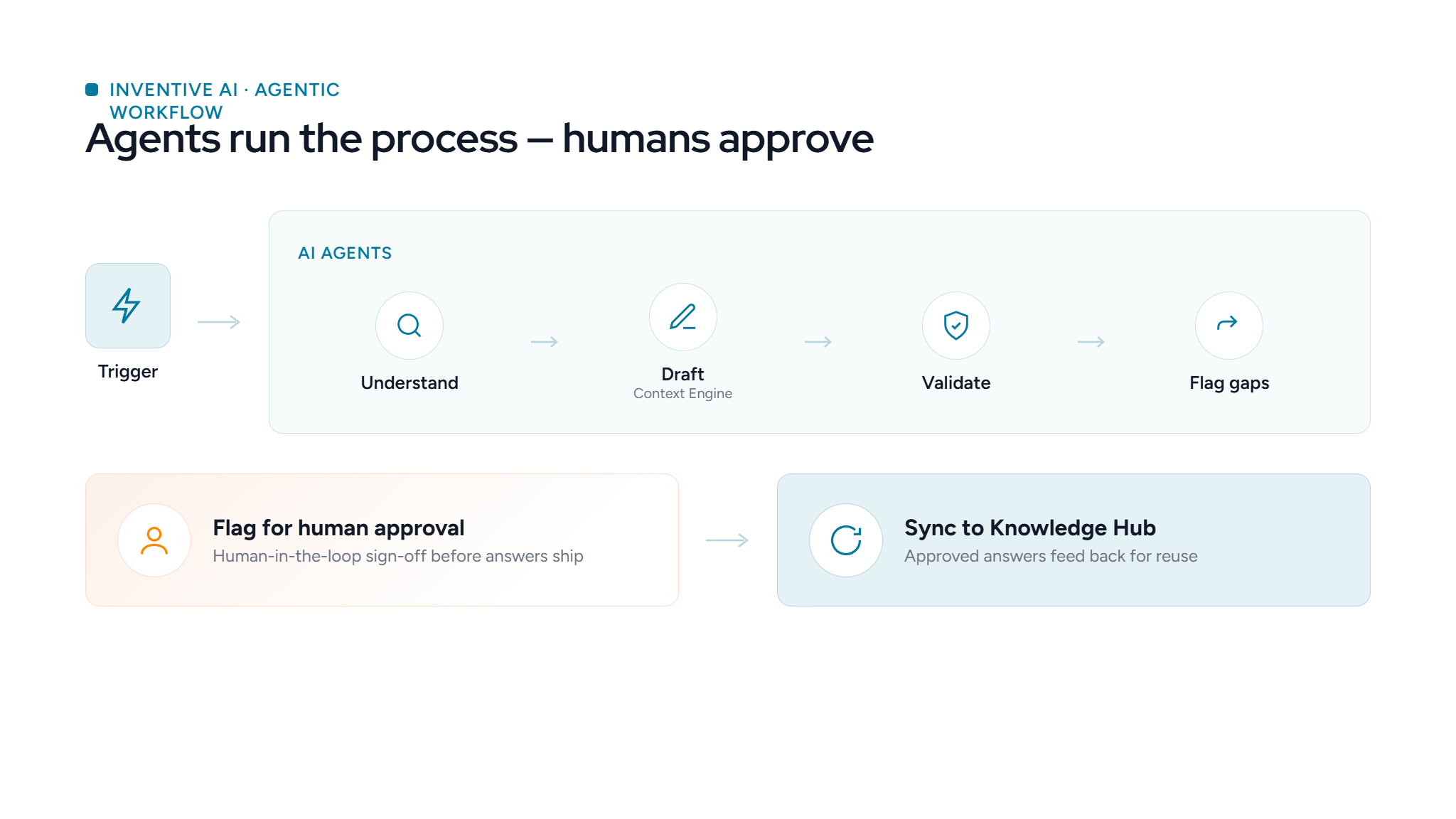
Inventive AI is positioned as an autonomous AI-agentic platform for RFPs, RFIs, DDQs and security questionnaires, with humans in the loop for approvals. Rather than asking teams to maintain a separate library or draft from scratch, its agents run the workflow — understanding the RFP, finding information, drafting, validating and flagging gaps.
Key capabilities of Inventive AI
• AI agents draft first responses with source references and confidence scores, flagging "information unavailable" rather than guessing.
• A Knowledge Hub that connects SharePoint, Google Drive, Salesforce, Confluence, Notion, Zendesk, Okta and websites, live-syncing when a source changes.
• A Content Governance Agent that flags conflicting, outdated and duplicate content automatically.
• A Context Engine that tailors responses to customer priorities and deal context.
• Competitive Intelligence agents that compare positioning against named competitors within the response.
• Format flexibility across Excel and narrative prose, not just Q&A pairs.
• Collaborative review with assignments, reviewer workflows and approval that feeds answers back into the Knowledge Hub.
• Response quality reported at 2× more client-ready answers than the next-best tool tested, per the RAD AI accuracy case study.
Best for: mid-market and enterprise teams that want agents to run the whole response process — not just drafting — with human approval at the end.
Why buyers comparing AutoRFP and Arphie might look at Inventive as an alternative
The shared pain point across both tools is sourcing and upkeep: AutoRFP is reported to draft mainly from past responses, and Arphie's reporting and export features are still maturing. Inventive AI is positioned to address that by connecting to systems teams already use and governing content automatically rather than through manual review. AssetWorks Facilities reports a 422% ROI with roughly $105K in net savings after moving RFP automation to an AI-native workflow, per its case study. If that architecture is relevant, compare the AI-native approach in a demo.
Frequently Asked Questions
Is AutoRFP better than Arphie?
Neither is objectively better. AutoRFP suits teams wanting fast first drafts from past responses with published pricing; Arphie suits teams wanting agents to draft from a managed knowledge base with a quote-based model. Both hold ~4.9 on G2 with small review counts — test both on your own questions.
How much does AutoRFP cost?
AutoRFP publishes Scale at $899/month and Accelerate at $1,299/month (both billed annually, unlimited users), with Enterprise quoted on project volume and a 12-month minimum, per autorfp.ai/pricing. Confirm current figures with the vendor.
How much does Arphie cost?
Arphie does not publish prices — all plans are custom quotes. Third-party sources describe a flat, concurrent per-project model with unlimited users, per SiftHub, but treat that as directional and get a written quote.
Do AutoRFP and Arphie have mobile apps?
Not at review time. AutoRFP is web-only per reviewers, and Arphie is described as "not mobile native yet." If mobile access matters, verify the roadmap with each vendor.
What is an alternative to AutoRFP and Arphie?
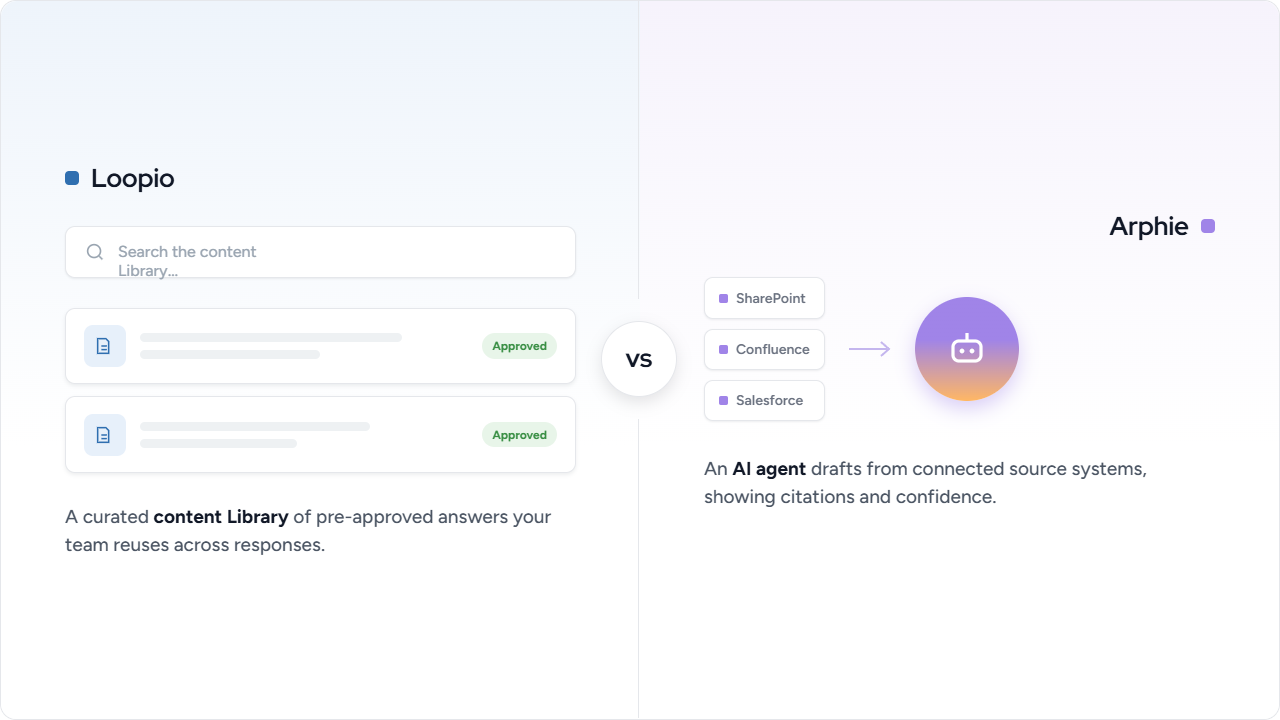
Beyond each other, buyers typically weigh two groups: legacy content-library platforms like Loopio, Responsive and RFPIO, and newer autonomous AI-agentic tools. The right shortlist depends on whether you value a mature answer library or agents that run the full response process — test a few edge-case questions on each before deciding.
Is there an AI-native alternative to AutoRFP and Arphie?
Yes. AI-native, agent-driven platforms are a growing category, and Inventive AI is one example, positioned around agents that run the full response process with human approval; MaxVal reports a 90% reduction in RFP turnaround after adopting that workflow, per its case study.
Related Comparisons and Resources
For deeper research as you build your shortlist:
• Best RFP software — a broad category roundup.
• Arphie vs Inventive AI — a direct AI-native comparison.
• MaxVal: 90% faster RFPs, zero weekend hours lost — a real-world time-savings example.



.png)