Qvidian vs Arphie (2026): Features, Reviews, ROI, and Which to Choose
Compare Qvidian and Arphie on features, pricing, AI drafting, Office workflows, setup time, reviews, and which tool fits your team.
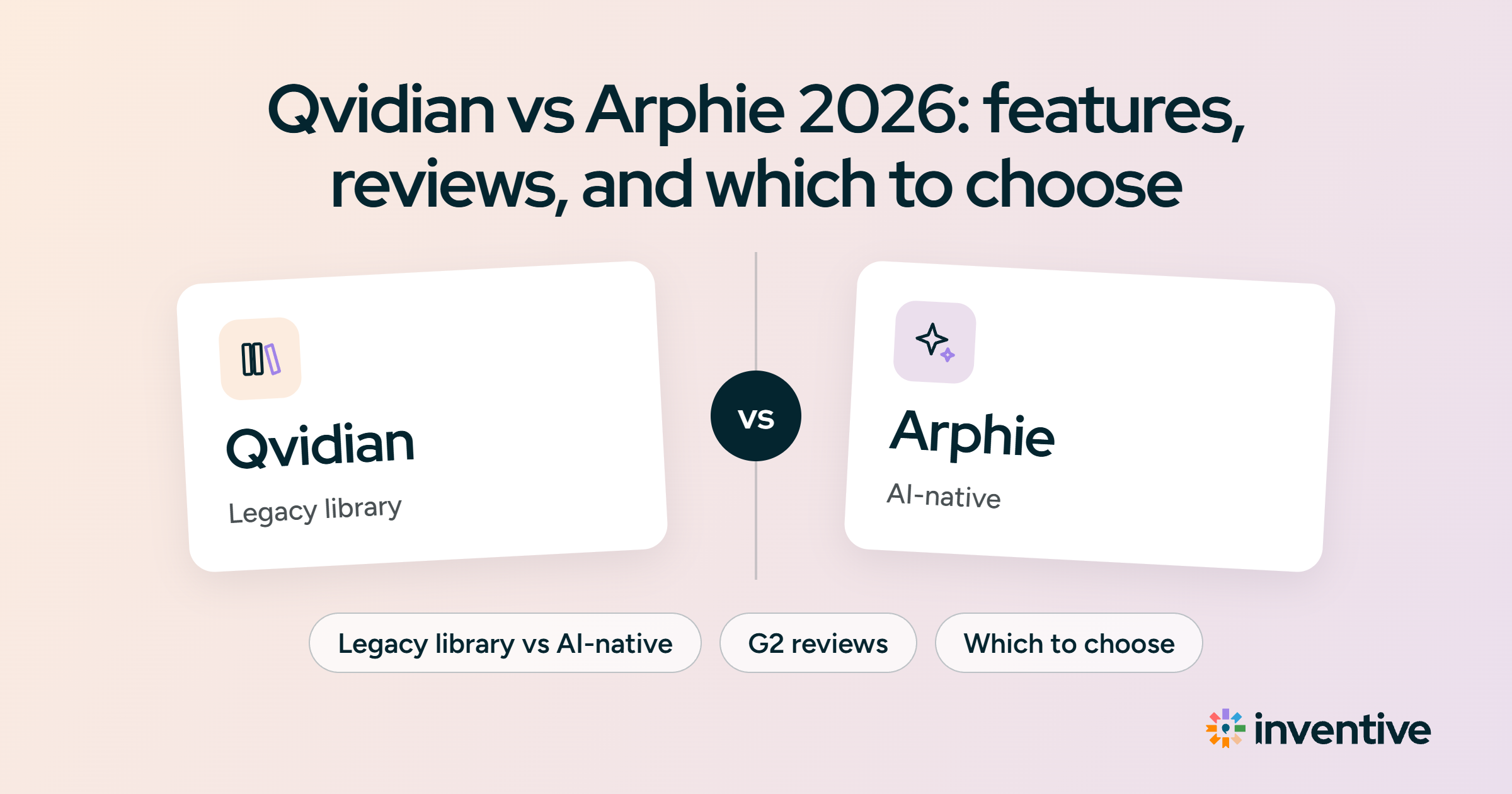
Qvidian vs Arphie comes down to two different approaches to RFP and proposal work: Qvidian centers on an approved content library and Microsoft Office, while Arphie uses AI to draft cited responses from connected content.
Upland Qvidian fits enterprise teams that build formatted proposals in Word and PowerPoint. Arphie fits presales and security teams handling high volumes of RFPs, security questionnaires, and due diligence questionnaires (DDQs).
This Qvidian vs. Arphie comparison covers features, AI drafting, content management, integrations, implementation time, pricing, reviews, and common use cases to help you choose the better fit for your team.
TL;DR: compare Qvidian and Arphie by team type
- Arphie fits RFP, security questionnaire, and DDQ work: every draft cites its sources, and setup takes about 1 month on G2, versus about 4 months for Qvidian.
- Qvidian fits teams that build proposals and SOWs from Word and PowerPoint templates, as long as someone owns the content library.
- Qvidian charges per seat, while Arphie charges by concurrent projects and lists $36,000 to $60,000+ a year.
- Teams looking for an Arphie vs. Qvidian comparison can try Inventive AI, which flags conflicting content and scores bid fit, from $830/month, billed annually with unlimited users.
Qvidian vs. Arphie at a glance
Qvidian is stronger for template-driven proposals in Microsoft Office, while Arphie is stronger for fast, cited drafts for questionnaires.
What is Upland Qvidian?
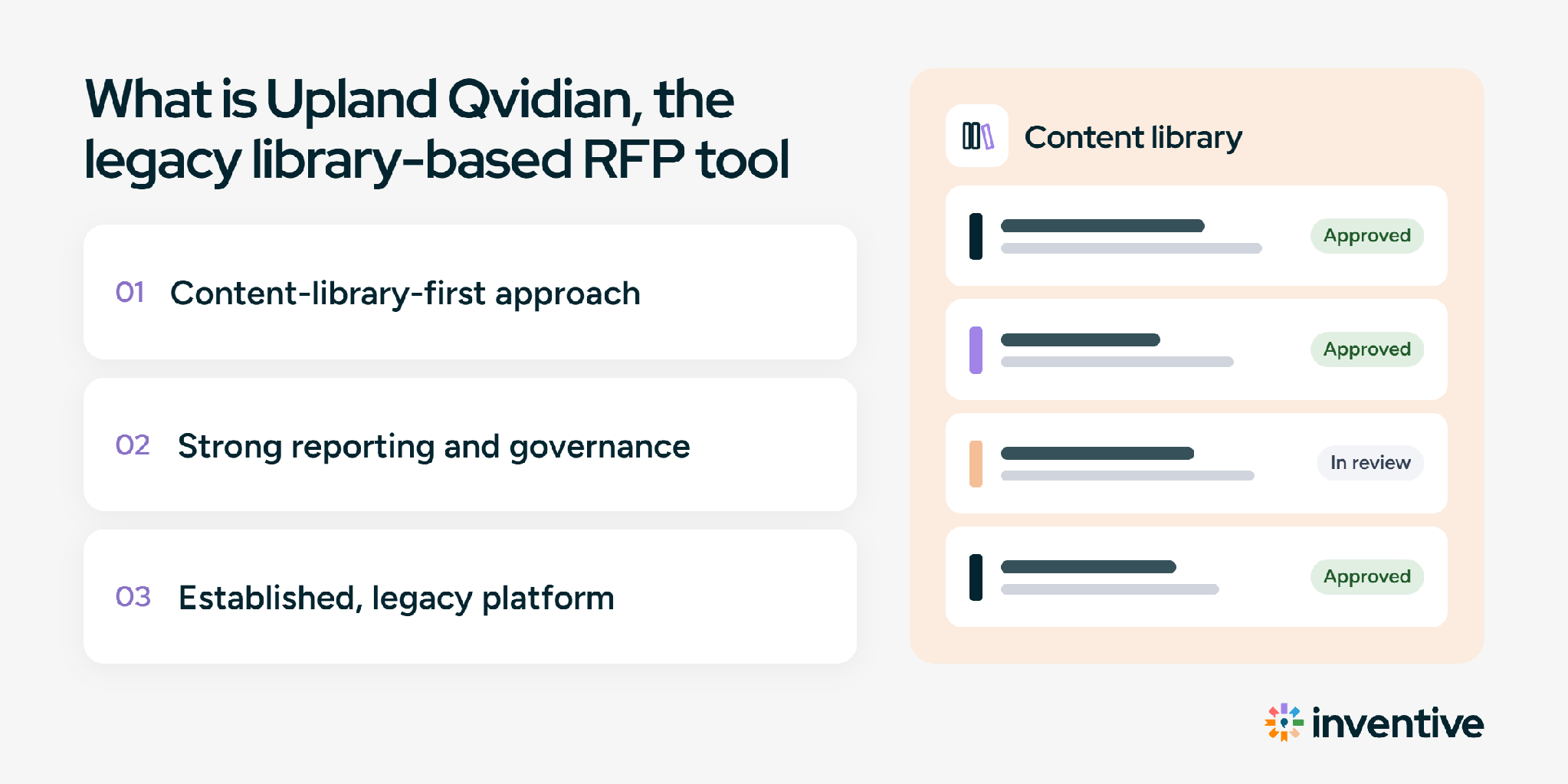
Upland Qvidian is an RFP and proposal management platform built around a central content library. It helps teams find approved answers, respond to RFPs and questionnaires, manage reviews, and build proposals and sales documents.
Qvidian also offers AI Assist, which generates response suggestions and rewrites existing content.
What is Arphie?
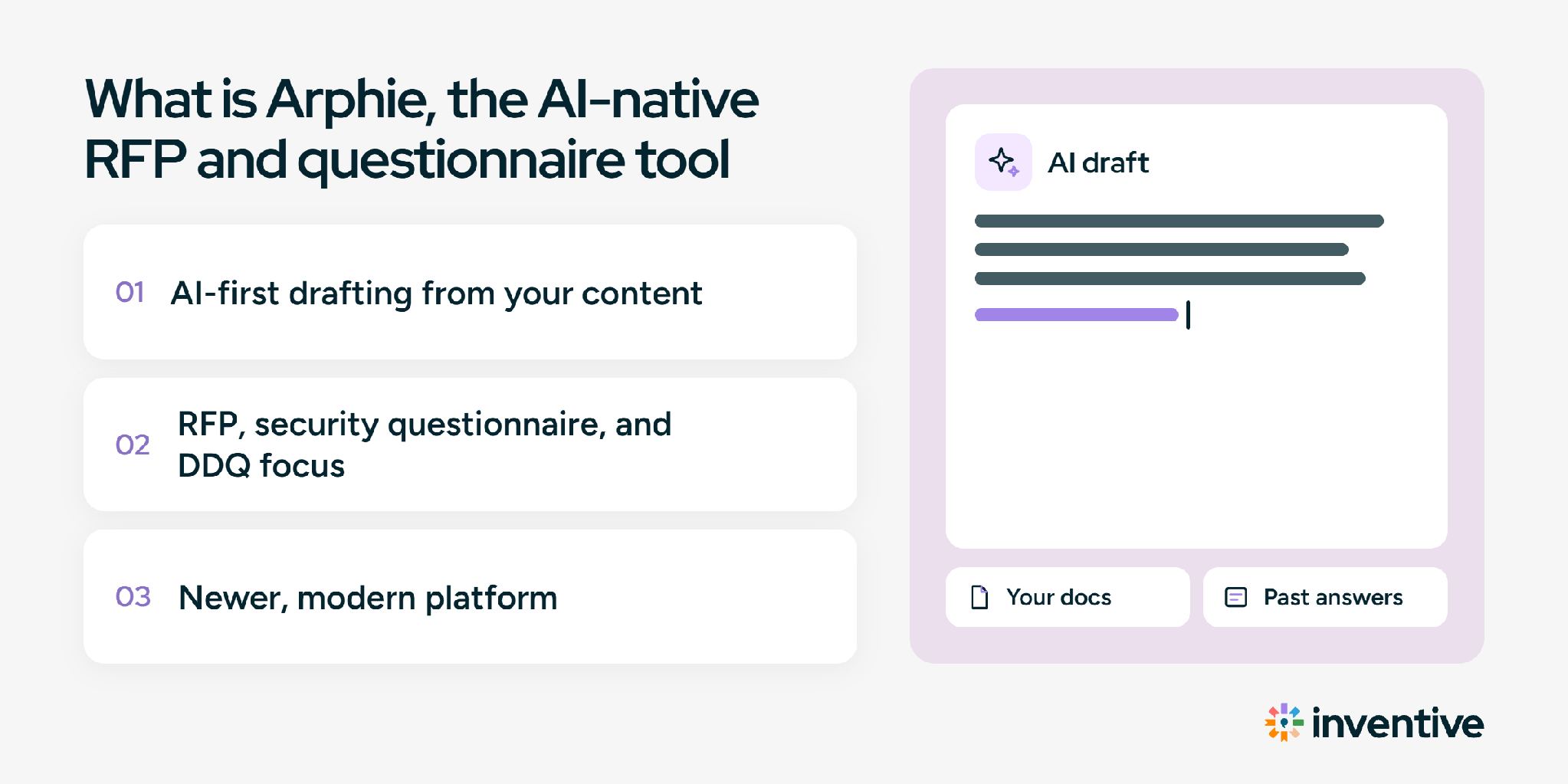
Arphie is an AI-native response platform for RFPs, RFQs, security questionnaires, and DDQs. It generates first-pass responses from a company’s approved content and connected sources, with source references and confidence signals for review.
Its workflow is built around question-by-question response generation rather than the template-based proposal assembly Qvidian supports. This makes Arphie a stronger fit for teams handling high volumes of RFPs and questionnaires than teams primarily building formatted proposals.
Qvidian features, limitations, pricing, and reviews
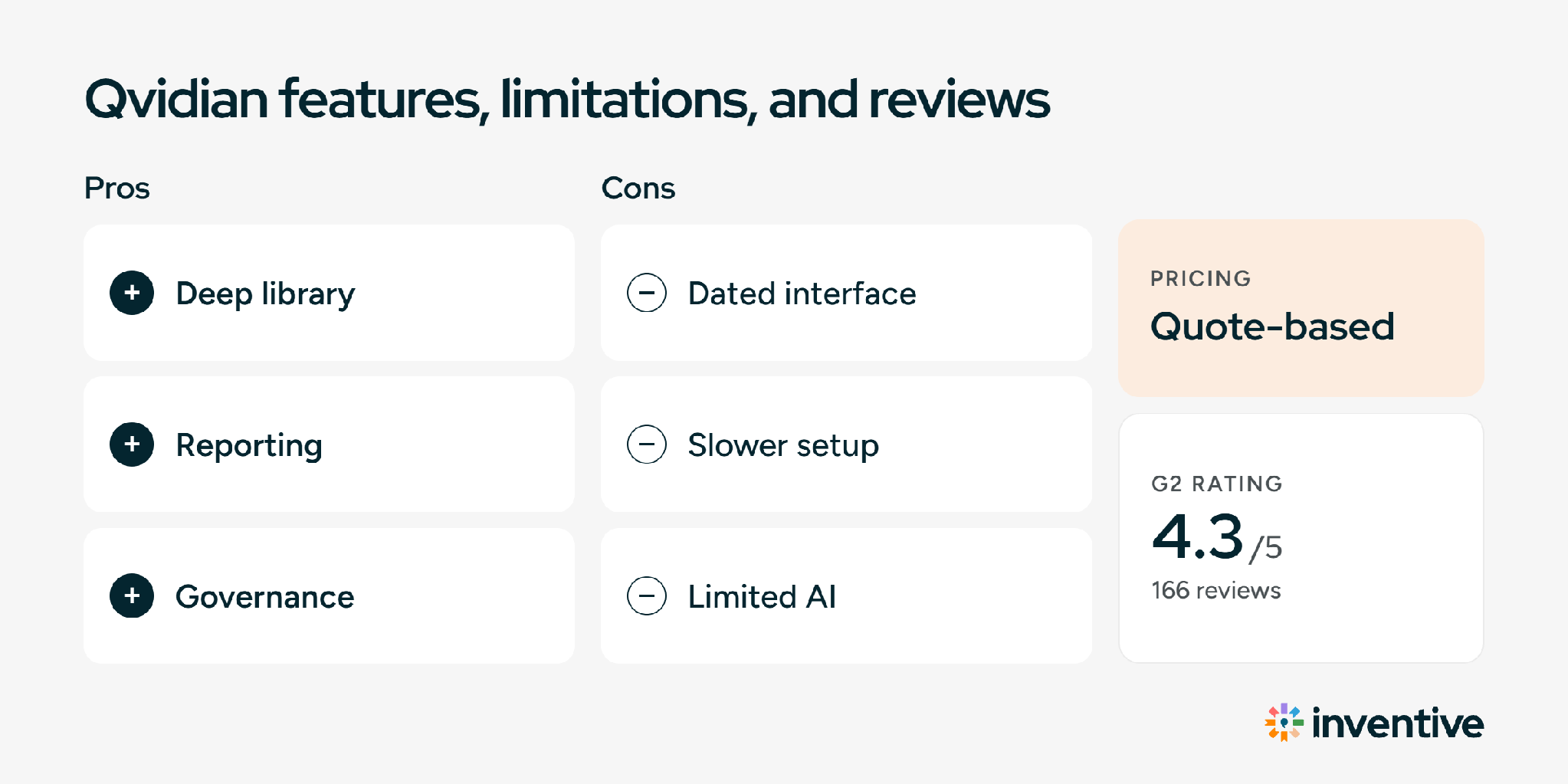
Qvidian's main strengths are Microsoft Office document assembly, formal review workflows, and reporting. G2 reviewers also point to a dated interface, time-consuming content upkeep, and gaps in newer AI capabilities.
Qvidian key features as per G2 reviews
- Microsoft Office add-ins: Users work on Qvidian projects in Word and Excel, build proactive proposals from Word and PowerPoint templates, and insert approved content into Outlook emails.
- Central content library: SMEs contribute content to a central library, with review workflows and version control controlling what's approved for reuse.
- Qvidian AI Assist: AI-generated suggestions inside AutoFill, rewrites for length, tone, and voice, shared prompt libraries, and flags for AI-written content.
- Reporting: Upland lists 70+ out-of-the-box reports and nine dashboards, plus custom reports on teams and content.
- Integrations: Salesforce, Microsoft 365, Outlook, browser access through Chrome, Firefox, and Edge, and an Open API.
Qvidian limitations as per G2 reviews
Based on G2 reviews of Qvidian (as of October 2026):
- Qvidian’s interface feels dated, and first-time users need help finding basic functions.
- Library search can miss the best response, so writers spend time finding approved content.
- Assignment workflows take extra clicks, and tracking the specific edits SMEs make is difficult.
- AI capability lags newer tools, and several enterprise reviewers are still waiting on more AI features.
- Pricing is hard to justify for teams that use only part of the feature set, and a mid-market reviewer asked for a tiered pricing option.
Qvidian pricing
Upland doesn’t publish Qvidian pricing, so buyers get a quote after a demo; the Qvidian pricing guide breaks down the cost factors. Upland states there's no license limit on the number of concurrent projects. A Capterra reviewer notes that SMEs who contribute content need paid licenses, which indicates costs rise as more experts join.
Qvidian ratings and reviews
Qvidian holds 4.6/5 on Gartner Peer Insights from 8 reviews and 4.3/5 on G2 from 166 reviews. G2 reviewers rate ease of content access, content management, and task assignment highest. They report an average of about 4 months to implement and 16 months to see a return on investment.
Arphie features, limitations, pricing, and reviews
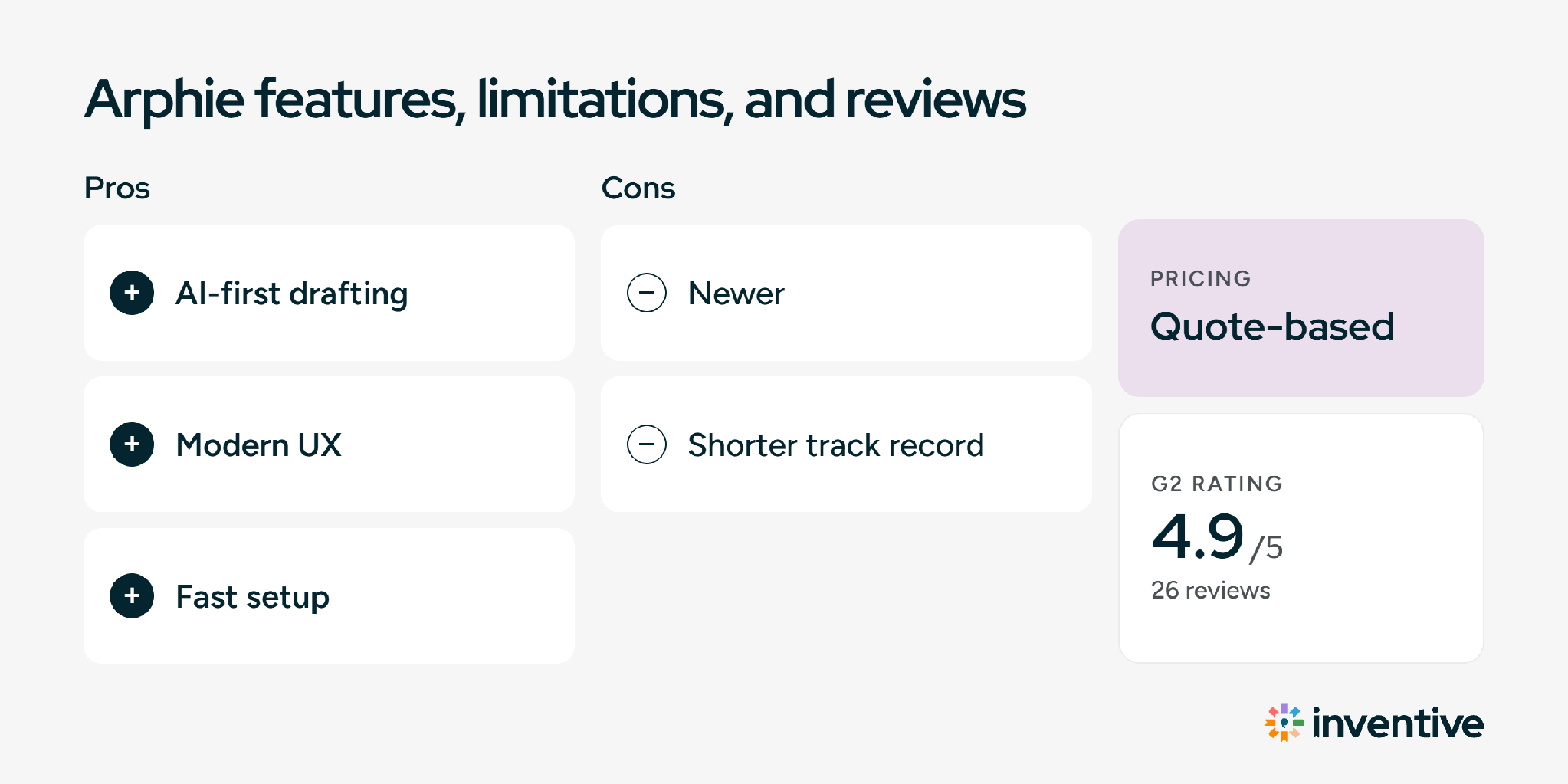
Arphie's strengths are cited first drafts and a short setup. Its weaknesses, based on G2 reviews, are import and export limits, thin reporting, and weak handling of questionnaires hosted on procurement portals.
Arphie key features as per G2 reviews
- AI first drafts with citations: AI agents draft a response for each question and show its sources, a confidence score, and why and how the agent answered, step by step.
- Live source connections: Google Drive, SharePoint, Confluence, Notion, Seismic, Highspot, and product documentation URLs, with control over which files and folders sync.
- Library cleanup: Smart Merge flags duplicate entries and favors the more recently updated version.
- Collaboration: Owner, writer, and reviewer roles, comments, tags, deadlines, and Slack notifications.
- Security: SOC 2 Type 2 with an annual audit, annual third-party penetration testing, encryption in transit and at rest, SAML SSO for enterprise customers, and customer data excluded from model training, per Arphie’s security page.
Arphie limitations as per G2 reviews
Based on G2 reviews of Arphie (as of October 2026):
- Import and export options are narrower than some teams need, and some file formats aren't supported.
- Reviewers report limitations when handling questionnaires hosted on procurement portals.
- Reporting is limited for teams that want detailed analytics.
- Arphie has no native mobile app, per a G2 reviewer.
Arphie pricing
- Pricing model: Based on the number of RFPs or questionnaires a team works on at the same time.
- Annual pricing: Arphie lists a range of $36,000 to $60,000+ per year in its comparison table.
- No per-seat charges: Arphie says teams can add SMEs without paying for additional user licenses, as of October 2026.
Arphie ratings and reviews
Arphie holds 4.9/5 on G2 from 26 reviews and 5.0/5 on Gartner Peer Insights from 5 ratings (as of October 29, 2026). Reviewers praise ease of use, time savings, and the interface. G2 reviewers report about 1 month to implement and 3 months to a return on investment, and Arphie says switching from legacy RFP software usually takes less than a week.
Qvidian vs Arphie head-to-head: AI drafting, support, integrations, and pricing
Qvidian works inside Word, Excel, PowerPoint, and Outlook, publishes its support hours, and offers more built-in reports. Arphie syncs live with SharePoint, Google Drive, and Confluence, supports customers through Slack, and charges by concurrent projects instead of seats.
How do Qvidian and Arphie build a first-draft response?
Qvidian uses approved content from its library and uses AI Assist to suggest or rewrite responses. Arphie generates a response for each question and cites the library entries and connected documents used.
In Qvidian, draft quality depends on how current the library is, and G2 reviewers describe searches that miss the best response and housekeeping that needs scheduled time each week. In Arphie, draft quality depends on the connected sources and on reviewers checking citations, since the draft is generated from whatever those sources say.
Gartner research finds B2B buyers spend only 17% of their buying time meeting potential suppliers, so the written response does much of the selling when a buying group compares vendors.
Support and onboarding
Integrations
Reporting and pricing
Qvidian vs Arphie by use case: questionnaires, proposals, and team fit
Arphie fits teams that answer many security questionnaires and DDQs, because every draft cites its sources. Qvidian fits teams that build formatted proposals in Word and PowerPoint. Teams that handle both should choose based on which kind of work fills most of their week, since running both tools means maintaining two content libraries.
Is Qvidian or Arphie better for security questionnaires and DDQs?
Arphie is the stronger choice for this work. Each draft response shows its sources and a confidence score, so security and investor relations reviewers can check the evidence before approving it. Qvidian also handles DDQs from its content library, and G2 reviewers include DDQ writers at enterprise investment managers. However, its tools are built mainly for assembling proposal documents.
- First draft: Qvidian matches approved library content to each question, and AI Assist suggests edits. Arphie generates a draft response for each question.
- Evidence for reviewers: Qvidian relies on its library approval workflow and version control. Arphie shows sources and a confidence score on each response.
- Excel questionnaires: Qvidian works through an Excel add-in. Arphie imports the file and exports responses back into the original.
- Procurement portals: Qvidian offers a browser extension for Chrome, Firefox, and Edge. G2 reviewers report that Arphie handles portal questionnaires poorly.
- Time to implement: G2 reviewers report about 4 months for Qvidian and about 1 month for Arphie.
In a 2025 Gartner survey of about 900 third-party relationship owners, 95% had seen a third-party red flag in the past year. Buyers use security questionnaires and DDQs to catch those red flags before they sign.
Teams that answer questionnaires in procurement portals should test one live portal questionnaire in both tools during the trial. For more options, see these security questionnaire automation tools.
Is Qvidian or Arphie better for proactive proposals and Word-heavy teams?
Qvidian is the stronger choice here. It assembles documents from Word and PowerPoint templates and lets writers work inside Office. Arphie supports Word import, export, and rich-text editing, but its workflow is built around answering one question at a time.
The trade-off is content maintenance. A template-driven library produces strong proposals only when someone keeps it current, and Qvidian reviewers describe setting aside blocks of time for housekeeping. Proposal teams weighing that cost can compare approaches in this guide to RFP content library automation.
Which teams should choose Qvidian or Arphie?
The table maps common team situations to the better fit.
What should buyers ask Qvidian and Arphie before signing?
Five questions separate a good demo from a good fit. Buyers should get written answers to each one before signing a contract.
- Can the tool draft responses to one of our past RFPs or questionnaires during the trial, and what share of those responses needed edits?
- How does it handle our real formats, including multi-tab Excel files, 200-page PDFs, and procurement portals?
- Who maintains the content, and how does the tool flag outdated, conflicting, or unsupported information?
- How is pricing structured: by seat, SME license, project, or usage?
- What does migration from our current tool involve, and how long did comparable customers take?
Inventive AI: catch conflicting content and weak-fit bids before review
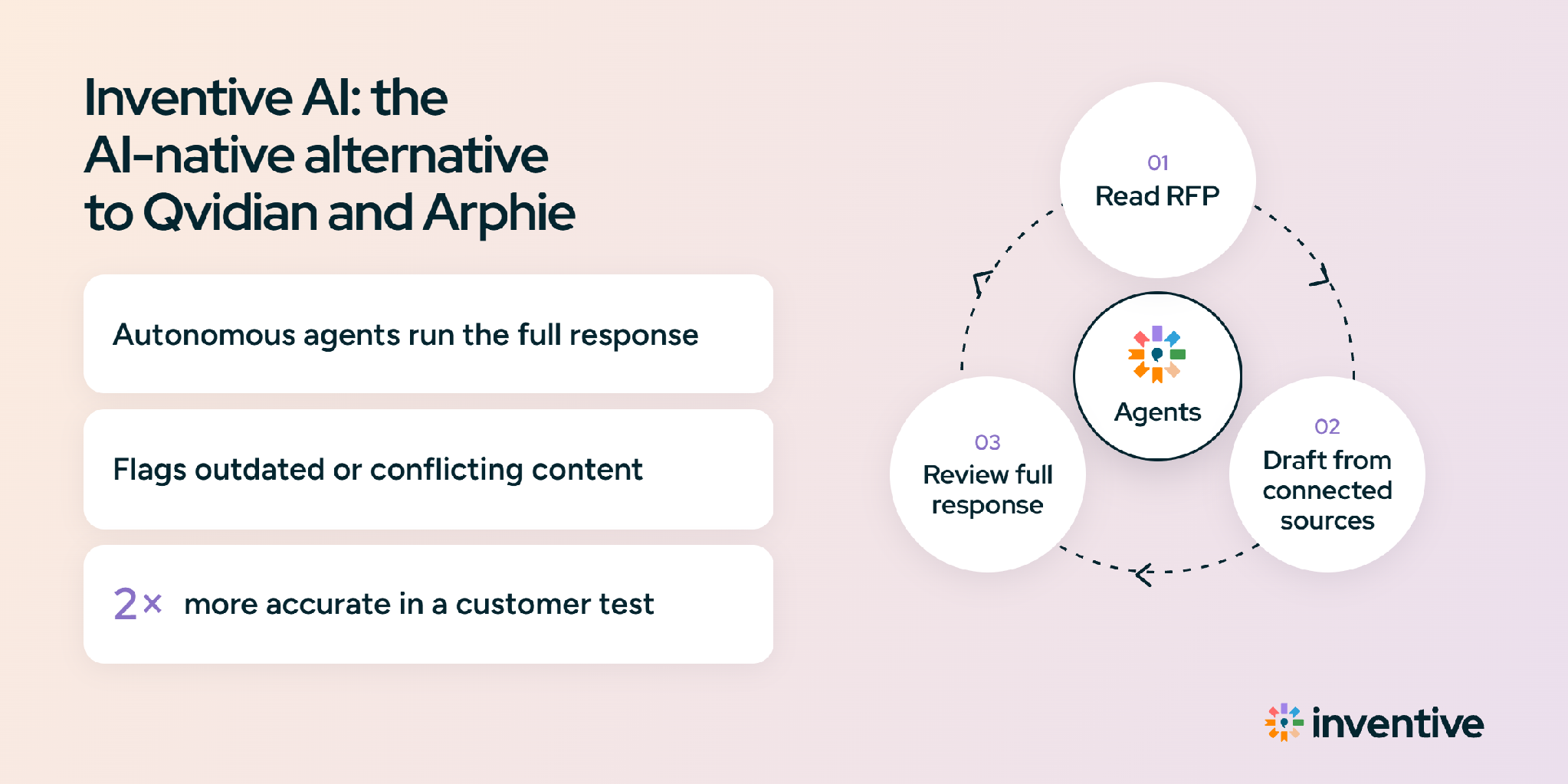
Inventive AI is an AI RFP response platform that generates cited first-draft responses to RFPs, requests for information (RFIs), DDQs, and security questionnaires from a company’s connected knowledge, and flags conflicting content across those sources before review.
- Cited responses with confidence scores: Inventive AI drafts each response from connected sources such as SharePoint, Google Drive, Confluence, Notion, and Zendesk. Each response carries in-line citations and a confidence score, and missing information gets flagged instead of guessed.
- The Go/No-Go agent: It maps requirement coverage as fully met, partially met, not met, or unknown before the team commits to a bid.
- AI Content Manager: Flags outdated and conflicting content and missing sources in the Knowledge Hub, so stale responses get caught before a reviewer sees them.
- Long documents handled whole: Reads a 200-page PDF in one pass and writes Excel responses back into the original file.
- Pricing: Starting from $830/month, billed annually, with unlimited users.
Qvidian vs Arphie: which one to shortlist
Shortlist Qvidian when formatted proposals and Office-based review drive the work, and shortlist Arphie when questionnaire volume and cited drafts matter most. In either case, run both tools on the same past RFP during evaluation. The number of responses that need rework says more about fit than any feature list.